
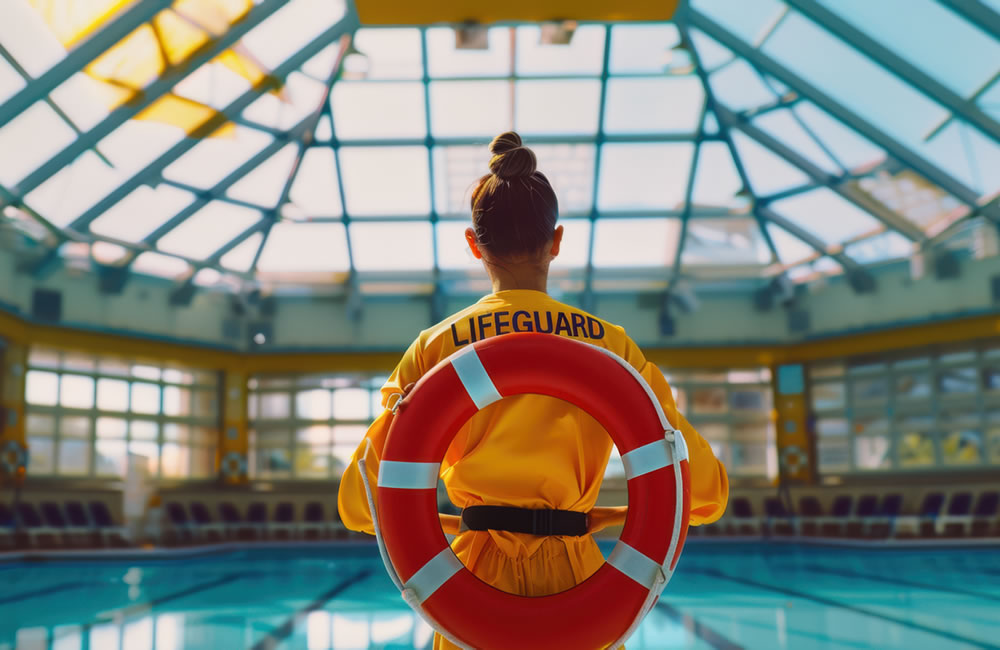
Managing Health and Safety in Swimming Pools
Managing health and safety in swimming pools is an essential responsibility for anyone who owns or operates a pool, spa, or hydrotherapy facility. While swimming is widely recognised as a fun and healthy activity, pools also present a number of risks that must be carefully managed to protect both swimmers and staff. From slips and trips on wet surfaces to waterborne pathogens and potential accidents in the pool itself, operators must ensure they create an environment that is not only enjoyable but also as safe as reasonably possible.
In this article, our experts explore the key aspects of swimming pool health and safety and outline what pool managers and operators need to know to remain compliant with UK health and safety law. We look at the importance of risk assessments, safe operating procedures, staff training, and emergency planning, as well as practical measures for pool maintenance, water treatment, testing, and safe design. By following best practice and guidance such as the HSE’s HSG179, pool operators can reduce risks, improve safety, and provide a more positive experience for all pool users.
Swimming pool health and safety
Plenty of people like to swim, enjoying the occasional dip in their local swimming pool. If you own or operate a swimming pool, hot tub or hydrotherapy pool, it is your responsibility to make sure the pool and surrounding areas are safe and enjoyable to use. This applies to both swimmers and those who work at the pool.
In this guide, we’ll look at the importance of health and safety in swimming pools and how you can achieve it. Under UK health and safety law you’re required to make sure you properly manage all aspects of pool safety, including maintenance, water treatment and testing, and balancing risk with the positive health aspects of swimming.
The document, Health and safety in swimming pools, HSG179 (Fourth edition) is available to download for further guidance and support on this topic.
How healthy is your swimming pool?
Good pool management is about much more than keeping the water looking crystal clear. Regular pool testing, effective water treatment and consistent monitoring all play an important role in protecting swimmers, maintaining water quality and keeping plant equipment operating efficiently. Our free Swimming Pool Health Assessment takes just a few minutes to complete. It will give you a practical overview of your current pool management programme, plus recommendations that could help improve performance and identify opportunities for further investigation.
What should swimming pool owners know about health and safety law?
As we’ve already noted, by law, you must make sure you do everything you reasonably can to ensure the health and safety of anyone using the swimming pool. You must do the same for anyone working at the pool, too.
When considering health and safety matters, you should begin with a risk assessment of the pool and it’s immediate surroundings. Risk management is a key aspect of providing a safe and enjoyable environment for people to swim in. Swimming is great for health, so you need to achieve a balance when considering risk. There will always be certain risk factors present at any swimming pool.
Put simply, it is not necessary to remove all potential risks a swimming pool might pose to those working near it or using it. it would not be practical to do so. Instead, you must strike a balance and deal with all risks as reasonably as you can.
For example, someone may get into difficulties in the water, but with competent lifeguards in place, they should be able to prevent anything from happening. Similarly, there are ample opportunities for debris and foreign bodies, bacteria, viruses, and other contaminants to enter the water. You cannot prevent this from occurring, but you can take steps to test and treat the water in the pool to make sure it is as safe as possible to swim in.
What are the laws concerning health and safety in swimming pools?
You may be surprised to learn that there’s nothing specific that comes into play in this situation. The UK’s main Health and Safety at Work etc. Act 1974 should be followed here. The pool and its surroundings should be safe for workers and visitors to use.
Other regulations may also be relevant. For example, the COSHH regulations, short for the Control of Substances Hazardous to Health Regulations, should be followed regarding substances used for cleaning or testing the water. Similarly, if any accidents occurred on the premises, you may need to report them under the Reporting of Injuries, Diseases and Dangerous Occurrences Regulations, or RIDDOR.
The Health and Safety Executive guidance document, Health and safety in swimming pools, HSG179 (Fourth edition) is also a must read for pool owners and operators.
If the Health and Safety Executive visited your swimming pool premises to consider whether you are doing all you can to provide a safe and enjoyable place to swim, you should be able to prove with evidence and records that you have done all you can to mitigate any risks.
Conducting a swimming pool risk assessment
Pool safety begins with a risk assessment. This should identify all risks present in and around the pool. You’re required to keep a record of this if you have fewer than five employees. However, in practice, it’s a good idea to keep a record anyway, as it provides proof of what you have done and when. You can easily refer to it to ensure you are reducing or removing all risks as best you can.
The pool risk assessment should be performed by someone who is competent and knowledgeable of the types of risks that may be present in and around a swimming pool. Training and experience are essential to ensure the person performing the task does it to the highest standard.
As a swimming pool owner or operator, you will be responsible for the risk assessment. However, you do not need to do it yourself if you feel you are not qualified or experienced enough to do so. You can hire an external person to complete it, although you are still responsible for making sure that person is qualified and experienced to do it.
Making sure all employees understand pool health and safety matters
It’s essential that everyone on site is aware of all aspects that contribute towards a safe swimming pool environment. The industry generally adopts pool safe operating procedures, known as PSOPs for the day-to-day safe running of the pool. Everyone should be aware of these procedures and make sure they are followed.
Similarly, there should also be an Emergency Action Plan or EAP that details what employees should do in the event of any emergency. This can help resolve any emergency as quickly as possible and potentially prevent a situation from becoming more serious.
Regular training and awareness of day-to-day procedures, as well as what to do if something goes wrong all contribute to making sure a swimming pool and its occupants and visitors remain as safe as possible. Topics such as first aid, building evacuation procedures, and alarms should all be covered during staff training.
Achieving pool safety for everyone
This is your aim, of course, so how do you achieve it? It’s important to consider that people may have different needs when visiting the pool. For example, some people may have disabilities or health conditions that may require different measures. You should risk assess a children’s pool separately from a main pool if both are present, and any splash pools or other facilities for infants, too.
Basically, the aim is to risk assess every aspect of the pool, hence why expertise is required to get it right. Another way of doing this is to provide information for swimmers inside the building, before they enter the pool area, and during their swim.
For example, installing notices in and around the pool can alert people to potential hazards. Some are obvious, for example, the pool should be clearly marked to indicate water depth. This will help ensure no one goes out of the depth they are comfortable to be in. You can also have signs warning swimmers not to run around the pool area, as it is likely to be wet and could potentially be slippery.
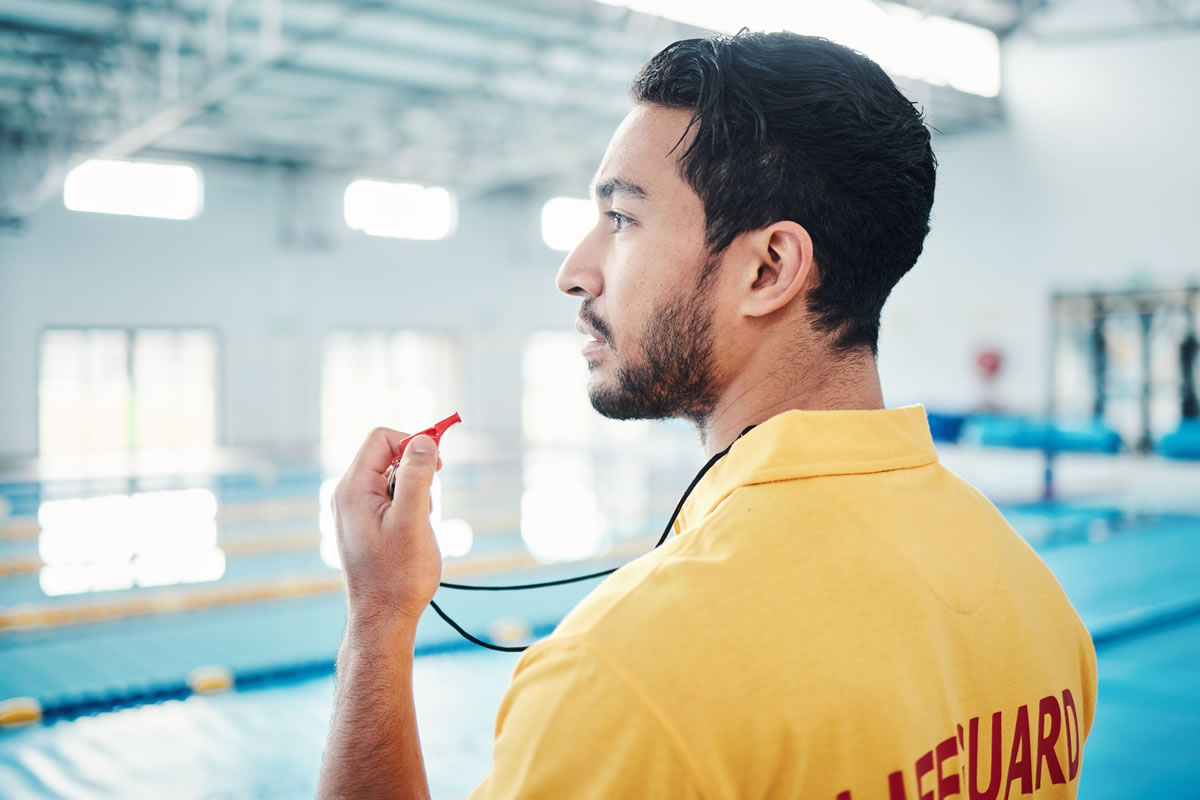
A common sight at all swimming pools is a lifeguard, surveying the pool to make sure that no one is in trouble. Depending on the size of the pool, you may require one or more competent lifeguards on duty at any one time. The Lifeguard Zone Visibility Test can be used to find out how many lifeguards are needed to ensure everyone in the pool is safe.
You may also decide to install CCTV or drowning alert systems to provide extra protection and to ensure quick identification of anything happening in the water. However, these are not a legal requirement. They are a good example of risk management factors, though. With sufficient lifeguards in place at all times, you may decide the cost of CCTV and/or other technology is not worth investing in given the difference it could potentially make in such a situation.
Obviously, continued training is necessary to ensure that all lifeguards remain competent and are suitable for the role they are performing.
Considering the safety of pool equipment
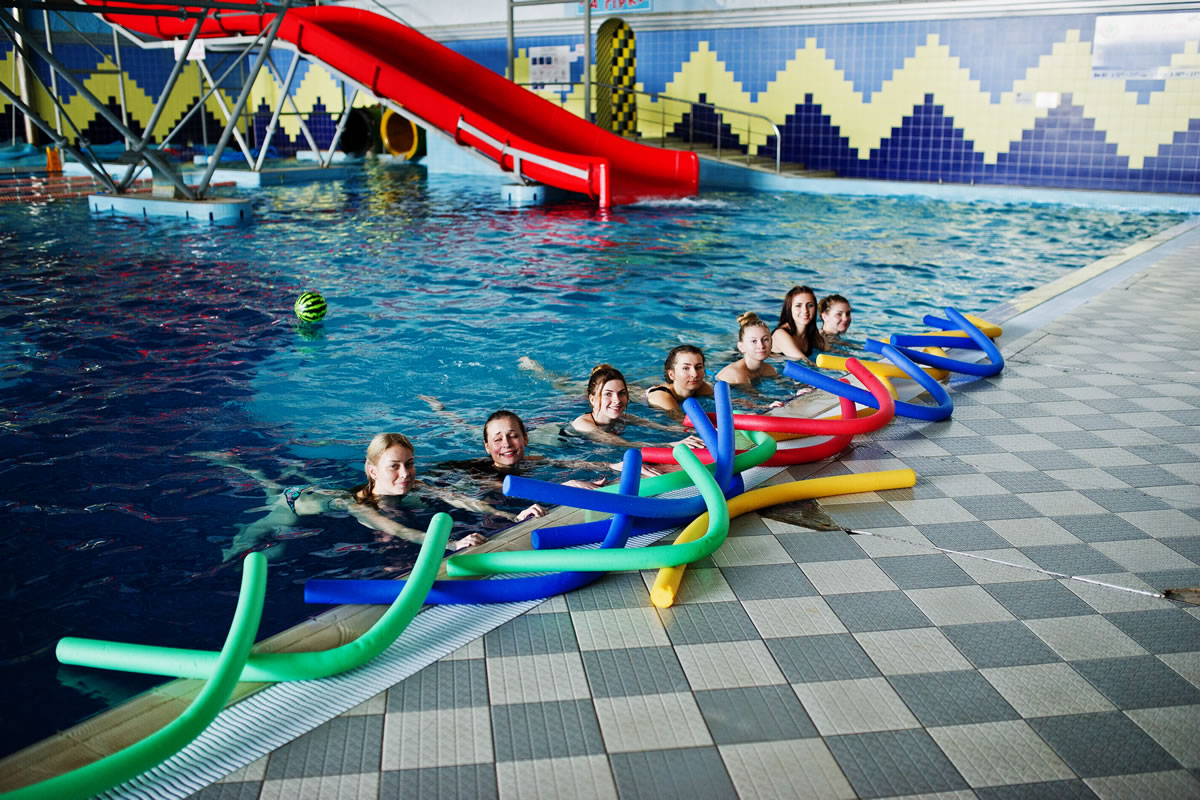
Risk assessments should consider whether it is appropriate to have certain types of pool equipment present, or whether they could represent a risk. For example, the depth of the pool may determine whether it is safe to have any type of diving board present.
Diving from the pool edge should also be considered as part of the risk assessment. This is another example where signage can be added to mitigate the risk. Swimmers may be informed that no diving is allowed from any part of the pool, for example.
All other pieces of equipment around the pool should also be risk assessed. In the case of water slides, they may be safer to use if someone is present to make sure users are safely spaced apart instead of going down one after the other with no gap.
Since all pools are different, some may require a more in-depth risk assessment of this type. Pools that offer multiple water slides and other features are very different from standard pools with no extras. Thus, a risk assessment should consider all these extras and highlight ways in which to ensure safety.
Treating and maintaining a swimming pool
Cleanliness is a big part of making sure a swimming pool and its surroundings are fit to use. All surfaces, especially floor surfaces of all kinds, should be regularly cleaned. They should also be dry wherever practicable, although this is of course not possible around the pool itself.
The pool water should also be regularly tested to ensure it is within safe parameters for pathogens (including E. coli, Pseudomonas, Coliforms, TVCs and Legionella) and other contaminants. It should also be regularly treated and disinfected with chlorine to keep such contaminants under control. Lots of people may swim in a pool over the course of the day. It’s quite possible that lots of contaminants may enter the water, from cosmetics to sunscreen lotion and bacteria to viruses. Regular cleaning and disinfection will ensure the risk of illness is kept to a minimum.
All maintenance tasks should be undertaken by someone with appropriate experience in that area. This applies to pool cleaning and a variety of other tasks. Those may involve maintenance of pool equipment, lighting, heating, and other areas of the building.
Health and safety and new swimming pool designs
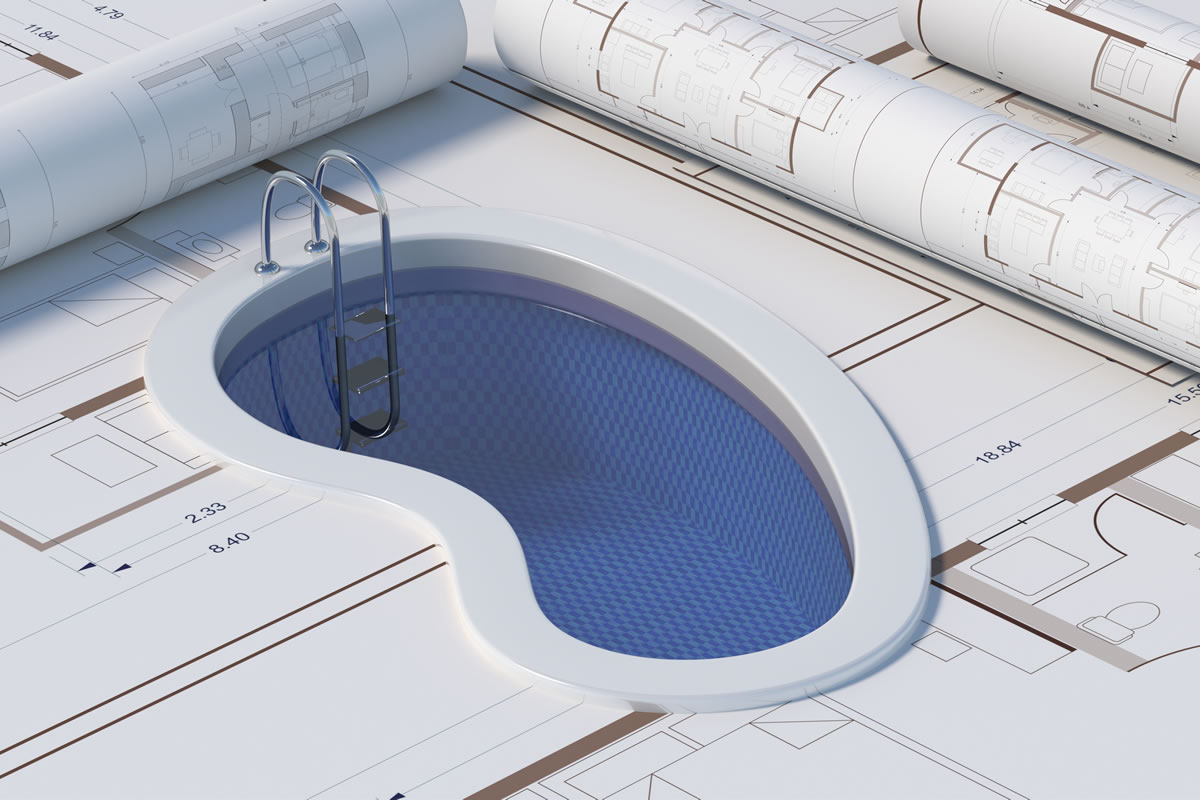
So far, we’ve covered the importance of assessing risks in an existing swimming pool environment. However, health and safety also comes into play when new swimming pools are being planned. Indeed, this is a crucial point in the life of a swimming pool. Lots of safety measures can be included at the planning stage that would make health and safety easier to achieve later.
It is ideal to have experts in swimming pool health and safety providing guidance when a designer is planning the pool and its specifications. They will have knowledge of potential risk factors and can point out things at this early stage that can be rectified on the drawing-board. While not all risks can be removed at this stage, it is possible to ensure the designed swimming pool and its surrounding areas are as safe as they can practically be. This applies both to indoor pools and to outdoor settings such as lidos.
Designers are required to remove all risks where possible in any buildings they design. They should also take steps to reduce any risks that might still be there once the design is complete. As noted earlier, it is not practical to remove every single risk – and that applies at the design stage as well.
But just as a pool manager may enlist the help of an experienced person in risk assessments to help assess the safety of their pool, so a designer should enlist the help of those with knowledge of swimming pool safety. This will ensure all risks are dealt with, whether by removal, adjustment, or minimisation.
Ensuring your pool is safe to use
Swimming pool health and safety does not end with the completion of a risk assessment. The assessment should highlight all the potential risks that might be present in and around the pool area. It should consider all those who might use the pool or be present if spectating or watching someone else. It should highlight the need to provide safety measures to protect those using the pool, whether through signage, lifeguards, the safe provision of equipment, and so on.
Regular training and training up-dates will help ensure that everyone, from the manager to lifeguards to other workers around the pool, knows and understands their roles. Everyone should be aware of safety measures and information, so that they can identify any potential issues the moment they arise. Prevention is a big part of health and safety. This is what a risk assessment should aim to achieve, the prevention of accidents and incidents. While there are no specific regulations pertaining to swimming pool health and safety, published guidance, coupled with common sense and training should help ensure your pool is as safe to use and enjoyable as possible.
In conclusion
Ensuring your swimming pool is safe and well managed requires ongoing attention to both the people and the systems that keep it running. From carrying out thorough risk assessments and maintaining effective operating procedures, to training staff and monitoring water quality, every step plays an important part in protecting swimmers and employees alike. While not all risks can be removed, a proactive approach to health and safety helps create a pool environment that is both enjoyable and compliant with UK legislation and best practice guidance.
Expert pool water testing
At Water Treatment Services, our specialists support pool owners and operators across the UK with expert advice, water quality testing, and laboratory analysis tailored to the needs of swimming pools, spas and hydrotherapy facilities. Our teams can help you put in place the right strategies to manage risks, maintain excellent water quality, and keep your pool facilities operating safely and efficiently.
Contact us today to learn how our expert water management solutions can help keep your pool waters clean and safe to use.

