
• Link to X
  • Link to Facebook
  • Link to LinkedIn
  • Link to Mail
  • Call Me Back
  • About
  • Knowledge
📞 Call us on 0330 223 31 31
Water Treatment Services
  • Home
  • Water
    • Applications
      • Boiler Water Treatment Services
      • Cooling Water Treatment
      • Closed Loop Water Treatment
    • Services
      • Cooling Tower Cleaning Services UK
      • Cooling Tower Maintenance
      • Chlorine Dioxide Water Treatment Services
      • Commercial Water Softeners
      • Expert Witness Services
      • Pre-Commission Cleaning
      • Tank Reline & Repair
      • TMV Servicing
      • Water Chlorination & Disinfection
      • Water Leak Detection
      • Water Testing
        • Drinking Water Testing Services UK
        • Testing Water for Heavy Metals
        • Pool Water Testing
        • BSRIA Closed System Testing
        • SDI Testing & Analysis
        • Trade Effluent Testing
    • Training
      • Water Treatment Training
      • Basic Chemistry of Water
      • Industrial Treatment
      • Pre-Treatment
      • Boiler Treatment
      • Cooling Systems
      • Closed Systems
      • Wastewater Training
      • Advanced Treatments
      • Training Dates 2025
  • Wastewater
    • Testing Water for Heavy Metals
    • Trade Effluent Testing
    • Wastewater Training
    • Expert Witness Services
  • Chemicals
    • Water Treatment Chemicals
      • Boiler Water Treatment Chemicals
  • Air
    • Ductwork Cleaning
    • Indoor Air Quality
    • Local Exhaust Ventilation Testing
    • Mould Testing
    • Expert Witness Services
  • Energy
  • Contact
  • Click to open the search input field Click to open the search input field Search
  • Menu Menu
You are here: Home1 / Knowledge2 / Air3 / Cooling Tower Water Management – Saving Water
Cooling tower water management to save water

Cooling Tower Water Management – Saving Water

Saving water in evaporative cooling towers has become an increasingly important focus for facilities managers and water treatment engineers. With most systems relying heavily on potable water, even small improvements in efficiency can deliver significant benefits. Not only can effective water management reduce operating costs, it can also help conserve valuable natural resources, cut waste, and support sustainability targets. By tackling unnecessary losses and making better use of alternative water sources, cooling towers can be operated in a way that is both more efficient and environmentally responsible.

In this article, we explore practical ways to reduce water use in cooling towers without compromising performance. We look at the different types of water loss and how they can be managed, as well as options for make-up water replacement, pre-treatment, and improving cycles of concentration. The discussion also highlights the role of chemical treatments in controlling scale, corrosion and bacteria, alongside steps to identify and prevent uncontrolled losses such as leaks and overflows. Together, these measures can deliver safer, more reliable, and more cost-effective cooling tower operation.

Evaporative cooling towers

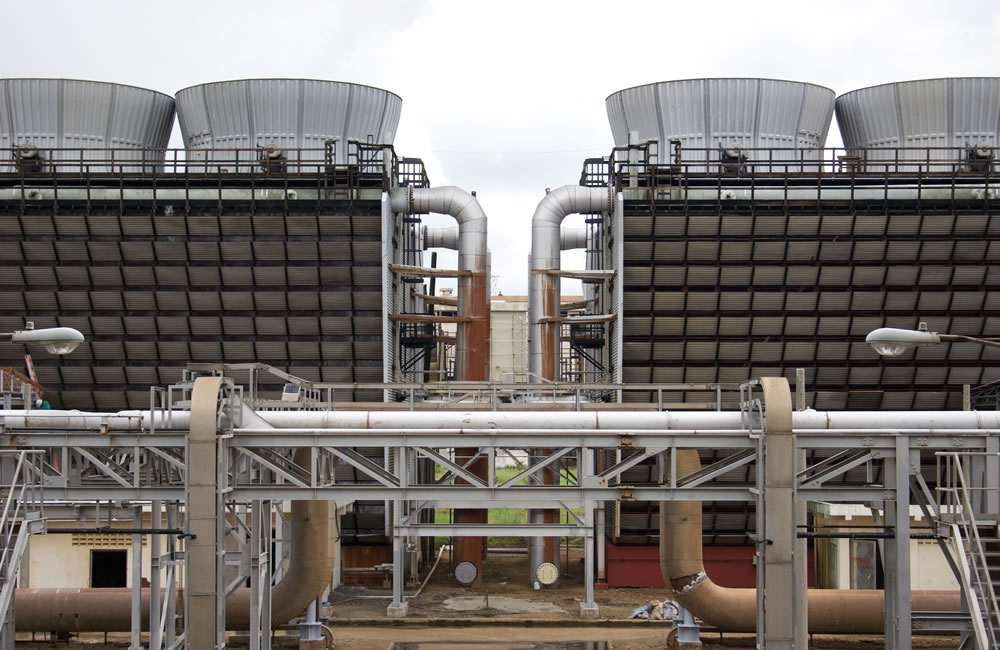
An evaporative cooling tower brings cool air and hot water together, so that the water temperature drops. Some water evaporates during this process. Most of the water used is potable water (water suitable for drinking). Thus, it is important to ensure that water consumption is kept to a minimum, so that demand on water resources is not excessive.

In this article, we’ll look at how optimum water management can be achieved. We’ll also consider treatment of the cooling water to attain the best performance from the tower.

How good is your cooling tower compliance programme? Find out with our short, confidential assessment

How confident are you that your cooling tower management programme would stand up to regulatory scrutiny? Take our short quiz to assess your cooling tower compliance. It will help identify potential risks and benchmark your programme, you’ll also receive a personalised compliance score.

Answer 15 quick questions (time to complete is only 3-4 minutes) to assess your cooling tower compliance status and identify areas that may need attention.

Cooling Tower Compliance Check

Can water losses from cooling towers be controlled?

There are two types of water loss that can occur in a cooling tower:

  • Controlled water loss
  • Uncontrolled water loss

Some degree of water loss is essential for an evaporative cooling tower to operate correctly. Evaporation is key, for example. The other route to water loss is known as bleed-off or blowdown. This process gets rid of mineralised water from the cooling tower that is generated during the evaporative process. If the minerals were allowed to remain in the tower, this would lead to the unwanted formation of scale or sludge. This in turn makes cleaning and maintenance more challenging and increases the opportunity for waterborne bacteria, such as Legionella to take hold.
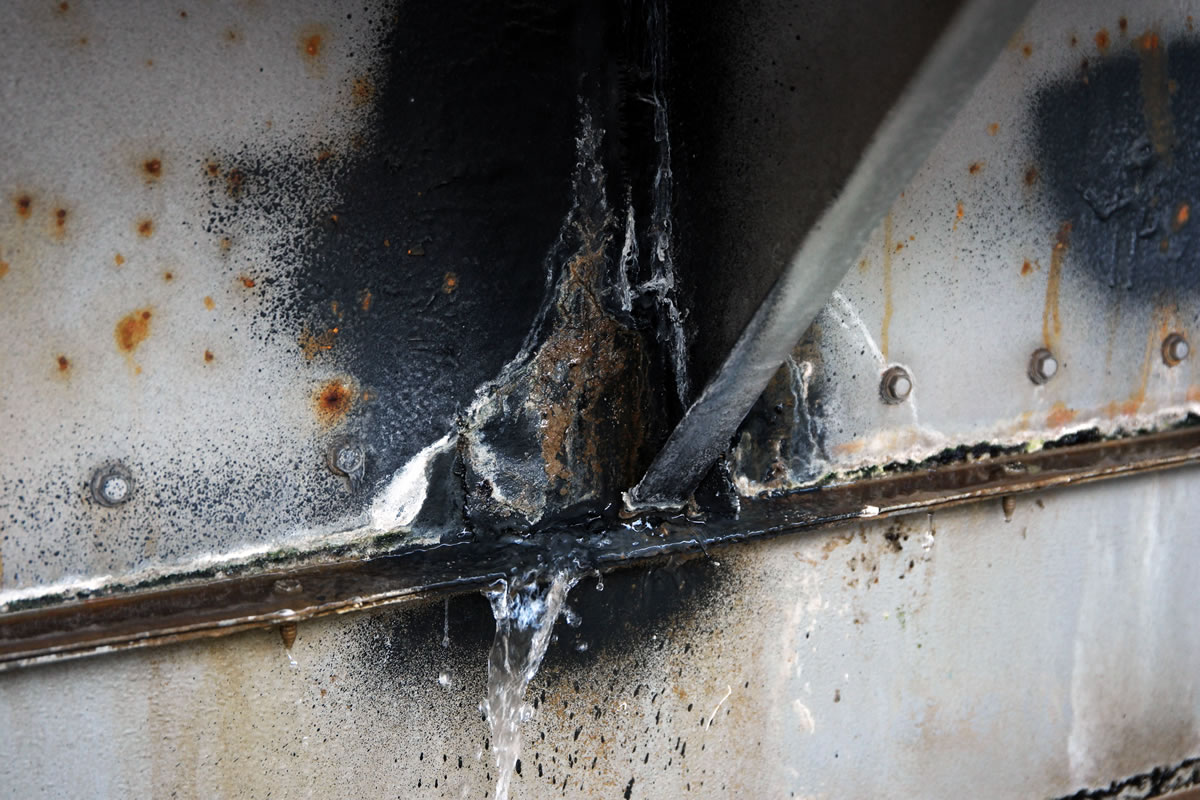
Uncontrolled water loss from cooling tower casing

However, uncontrolled water losses should certainly be looked at and reduced wherever possible. If this does not happen, the cooling tower will go through more water than is necessary. Leaks and overflows are common areas to look for here, but there can be other problems too, such as water splashing when it should not do so.

How to replace cooling water lost via tower bleed-off and evaporation

Both tower bleed-off and evaporation are controlled processes, as we’ve seen, but the losses must still be replaced for a tower to work efficiently. The normal source is potable water, but it is also possible to treat other water sources including wastewater which can be re-used once water quality is improved. This type of water recycling will ensure that less potable water is required for the correct operation of the cooling tower.

Pre-treating cooling water

Pre-treating the water going into the cooling tower is essential to ensure that it is of the best quality and won’t adversely impact the towers operation. Calcium hardness is a key factor here. The harder the water being used, the more likely it is there will be a build-up of scale in the cooling tower which is bad news.

Examining the cycles of concentration

Calculating the cycles of concentration involves measuring the concentration of dissolved solids in the bleed-off water and comparing this to the make-up water added to the cooling system. Removing the solids from the water will allow it to cycle through the cooling system more times. This in turn saves water and raises the water efficiency level.

All this means that less water will be required to add-back into the system and less will be lost to the drains through the process. If the maximum cycles of concentration are reached, this means the cooling tower will use less water, be more efficient and cost less to run.

Treating cooling water with a scale and corrosion inhibitor

A combined scale and corrosion inhibitor can help improve water quality and ensure the tower cycles are increased as well. These inhibitor products are designed to make the calcium and magnesium salts present in the water more soluble. They also make sure the level of corrosion in the tower is reduced to an acceptable level.
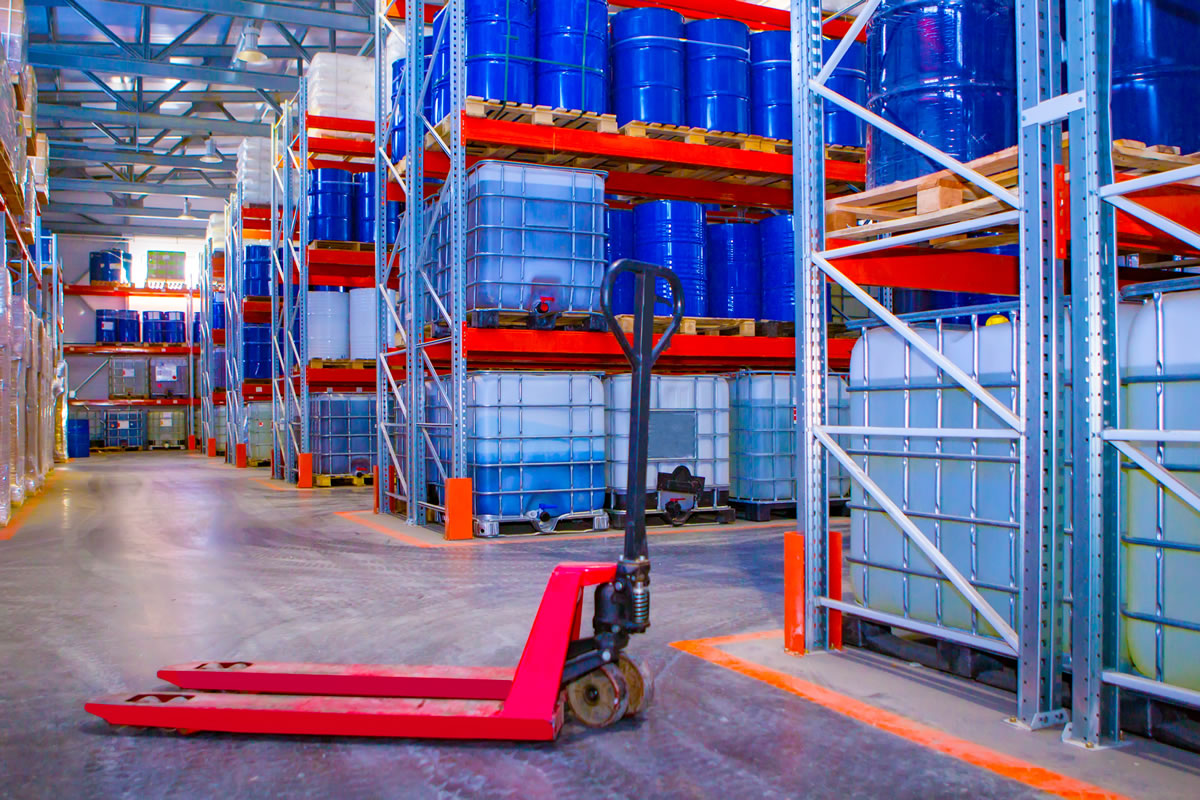
Cooling water scale and corrosion inhibitor chemicals in storage warehouse

Focusing on better cooling tower water management

By targeting water management and ensuring as little water as possible is lost through operation, you can ensure your cooling tower becomes more efficient. It will also use less water, perhaps by switching or re-using other water sources and focusing on improving their quality or by increasing the cycles of concentration.

It’s clear there is a role here for chemical water treatment products designed to improve the quality of the water used in a cooling tower, although of course, this is only part of the equation. Maintaining safety and focussing on good performance, raising it where possible will also reduce the chances of any waterborne bacteria such as Legionella causing problems in the system.

Cooling tower water management support

Managing water use in evaporative cooling towers is about far more than just keeping systems topped up. By focusing on reducing unnecessary losses, improving water quality, and making the most of alternative supplies, it’s possible to achieve safer, more efficient, and more sustainable operation. The result is lower running costs, reduced environmental impact, and improved reliability across the system.

At Water Treatment Services we help businesses across the UK and Ireland get the best from their cooling water systems. Our specialist teams provide expert advice, water treatment solutions and ongoing support to improve efficiency, manage water safety risks such as Legionella, and ensure compliance with regulatory standards. With offices and engineers based nationwide, we can deliver cost-effective, practical solutions wherever you are.

Contact us today to learn how our cooling water treatment solutions can help you.

Contact Us Today

Search…

Search Search

What's New

  • Swimming Pool Water Testing UK: Complete Compliance Guide for Pool Operators & Facilities Managers

    Swimming Pool Water Testing UK: Complete Compliance Guide for Pool Operators & Facilities Managers

    Swimming pool water quality is one of those things …
  • Cooling Tower Compliance Check – Free Online Assessment

    Cooling Tower Compliance Check – Free Online Assessment

    How confident are you that your cooling tower management …
  • What are the 4 Main Methods for Treating Industrial Wastewater?

    What are the 4 Main Methods for Treating Industrial Wastewater?

    We all rely on water every day yet rarely …
  • Water Quality Assessment: 3 Key Areas for Safe Water Systems

    Water Quality Assessment: 3 Key Areas for Safe Water Systems

    Assessing water quality is a fundamental part of managing …
  • Water Quality Analysis for Modern Industries

    Water Quality Analysis for Modern Industries

    Understanding the quality of water used across modern industries …
  • Free Boiler Health Check & Boiler Water Treatment Assessment

    Free Boiler Health Check & Boiler Water Treatment Assessment

    Even small boiler water quality issues can lead to …

REVIEWS

4.8
Water Treatment Services is rated 4.8 out of 5 stars (based on 103 reviews)
Read our reviews

Newsletter

Receive exciting features, news, latest research and special offers! Just add your email address and we'll do the rest.

Contact us

Water Treatment Services

[email protected]

Tel: 0330 223 31 31

© Copyright 2026 - EDG Ltd. Operating as Water Treatment Services
  • Link to X
  • Link to Facebook
  • Link to LinkedIn
  • Link to Mail
  • Home
  • About
  • Careers
  • Privacy
  • Environment
  • Reviews
  • Login[learndash_login login_label=”Login/Register” logout_label=”Logout”]
  • Sitemap
Link to: Managing Health and Safety in Swimming Pools Link to: Managing Health and Safety in Swimming Pools Managing Health and Safety in Swimming PoolsManaging health and safety in swimming pools Link to: Guide to Drilling Water Boreholes – What You Need to Know Link to: Guide to Drilling Water Boreholes – What You Need to Know Guide to drilling water boreholesGuide to Drilling Water Boreholes – What You Need to Know
Scroll to top Scroll to top Scroll to top

This site uses cookies. By continuing to browse the site, you are agreeing to our use of cookies.

OK

Cookie and Privacy Settings


How we use cookies

We may request cookies to be set on your device. We use cookies to let us know when you visit our websites, how you interact with us, to enrich your user experience, and to customize your relationship with our website.

Click on the different category headings to find out more. You can also change some of your preferences. Note that blocking some types of cookies may impact your experience on our websites and the services we are able to offer.

Essential Website Cookies

These cookies are strictly necessary to provide you with services available through our website and to use some of its features.

Because these cookies are strictly necessary to deliver the website, refusing them will have impact how our site functions. You always can block or delete cookies by changing your browser settings and force blocking all cookies on this website. But this will always prompt you to accept/refuse cookies when revisiting our site.

We fully respect if you want to refuse cookies but to avoid asking you again and again kindly allow us to store a cookie for that. You are free to opt out any time or opt in for other cookies to get a better experience. If you refuse cookies we will remove all set cookies in our domain.

We provide you with a list of stored cookies on your computer in our domain so you can check what we stored. Due to security reasons we are not able to show or modify cookies from other domains. You can check these in your browser security settings.

Google Analytics Cookies

These cookies collect information that is used either in aggregate form to help us understand how our website is being used or how effective our marketing campaigns are, or to help us customize our website and application for you in order to enhance your experience.

If you do not want that we track your visit to our site you can disable tracking in your browser here:

Other external services

We also use different external services like Google Webfonts, Google Maps, and external Video providers. Since these providers may collect personal data like your IP address we allow you to block them here. Please be aware that this might heavily reduce the functionality and appearance of our site. Changes will take effect once you reload the page.

Google Webfont Settings:

Google Map Settings:

Google reCaptcha Settings:

Vimeo and Youtube video embeds:

Other cookies

The following cookies are also needed - You can choose if you want to allow them:

Privacy Policy

You can read about our cookies and privacy settings in detail on our Privacy Policy Page.

Privacy
Accept settingsHide notification only