 Water Treatment Services
Swimming Pool Water Testing UK: Complete Compliance Guide for Pool Operators & Facilities Managers
Swimming pool water quality is one of those things people only notice when something goes wrong. In reality, maintaining safe water is an ongoing process that relies on good plant operation, effective disinfection and regular microbiological testing. Having worked with commercial pools, hotels, schools and leisure facilities throughout the UK, we’ve seen first-hand that clear water doesn’t always mean safe water. Routine pool water testing plays a vital role in demonstrating compliance, protecting bathers and identifying developing issues before they turn into something much more serious.
In this guide, we’ll look at what UK swimming pool operators need to know about water testing and compliance. We’ll cover the bacteria and pathogens commonly tested for, recommended sampling frequencies, good sampling practice and the importance of record keeping. We’ll also explain some of the common causes of failed water tests, when additional investigation may be needed and why many facilities managers choose to use specialist companies such as Water Treatment Services to support their pool water treatment and monitoring programmes.
Why swimming pool water testing is important
Many people use swimming pools several times a week – sometimes even daily. We rarely think about pool safety in terms of water quality when we go swimming, but we certainly expect the water to be safe to swim in.
If you are responsible for managing the health and safety aspects of a swimming pool, you must make sure you follow the regulations laid out in the Health and Safety at Work etc Act 1974. It might surprise you to learn there are no specific rules pertaining to swimming pool safety, but you must make sure your pool is always safe to use and swim in.
While this process includes visual checks, it must also include regular pool water sampling and testing. While some contaminants may produce visual signs, many won’t, leaving testing as the best method to determine water quality. As always, a risk assessment should be done to determine all inherent risks in and around the pool. This should indicate regular water testing to ensure it remains safe to use.
What does swimming pool water testing test for?
Many pathogens can be present in a swimming pool with no sign that they’re there. Thus, regular testing can determine which pathogens are in the water and whether they are at safe levels.
Plenty of people go swimming, and this can introduce all kinds of things into the water. So, testing should look at the total viable count, or TVC, of microorganisms that are present to start with. This is also sometimes referred to as the aerobic colony count in the water. It will give a general impression of the total bacteria in the sample and therefore the quality of the water.
More specifically, the sample should also be tested for E. coli, Pseudomonas aeruginosa, Legionella, and the total coliforms present.
Regular microbiological analysis of a pool would normally include the following:
- Total Viable Count (TVC), sometimes called aerobic colony count.
- Escherichia coli (E. coli).
- Total coliform bacteria.
- Pseudomonas aeruginosa.
- Legionella, where appropriate.
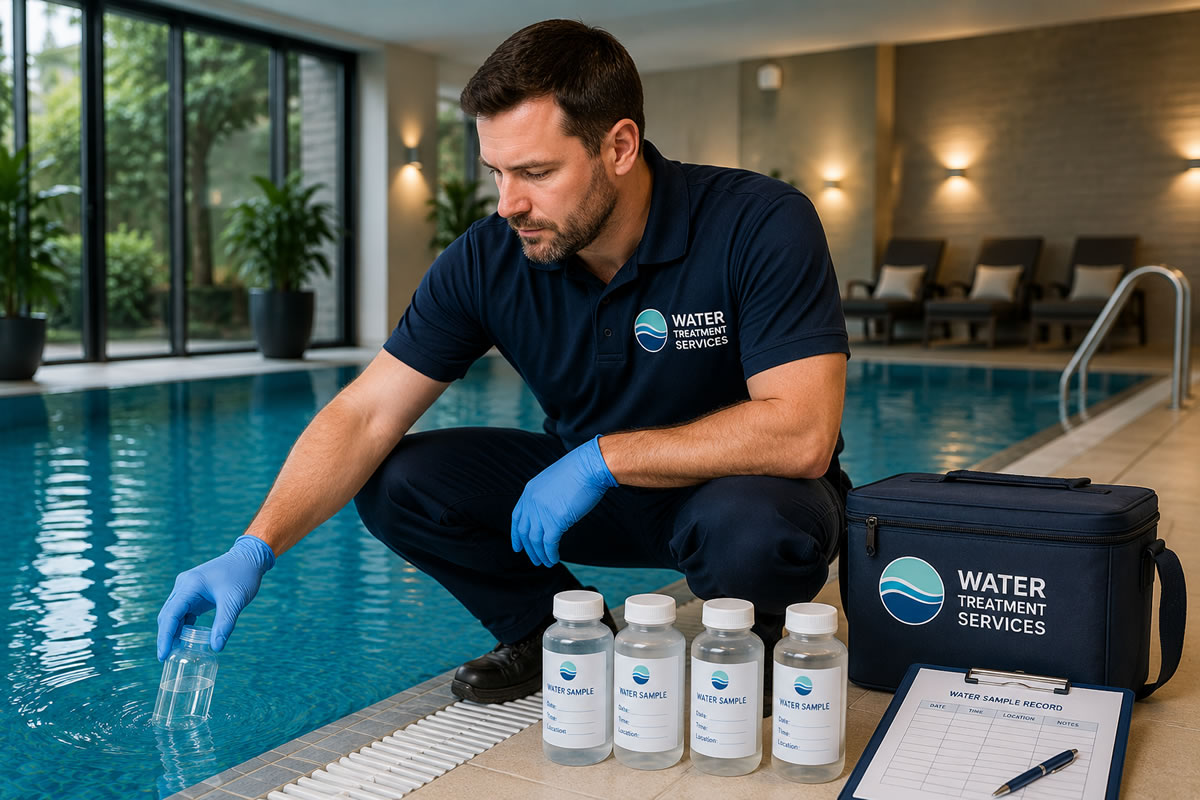
| Routine swimming pool water sampling by Water Treatment Services helps commercial pool operators maintain safe water quality and comply with UK regulations.
How healthy is your swimming pool?
Good pool management is about much more than keeping the water looking crystal clear. Regular pool testing, effective water treatment and consistent monitoring all play an important role in protecting swimmers, maintaining water quality and keeping plant equipment operating efficiently. Our free Swimming Pool Health Assessment takes just a few minutes to complete. It will give you a practical overview of your current pool management programme, plus recommendations that could help improve performance and identify opportunities for further investigation.
How often should swimming pool water be tested?
Weekly checks should be conducted to look at pH levels, chlorine levels, and alkalinity. More frequent checks might be necessary during peak seasons when the pool is busy – sometimes even daily. However, this is only the start.
Typical pool water chemical parameters operators should check include:
- Free chlorine
- Combined chlorine
- pH
- Alkalinity
- Water temperature
- Cyanuric acid, where stabilised chlorine products are used
In general, you should conduct water sampling and testing for microbiological levels once a month. You should conduct tests more often if there has been an outbreak of illness that might relate to the pool, or if there are any issues anywhere that could potentially affect the water quality.
Moreover, if the sample results highlight any potential issues, further testing will be required while steps are taken to combat the issues. This further testing regime will ensure that the results are back within normal levels for any microbiological samples that were a cause for concern.
How to take swimming pool water samples correctly
Water samples should only be taken by those who are familiar with the process and know how to do it. Proper sample containers should be obtained from the lab that will undertake all the testing. Only those with training and experience of taking samples should do so, as there is ample space for contamination to occur if an inexperienced member of staff does it instead.
Rather than waiting until the pool is closed, samples should always be taken when it is in use. They should be taken at the deep end of the pool, ensuring that this is done far from any outlets in order to obtain an accurate sample. Sample bottles will include a suitable agent to neutralise the chosen disinfectant used in the pool. This ensures accurate results when the samples are tested.
Should you outsource swimming pool water testing?
Yes – you can do this and indeed some find it a better option. Sampling and testing should only be done by those who know exactly what to do and how often to do it. Many people hire experts to conduct risk assessments on their behalf, so you can approach pool testing in a similar manner if you wish.
There are specialists, such as Water Treatment Services that can handle swimming pool testing for you, many of whom have their own specialist labs to handle testing and results, too. You will still be responsible for ensuring you hire people who have experience and qualifications in swimming pool testing in the UK. Do your research and choose wisely to ensure you have the support of an experienced company in this respect.
There are many advantages to taking this route. Perhaps most importantly, it ensures that all samples are taken in the proper manner. If you were to do this yourself, you might accidentally contaminate the sample before testing. This would give an inaccurate result, and potentially even cause issues when the pool water itself was safe.
Swimming pool record keeping and compliance
It is imperative that you keep accurate and up-to-date records of your swimming pool health and safety management procedures. In terms of sampling the pool water for testing, you should always note when and where samples were taken, by whom, and what the results were from that sample.
You can keep and maintain records in several ways. Some operators keep paper records, while others keep records on a computer in a spreadsheet. You may be able to use software to ensure everything is kept up to date.
What are the penalties for failing to comply with swimming pool health and safety laws?
If you are responsible for health and safety in a swimming pool, you should recognise how important it is to take regular water samples for testing. The results will help determine whether the water is being correctly treated, and whether there is any bacterial contamination that should be dealt with. Keeping accurate and up-to-date results will also help you provide proof of your efforts to maintain health and safety if you ever need it.
The penalties for breaking health and safety laws can be significant, with heavy fines imposed on those who do not meet the requirements laid down by those laws. Regular maintenance, cleaning, and testing all contribute to ensuring your swimming pool is safe and enjoyable to use for whomever wants to visit.
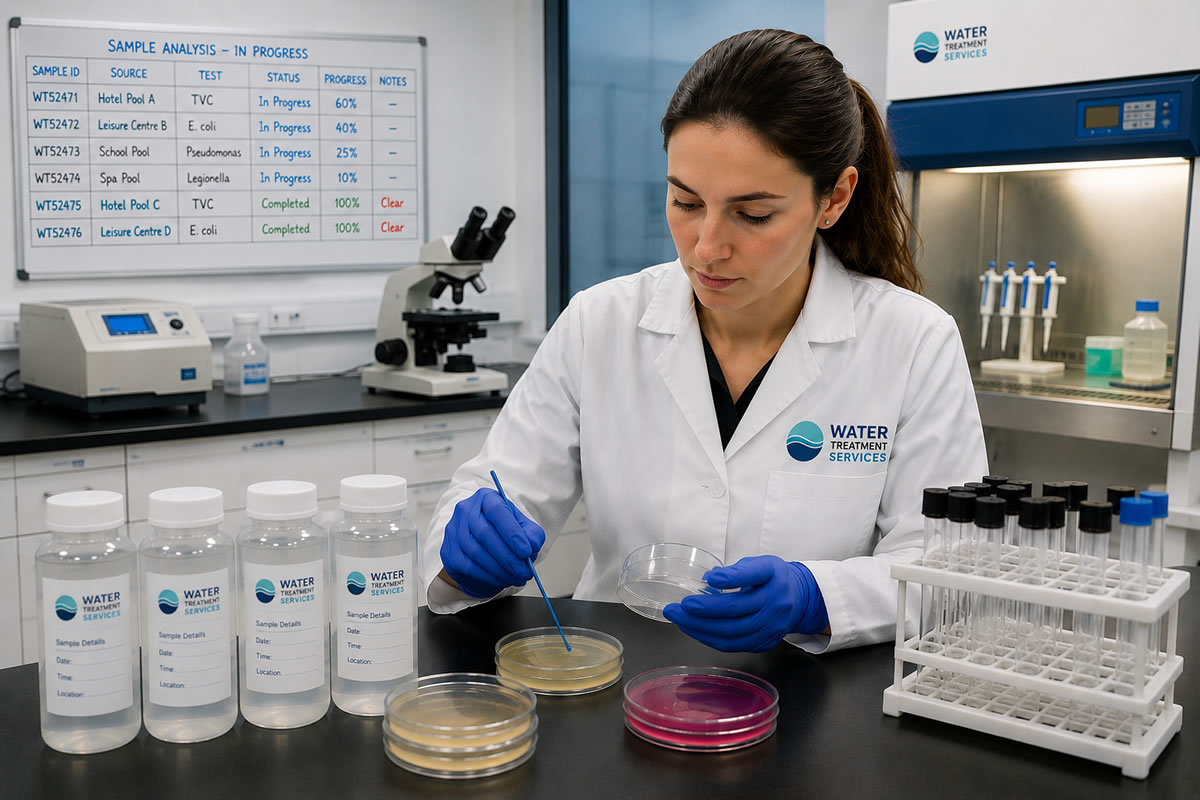
| Swimming pool water samples undergoing microbiological analysis to help commercial pool operators maintain safe water quality and comply with UK regulations.
Frequently Asked Questions about swimming pool water testing
Is swimming pool water testing a legal requirement in the UK?
Currently, there are no regulations that set out how often swimming pool water must be sampled. Under the Health and Safety at Work etc. Act 1974 pool operators have a duty make sure the pool environment is safe. Regular water testing is an important part of demonstrating compliance and protecting swimmers.
How often should swimming pool water be tested?
Pool operators should check chemical parameters including free chlorine and pH daily. If the pool is busy they should be checked several times throughout the day. Microbiological testing is usually completed monthly, although with higher-risk facilities or during times of heavy use more frequent sampling may be needed.
What bacteria are tested for in swimming pool water?
Regular microbiological testing usually includes Total Viable Count (TVC), Escherichia coli (E. coli), total coliforms and Pseudomonas aeruginosa. Depending on the design of the pool system and the results of the risk assessment, Legionella testing may also be needed.
Can pool water look clean and still fail a water test?
Yes. Many microbiological dangers are invisible, so having clear water doesn’t necessarily mean it’s safe. Pool water can look crystal clear but still contain high bacterial counts or Pseudomonas contamination. The only reliable way to confirm safe water quality is via Laboratory analysis.
What causes a swimming pool water sample to fail?
There are lots of reasons why a pool water sample may fail, including poor disinfection, inadequate circulation, dirty filters, excessive bather loads, biofilm formation, equipment faults and poor water sampling. Even small issues, if left unresolved, can eventually affect water quality.
Where should swimming pool water samples be taken from?
Take pool samples while the pool is in use and away from any return inlets. This is to prevent freshly treated water affecting the result. Water samples are typically taken from the deep end using special sterile bottles.
What should you do if a swimming pool fails a microbiological test?
Never ignore a failed test result. The cause should be investigated straight away and corrective actions taken. Depending on reason for the failure, further actions may involve shock dosing, filter cleaning, system disinfection or more sampling to confirm that water quality has returned to acceptable levels.
Can swimming pool operators carry out water sampling themselves?
They can, provided they are competent to do so. This involves suitable training and following the correct sampling procedures. However, many operators choose to use specialist water treatment companies like Water Treatment Services to ensure samples are taken correctly and results are properly interpreted.
Do swimming pools need Legionella testing?
Not every swimming pool needs routine Legionella testing. Your Legionella risk assessment will identify any need for this type of testing and frequency. Facilities with spas, hydrotherapy pools, spray features, balance tanks and associated hot and cold water systems may require additional monitoring.
How long should swimming pool water testing records be kept?
You should always keep records of any chemical readings, microbiological tests, maintenance works and corrective actions you take. Good record keeping is essential; it demonstrates good management processes and will help you spot developing problems before they become serious.
What guidance should swimming pool operators follow?
Most pool operators follow the guidance from the Pool Water Treatment Advisory Group (PWTAG). PWTAG documents are seen as the industry standard for good practice and provide excellent practical advice on water quality, sampling, filtration and pool plant operation.
Is outsourcing swimming pool water testing worthwhile?
Yes. Our experienced pool water treatment technicians can offer real value to pool owners and operators. We can interpret results, identify trends and spot underlying problems that may not be obvious from chemical readings alone. Our independent testing also provides reassurance that your treatment systems are performing as they should.
How much does swimming pool water testing cost?
The cost of swimming pool water testing depends on several factors, including the size and type of pool, the number of samples taken and if additional testing is needed. In terms of value for money, our typical monthly microbiological tests usually cost less than a full investigation following a failed test result or suspected contamination problem.
It’s important to remember that routine testing is relatively inexpensive when compared with the cost of closing a pool, carrying out remedial works or dealing with complaints from pool users. Our clients view regular testing as a sensible preventative measure rather than an expense.
Do hotels, schools and leisure centres need monthly swimming pool water testing?
Yes. For hotels, schools, leisure centres, and other facilities with pools monthly microbiological testing is seen as good practice and is widely recommended within the industry. The frequency of testing should be based on risk levels, taking into account things like bather load, pool type and previous water test results.
Warm water pools, hydrotherapy pools and spas typically require more regular testing. Extra samples may also be needed after equipment failures, faecal incidents or any positive microbiological results.
Regular pool water testing provides reassurance for operators, staff and pool users, demonstrating that water quality is important and is being managed effectively.
Can you arrange swimming pool water sampling and laboratory analysis on our behalf?
Yes. Water Treatment Services carry out swimming pool water testing for many organisations throughout the UK. Our expert pool technicians ensure water samples are taken correctly, transported under the right conditions and analysed by accredited laboratories.
Our experience also helps us to identify developing problems before they become serious. Trends identified in bacterial counts, chemical readings and plant performance are often spotted long before they become obvious to pool users.
Whether you operate a hotel, leisure centre, school, health club or therapy pool, our professional pool water testing services can provide regular sampling, laboratory analysis, expert interpretation of results and practical advice on any remedial actions that may be needed.
Can Water Treatment Services investigate failed swimming pool water test results?
Failed microbiological tests don’t always mean a pool needs to close, but it’s important that the route cause is investigated to understand why it’s occurred and what needs to be done. Our experienced pool technicians have the skills and competence to investigate failed tests to identify any underlying causes, whether that’s poor circulation, inadequate disinfection, filter performance issues or biofilm within the system.
Remedial repairs may include system disinfection, shock chlorination, filter cleaning and re-balancing chemical parameters. Additional water sampling would also be recommended to confirm that water quality has returned to acceptable levels. Remember, regular testing and monitoring and interpretation of key parameters can help prevent minor issues from becoming much larger, potentially serious problems.
Keeping pool water safe requires more than just testing
Good pool water management is built on consistency. Most problems don’t appear overnight… they develop gradually. Filters become less effective, sensors drift out of calibration, dosing equipment wears and changing bather loads place additional demands on the system. Left unchecked, relatively minor issues can eventually affect water quality and increase the risk of microbiological failures.
That’s why swimming pool water testing should never be viewed as a box-ticking exercise. Taking a sample is only part of the process. Understanding what the results are telling you is equally important. Over the years, we’ve found that trends in Total Viable Count, Pseudomonas levels or chemical parameters often provide early warning signs that something within the treatment system needs attention. Picking up those changes early can prevent much larger and more costly problems later on.
At Water Treatment Services, we work with hotels, schools, leisure centres, health clubs and therapy pools throughout the UK, providing swimming pool water sampling, laboratory analysis and practical support to operators and facilities managers. And because we’re engineers rather than simply sample collectors, we don’t just issue reports. We help clients understand the results, investigate failed tests and identify the underlying causes when problems occur.
Ultimately, maintaining safe swimming pool water is about protecting bathers and ensuring your treatment systems are performing as they should. Regular testing, good record keeping and expert interpretation all have an important part to play. And when issues do arise, having experienced pool water specialists on hand can make the difference between a straightforward corrective action and a prolonged operational headache.
Expert swimming pool water testing services in the UK
Whether you manage a hotel pool, leisure centre, school, health club or therapy facility, regular swimming pool water testing is essential to maintaining safe water quality and demonstrating compliance with your health and safety responsibilities.
At Water Treatment Services, we provide professional swimming pool water sampling, laboratory analysis and expert interpretation of results for commercial pools throughout the UK. Our experienced pool water specialists understand that producing a laboratory report is only part of the job. Interpreting the findings and identifying the underlying causes behind any issues is where real value is added.
We’ve helped clients investigate failed microbiological tests, diagnose filtration and circulation problems and identify developing trends before they become major operational issues. In many cases, early intervention has prevented costly downtime and avoided unnecessary disruption to pool users.
So, whether you require routine monthly swimming pool water testing, assistance investigating failed results or expert advice on improving water quality and pool plant performance, our experienced engineers are here to help. To discuss your requirements or arrange swimming pool water sampling and laboratory analysis, contact Water Treatment Services today.