
• Link to X
  • Link to Facebook
  • Link to LinkedIn
  • Link to Mail
  • Call Me Back
  • About
  • Knowledge
📞 Call us on 0330 223 31 31
Water Treatment Services
  • Home
  • Water
    • Applications
      • Boiler Water Treatment Services
      • Cooling Water Treatment
      • Closed Loop Water Treatment
    • Services
      • Cooling Tower Cleaning Services UK
      • Cooling Tower Maintenance
      • Chlorine Dioxide Water Treatment Services
      • Commercial Water Softeners
      • Expert Witness Services
      • Pre-Commission Cleaning
      • Tank Reline & Repair
      • TMV Servicing
      • Water Chlorination & Disinfection
      • Water Leak Detection
      • Water Testing
        • Drinking Water Testing Services UK
        • Testing Water for Heavy Metals
        • Pool Water Testing
        • BSRIA Closed System Testing
        • SDI Testing & Analysis
        • Trade Effluent Testing
    • Training
      • Water Treatment Training
      • Basic Chemistry of Water
      • Industrial Treatment
      • Pre-Treatment
      • Boiler Treatment
      • Cooling Systems
      • Closed Systems
      • Wastewater Training
      • Advanced Treatments
      • Training Dates 2025
  • Wastewater
    • Testing Water for Heavy Metals
    • Trade Effluent Testing
    • Wastewater Training
    • Expert Witness Services
  • Chemicals
    • Water Treatment Chemicals
      • Boiler Water Treatment Chemicals
  • Air
    • Ductwork Cleaning
    • Indoor Air Quality
    • Local Exhaust Ventilation Testing
    • Mould Testing
    • Expert Witness Services
  • Energy
  • Contact
  • Click to open the search input field Click to open the search input field Search
  • Menu Menu
You are here: Home1 / Knowledge2 / Environment3 / Creating a Safe Swimming Pool Environment
Creating a safe swimming pool environment

Creating a Safe Swimming Pool Environment

Many people take swimming for granted. They assume the pool they’re visiting is safe, clean, and fine to use – and it should be. There are many recommendations and guidelines to follow that ought to ensure all swimming pools throughout the UK meet high standards, including those from the Health and Safety Executive (HSE) and the Pool Water Treatment Advisory Group (PWTAG).

This article will cover some of the most important measures you can take if you have responsibility for managing and maintaining a safe swimming pool and its water quality.

Safety first in and around the swimming pool

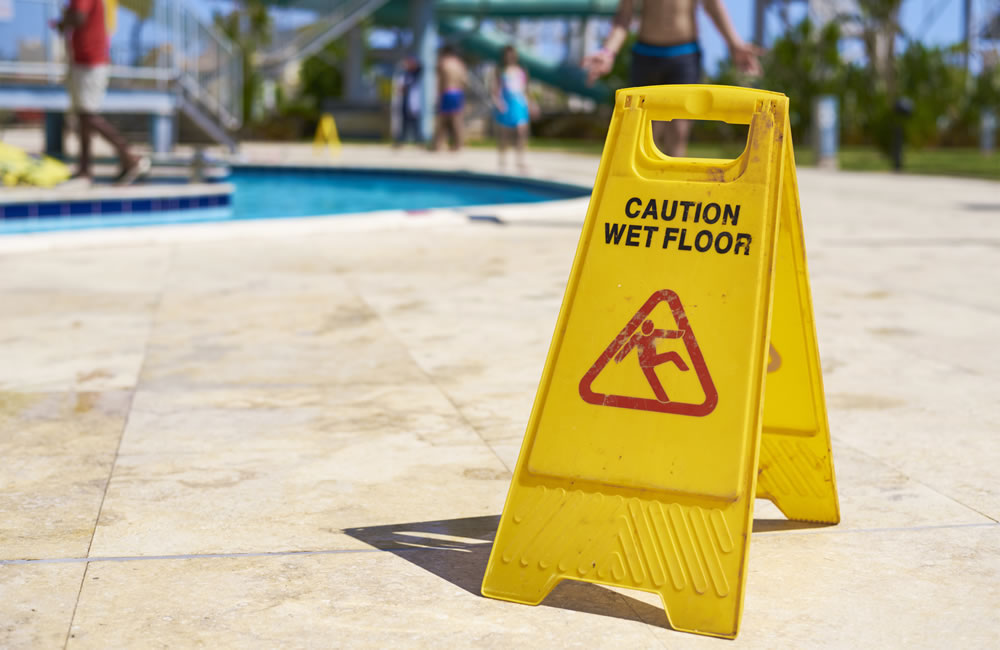
Safety begins with the environment – not just in the pool but around it and extending to the changing rooms. The flooring should be safe, clean, and free from trip hazards and slippery areas. Regular cleaning and maintenance checks can ensure this is the case.

Maintenance is particularly important in and around swimming pools, given that people, water and chemicals are all involved. Identifying any potential areas of corrosion, wear or contamination is vital when they first appear, so that remedial actions can be taken to resolve them in a timely manner.
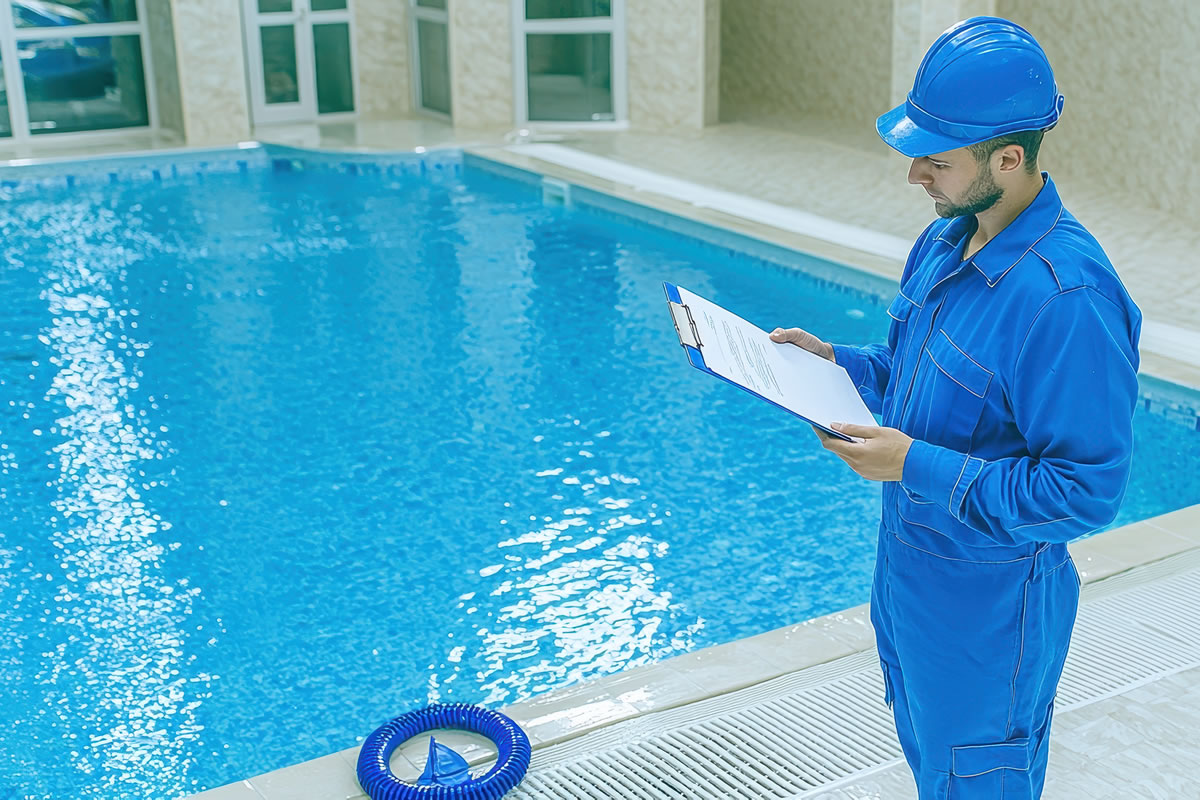
Regular pool cleaning and maintenance is essential

Relevant safety signage also has an important role to play in this area. You should determine which signs you need to show at the pool and where they must be placed. There are Safety Signs Regulations that cover this in depth which are well worth reading. One of the more obvious signs required at all pools provides depth information, so swimmers can see when they are in the shallow end or the deep end.

Are your pool outlets safe?

A pool outlet is used to take water from the swimming pool for circulation purposes. It can create a suction effect, and there have been accidents where individuals have been trapped with one of these.

You’ll notice that we mentioned outlets in plural in this subheading. That’s because having two outlets is safer than having only one, as it reduces the pressure and therefore reduces the risk of an accident. In all cases, however, the pool outlets must have suitable covers that cannot be damaged or removed by anyone using the pool. You should also check the condition of these each day and address any issues immediately.

Focusing on unauthorised access to the pool, plant room and chemical stores

Ensuring good security to prevent unauthorised access doesn’t just concern the pool – you must also make sure all chemicals, cleaning materials, plant and equipment are kept locked away and out of reach of anyone else. Security measures will vary depending on whether you manage an indoor or outdoor pool.

It’s also crucial to ensure that any electrical equipment in use is also out of bounds. Such equipment should remain in so-called dry areas where possible. In cases where sockets or other electrical equipment is required for use near the pool, it should be designed to reflect this. It should be able to withstand being immersed in water should that ever occur.

Pool maintenance and swimming pool cleaning are essential

Treating and testing swimming pool water

Water treatment and testing are both ongoing tasks, since bathers will introduce all manner of pollutants into the pool. Good filtration will help to ensure that bacteria and other pollutants are removed from the pool. Treating the water via disinfection will work alongside filtration to ensure the pool water is safe and remains clear. If it is cloudy at any point, it could indicate a problem that must be dealt with before anyone can use the pool.

While disinfection is an essential part of swimming pool cleaning and maintenance, it is important to make sure the water balance is correct. Too much disinfectant can be just as harmful as too little, albeit in different ways. Regular pool water testing to check the levels of chlorine is essential and should be done several times per day depending on how many people use the pool. You can check pH levels at the same time as well. 

Microbiological testing of pool water

Microbiological testing of pool water is more involved, and while samples can be taken by members of staff who know what to do, sample testing can only be done by a specialist laboratory. Ideally, the sample should return safe levels of microbiological activity in the pool water and your testing specialist can advise here.

Test Your Pool Water

A good example of a bacterium that can cause serious illness in humans is Legionella. This can thrive in areas where warm water between 20-45 degrees Celsius is present, especially where spray or mist is created, which can occur in hot tubs and spas. If people inhale spray that is infected with Legionella bacteria, they may go on to develop Legionnaires’ disease which is a serious pneumonia like condition affecting the lungs.

If the swimming pool or hot tub is properly maintained and cleaned, there should be no reason for Legionella bacteria to take hold. The same applies with the showers. Water heated to at least 60 degrees Celsius should be delivered via the shower head at 50 degrees Celsius for safety. Regular cleaning, disinfecting, and descaling of the shower heads is another essential task that can help to maintain safety standards.

Staff training plays a crucial role in maintaining a safe pool environment

This holds true for everyone working at the swimming pool. There should be enough lifeguards with proper training and qualifications depending on the size of the pool.

Further, anyone responsible for testing water quality, taking water samples, or managing cleaning and maintenance tasks should also be adequately trained. It is also important that everyone has knowledge of the risks posed by pool water that has not been properly treated. This will ensure that any risk of Legionella or other waterborne pathogens can be kept as low as possible, for the safety of all those working at or using the swimming pool for leisure purposes.
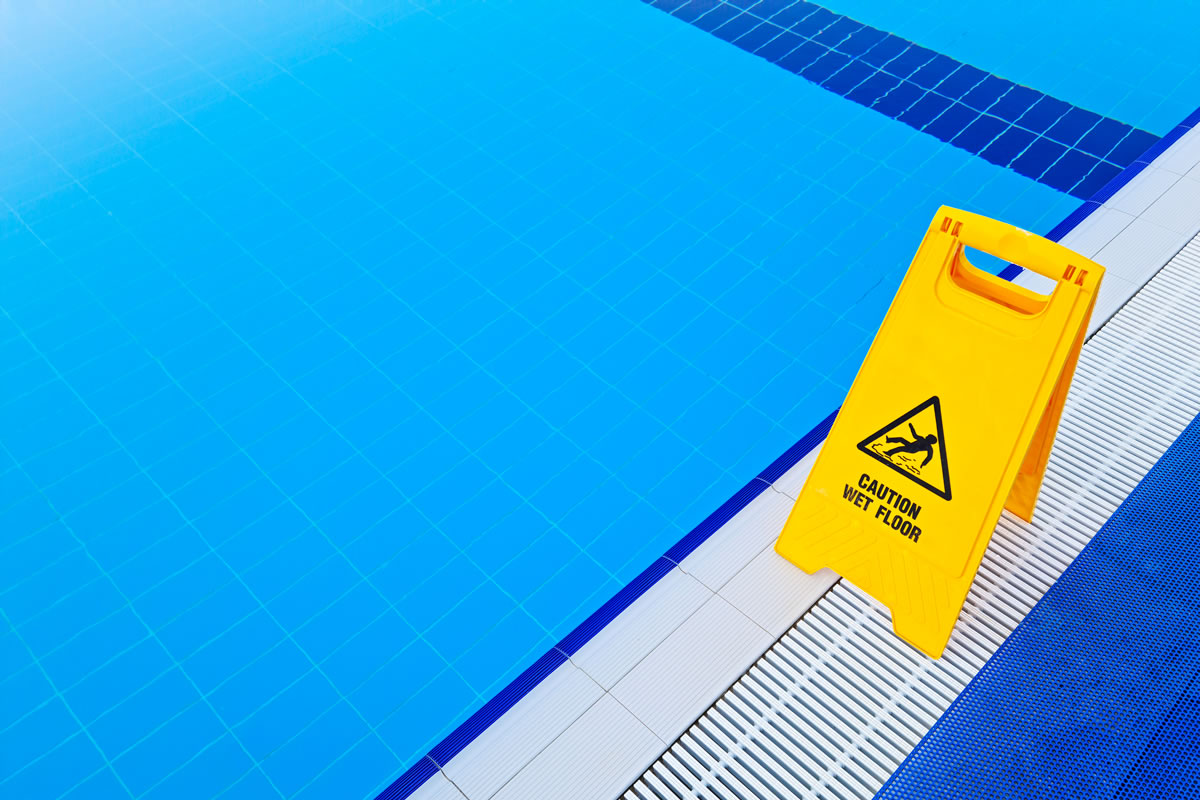
Good pool safety signage helps to maintain a safe environment

Expert pool water testing

Water Treatment Services offer a comprehensive range of water quality testing and laboratory analysis solutions to support owners and operators of swimming pools, spas and hot tubs. Our experts can provide advice and support to help you identify the most appropriate strategies for the on-going management of your pool facilities to keep them safe and in tip-top condition.

With offices in London serving the South and South East England, Manchester (North West), Birmingham (Midlands), Bristol (South East England and Wales), Leeds (North and North East) and Glasgow (Scotland), supported by regional teams of specially trained technicians, in-field specialists and consultants we can offer professional, cost effective water management and laboratory analysis solutions across the whole of the UK and internationally.

Contact us today to learn how our expert water management solutions can help keep your pool waters clean and safe to use.

Contact Us Today

Tags: Swimming Pool Water Testing, Swimming pools, Water testing
You might also like
Swimming pool related illnesses Swimming Related Pool Illnesses: Is it Safe to Go into the Water?
What is Turbidity in Water? What is Turbidity in Water?
Natural water quality, pollution, its impact on human health and testing Natural Water Quality and Pollution: The Impact on Human Health and Testing
How to safely dispose of used cooking oil How to Safely Dispose of Used Cooking Oil
Common soil contaminants and testing Common Soil Contaminants and Testing
Controlling biofilm in cooling water systems Controlling Biofilm in Cooling Water Systems
PWTAG Code of Practice for Pool Water Treatment PWTAG Code of Practice for Pool Water Treatment
What is rainwater harvesting? What is Rainwater Harvesting?

Search…

Search Search

What's New

  • Cooling Tower Compliance Check – Free Online Assessment

    Cooling Tower Compliance Check – Free Online Assessment

    How confident are you that your cooling tower management …
  • What are the 4 Main Methods for Treating Industrial Wastewater?

    What are the 4 Main Methods for Treating Industrial Wastewater?

    We all rely on water every day yet rarely …
  • Water Quality Assessment: 3 Key Areas for Safe Water Systems

    Water Quality Assessment: 3 Key Areas for Safe Water Systems

    Assessing water quality is a fundamental part of managing …
  • Water Quality Analysis for Modern Industries

    Water Quality Analysis for Modern Industries

    Understanding the quality of water used across modern industries …
  • Free Boiler Health Check & Boiler Water Treatment Assessment

    Free Boiler Health Check & Boiler Water Treatment Assessment

    Even small boiler water quality issues can lead to …
  • How to Clean and Maintain Reverse Osmosis Membranes

    How to Clean and Maintain Reverse Osmosis Membranes

    Reverse osmosis (RO) systems are relied upon to deliver …

REVIEWS

4.8
Water Treatment Services is rated 4.8 out of 5 stars (based on 103 reviews)
Read our reviews

Newsletter

Receive exciting features, news, latest research and special offers! Just add your email address and we'll do the rest.

Contact us

Water Treatment Services

[email protected]

Tel: 0330 223 31 31

© Copyright 2026 - EDG Ltd. Operating as Water Treatment Services
  • Link to X
  • Link to Facebook
  • Link to LinkedIn
  • Link to Mail
  • Home
  • About
  • Careers
  • Privacy
  • Environment
  • Reviews
  • Login[learndash_login login_label=”Login/Register” logout_label=”Logout”]
  • Sitemap
Link to: Natural Water Quality and Pollution: The Impact on Human Health and Testing Link to: Natural Water Quality and Pollution: The Impact on Human Health and Testing Natural Water Quality and Pollution: The Impact on Human Health and TestingNatural water quality, pollution, its impact on human health and testing Link to: How Important Are Biocides in Water Treatment? Link to: How Important Are Biocides in Water Treatment? How important are biocides in water treatment?How Important Are Biocides in Water Treatment?
Scroll to top Scroll to top Scroll to top

This site uses cookies. By continuing to browse the site, you are agreeing to our use of cookies.

OK

Cookie and Privacy Settings


How we use cookies

We may request cookies to be set on your device. We use cookies to let us know when you visit our websites, how you interact with us, to enrich your user experience, and to customize your relationship with our website.

Click on the different category headings to find out more. You can also change some of your preferences. Note that blocking some types of cookies may impact your experience on our websites and the services we are able to offer.

Essential Website Cookies

These cookies are strictly necessary to provide you with services available through our website and to use some of its features.

Because these cookies are strictly necessary to deliver the website, refusing them will have impact how our site functions. You always can block or delete cookies by changing your browser settings and force blocking all cookies on this website. But this will always prompt you to accept/refuse cookies when revisiting our site.

We fully respect if you want to refuse cookies but to avoid asking you again and again kindly allow us to store a cookie for that. You are free to opt out any time or opt in for other cookies to get a better experience. If you refuse cookies we will remove all set cookies in our domain.

We provide you with a list of stored cookies on your computer in our domain so you can check what we stored. Due to security reasons we are not able to show or modify cookies from other domains. You can check these in your browser security settings.

Google Analytics Cookies

These cookies collect information that is used either in aggregate form to help us understand how our website is being used or how effective our marketing campaigns are, or to help us customize our website and application for you in order to enhance your experience.

If you do not want that we track your visit to our site you can disable tracking in your browser here:

Other external services

We also use different external services like Google Webfonts, Google Maps, and external Video providers. Since these providers may collect personal data like your IP address we allow you to block them here. Please be aware that this might heavily reduce the functionality and appearance of our site. Changes will take effect once you reload the page.

Google Webfont Settings:

Google Map Settings:

Google reCaptcha Settings:

Vimeo and Youtube video embeds:

Other cookies

The following cookies are also needed - You can choose if you want to allow them:

Privacy Policy

You can read about our cookies and privacy settings in detail on our Privacy Policy Page.

Privacy
Accept settingsHide notification only