How to Clean and Maintain Reverse Osmosis Membranes
Reverse osmosis (RO) systems are relied upon to deliver a consistent supply of high-quality water, whether in industrial settings or onboard vessels operating far from port. At the heart of the process is the RO membrane, which must operate under pressure while retaining salts, minerals and biological contaminants. Without proper care, these materials accumulate on the membrane surface, reducing efficiency and output. Regular cleaning and proactive maintenance help preserve membrane performance, extend service life and ensure the system continues to produce potable water at the required rate.
This article explains how fouling develops within reverse osmosis membranes and why it can quickly become a problem if left unchecked. It covers the main types of membrane fouling, the importance of routine monitoring such as permeate flow checks, and practical measures to prevent performance loss. You’ll also find guidance on pre-treatment, approved antifoulants and biocides, and when more intensive cleaning methods such as Clean-in-Place procedures are required to restore the system to optimal operation.
Reverse osmosis for industrial and maritime applications
Reverse osmosis is a process used to purify water using a special semi-permeable membrane. The water to be processed is forcibly pushed through the membrane using high pressure, while impurities in the water cannot pass through and are then left behind on the other side. This is a common method used in industrial processes and onboard boats and ships, especially in situations where they may be at sea and far away from port for significant lengths of time. Such scenarios mean they would be without enough potable water to use if they didn’t resort to reverse osmosis procedures.
While seawater is comprised mainly of water, at around 96.5% of the total, it also contains around 2.5% salt. The remaining 1% is comprised of dissolved and suspended solids, along with various biological contaminants. While reverse osmosis cannot remove everything during the desalination process, it does an excellent job of removing most contaminants from seawater.

Understanding reverse osmosis membranes and what’s left behind
We’ve seen that the RO process removes various solids, particles, and biological contaminants from water. Those are naturally left behind as potable water is produced from the RO process. This is known as fouling and describes an accumulation of materials on a surface that will cause issues if not removed. In the case of RO, fouling will occur in three ways.
Minerals causing membrane scaling
As the water is pushed through the RO membrane, waste elements are left behind. These will include various minerals, most notably calcium. The calcium deposits will naturally build up by the membrane as the water passes through, and the minerals are left behind.
Build-up of suspended particles on the membrane
The membrane will ensure these particles do not pass through as it creates potable water on the other side. The pressure used for reverse osmosis will also cause these particles to congregate by the membrane.
Microbial contamination of the RO membrane causing biofouling
Many kinds of microbiological contamination will become caught by the membrane and remain there if it is not regularly cleaned. If the conditions are right, the microbes can multiply and cause additional issues.
If fouling is allowed to occur and build up, it will lead to far less water being made available via RO for use. It will also prevent the system from working efficiently and will require far more intense cleaning and treatment of the membrane to be able to bring it back to its optimum performance.
Daily checks can help identify potential membrane issues
Reverse osmosis only works as well as the quality of the membrane used. If this is not properly maintained, the process of RO will become more difficult and less effective. We’ve seen how many contaminants you can remove via the process, but this can only continue if you regularly clean and maintain the reverse osmosis system.
Checking permeate flow
An important indicator of how well the membrane is functioning involves checking the permeate flow. This refers to the rate at which water comes through the membrane. If the membrane becomes too clogged with contaminants, the permeate flow will drop. This indicates there is an issue and that membrane cleaning and maintenance is required.
You can check the permeate flow rate each day to keep track of performance and any potential issues. If the flow rate drops by 10% or more, this indicates you need to clean the RO membrane to improve performance.
The idea is to make sure you are aware of what’s happening inside the system. You won’t be able to view the membrane but checking permeate flow is an excellent indicator of whether contaminants have built up to the point where the membrane is no longer working at its best. If you remain alert to any drop in flow, you can tackle the problem and develop a membrane cleaning routine to suit your needs.
Obviously, the more water you push through the RO membrane, the faster it will foul up. This indicates that you need to clean it more often. If the RO system is being used onboard a boat or ship can then adjust this to reflect times when you’re out on the water and times when you’re in dock.
Cleaning and maintenance of RO membranes
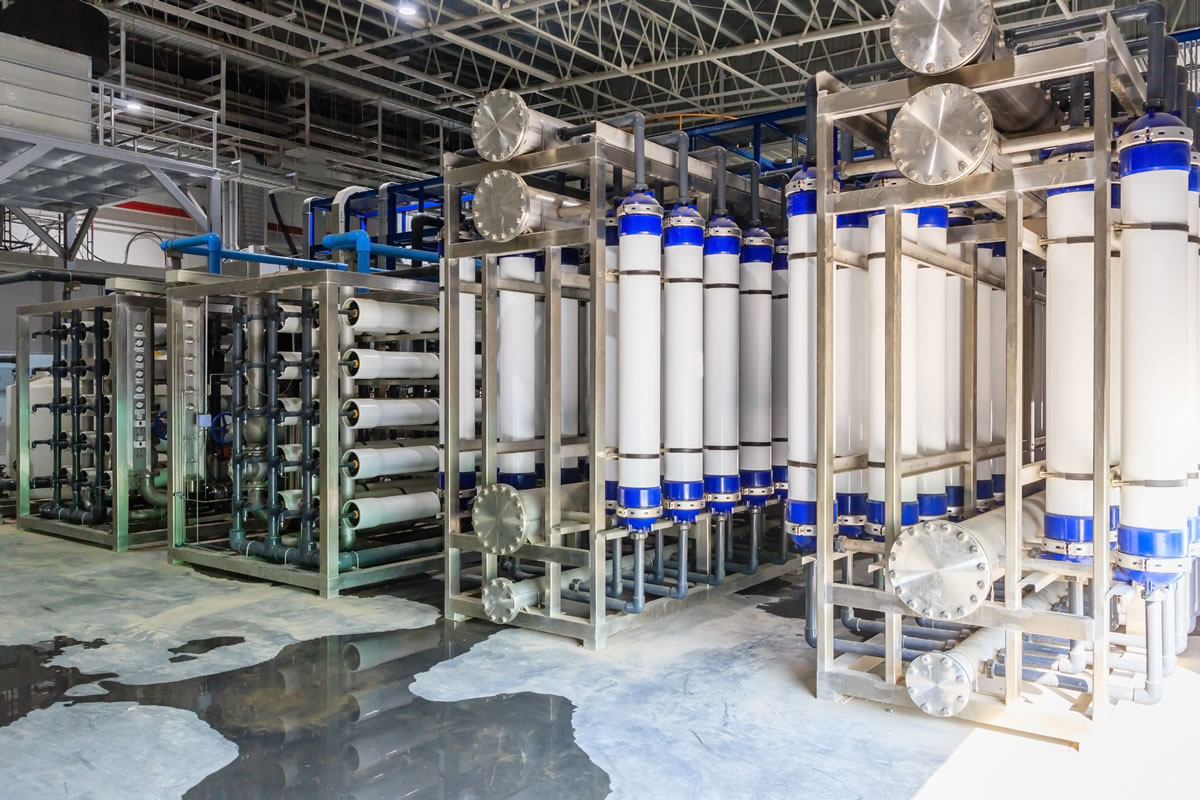
The first line of defence for the maintenance of any RO system is to ensure you have pre-filtration beds in place. These will remove solids suspended in the water to be treated / seawater that passes through the membrane. The beds are positioned prior to the pumps that push the water through at high pressure. This process thereby ensures the water is already cleaner when it reaches the membrane, acting as an effective pre-treatment routine that minimises the issues caused by fouling.
RO membrane antifoulants
As we’ve seen, regular RO membrane cleaning will help to ensure the system remains in excellent condition. You should only ever use approved products designed for this purpose. Specialist antifoulants are available to treat RO systems, providing a chemical solution to add to the feedwater, that is, the water going into the RO system prior to reaching the membrane. This inhibits deposits from forming on the membrane and reducing the overall efficiency of the system.
The specific reverse osmosis antifoulant you use may depend on where you are. You can select a specialised product designed to act on common scaling in RO membranes, depending on the type of water you are feeding into them. You can also use an RO biocide to tackle biological fouling, which will deal with any microbiological contaminants in the water.
Proactive reverse osmosis membrane maintenance
Prevention is far better than waiting until the membrane develops problems and the permeate flow rate drops. This may not take long to occur either. In some cases, particularly if the permeate flow drops significantly, you will need to take the system offline and employ a Clean-in-Place (CIP) procedure. This allows you to add the relevant cleaning agents to the system and circulate them through the water from one end to the other. Flushing is then required to remove all residual treatments before the system can be brought back online.
Fouling of various types is clearly an issue that can prevent RO membranes from working effectively. Whether you’re running an industrial process or at sea, it can be a significant problem as it prevents you from getting the potable water you need each day. Thus, employing a consistent maintenance and cleaning programme will ensure the reverse osmosis membrane always performs at its best.
Bringing it all together
Maintaining reverse osmosis membranes is not a one-off task, but an ongoing process that underpins the reliability and efficiency of the entire RO system. As outlined throughout this article, fouling can take several forms and develop quickly, particularly in demanding environments or where systems are operated continuously. By understanding how and why membranes foul, carrying out regular performance checks, and adopting a preventative approach to cleaning, operators can avoid unnecessary downtime and costly remedial work.
A well-planned maintenance routine, supported by effective pre-treatment and the correct use of approved antifoulants and cleaning procedures, ensures RO membranes continue to perform as intended. Whether supplying potable water at sea or supporting an industrial process, consistent care of the membrane helps safeguard water quality, system efficiency and long-term operational reliability.
Leading water treatment specialists
At Water Treatment Services we help businesses across the UK and Ireland get the best from their water systems. Our specialist teams provide expert advice, water treatment solutions, water quality analysis and ongoing support to improve efficiency, manage water risks, and ensure compliance with regulatory standards. With offices and engineers based nationwide, we can deliver cost-effective, practical solutions wherever you are.
Contact us today to learn how our borehole water treatment solutions can help you.