
Water Tank Cleaning: Why and How Should You Do It?
In this article the water hygiene specialists at Water Treatment Services highlight the importance of water tank cleaning, explaining why it’s needed and how to do it properly.
The article focuses on the potential risks from waterborne pathogens associated with water storage tanks, the problems caused by stagnation, the importance of regular cleaning and disinfection, and how to do it correctly.
The essentials of water tank cleaning
Domestic water tanks store water to use in a variety of situations. Since these tanks are designed to store larger volumes of water, the flow of water in the tank won’t be as frequent as the flow of water through pipes that are used to distribute the water.
All parts of a hot and cold water system should be risk assessed for the dangers associated with Legionella bacteria. They should also be regularly checked and cleaned, and maintained to ensure they are working properly and do not carry any undue risk to those people using the system. In terms of a water storage tank, an understanding of the risks posed by legionella and other bacteria is essential if the tank is to remain safe to use.
What is legionella?
Legionella is a type of bacteria responsible for causing respiratory illnesses in people who inhale fine water droplets and vapour containing the bacteria. A mild version of the illness is known as Pontiac fever, whereas the more serious version – a form of pneumonia – is called Legionnaires’ disease.

While the bacteria can cause serious illness, it is possible to keep it under control in hot and cold water systems. The process begins with a legionella risk assessment which will provide an understanding of how legionella can multiply in certain water sources such as water tanks.
Conducting a legionella risk assessment
A legionella risk assessment should be done for all the water systems in a building, including the water storage tanks. However, for the purposes of this article, we’ll focus on the risks associated with the water tanks.
A domestic water tank is designed to store water, so there is an increased risk of bacteria like legionella multiplying in the tank compared to pipework, taps, and other features of the water system that are in frequent use.
Legionella is always a greater risk when found in areas of low flow or slow water circulation. It likes to multiply undisturbed in stagnant water. A water tank won’t reach the levels of stagnation seen in a dead-leg or disused run of pipework (something that can easily be removed), it will still experience a certain level of stagnation which can increase the risk.
British Standard BS 8558:2015 is a great resource covering the design, installation, testing and maintenance of water for domestic systems
How to minimise stagnation in water tanks?
While it is impossible to entirely prevent this happening, it is possible to take measures to reduce the level of stagnation seen if it is present in water tanks. For example, there may be cases where the tank in use is too big for its purpose. Replacing it with a smaller tank would be ideal in this scenario.
In other cases, there could be problems somewhere in the water system that mean the flow rate is not as good as it could be, thereby increasing the risk of stagnant water inside the tank. Identifying and solving such cases can improve the condition of the water in the tank, reduce the presence of stagnant water. This in turn will reduce the opportunity legionella and other bacteria have to colonise that part of the water system.
The importance of regular water storage tank cleaning
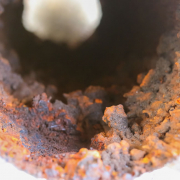
A new water storage tank will always be in better condition than an old one that has been in place for many years. It can be home to rust from the inside of pipework, sediment in the water, and other debris that either gets into the tank or comes in via the main water source.
Tank cleaning should always be done by specialists who have been trained and certified to carry it out correctly. Individuals should also have PPE equipment to protect them from any bacteria, spray, or debris that might be generated or removed. It is also wise to display signs before the work begins, to ensure that no one else is in the area during the process.

The British Standard BS8558:2015 covers all areas of supplying water for domestic use, including maintenance. It is wise to familiarise yourself with this document as part of the process of cleaning water tanks.
How to clean a water tank?
The storage tank should always be isolated and drained before cleaning begins. Photographing the tank before and after draining it is highly recommended, so the photos can form part of the record process.
The empty tank can then be scraped clean of all debris on the inner walls. A wet vac should be used to remove all debris left in the tank. The water tank can then be inspected for any damage or issues still present. When the tank is refilled and flushed, it is necessary to inspect the walls in case of leaks.
Finally, disinfection and chlorination of the water can take place, calculating the amount required for the size of the tank. Outlets are then tested before neutralising the chlorine in the water and recommissioning the water system.
BS8558:2015 lays out all requirements for water tank cleaning. You must have the level of expertise required to carry out this task. If not, you can enlist the help of a professional water hygiene specialist to carry out water tank cleaning regularly on your behalf.
Expert water management solutions
Water Treatment Services offer a range of specialist water management solutions to support those responsible for the safety of water systems including business owners, landlords, the statutory duty holder and responsible person.
Contact us today to learn how our legionella and water safety specialists can help you manage your water systems, maintain regulatory compliance and so keep people safe.
With offices in London serving the South and South East England, Manchester (North West), Birmingham (Midlands), Bristol (South East England and Wales), Leeds (North and North East) and Glasgow (Scotland), supported by regional teams of specially trained technicians and engineers we can offer specialist Authorising Engineer support, legionella risk assessments, training, water quality analysis and other risk management solutions throughout the UK and Internationally.
Contact us today to learn how our water safety and legionella management solutions can help you.