
How to Reduce Water Consumption in Industrial Water Treatment
Every industrial site relies on water in one way or another, but very few use it as efficiently as they could. Sites where perfectly usable water is routinely sent to drain, old and dilapidated treatment equipment wastes thousands of litres every week, or simple changes to processes or equipment could have reduced both water use and operating costs. Taking a better look at how businesses treat their water, how it’s recovered and eventually reused can often reveal big savings without affecting production or water quality.
This guide explains some of the most effective ways to reduce water use in industrial water treatment. It covers various technologies including reverse osmosis, biological treatment and advanced oxidation processes, together with practical ideas for reusing treated wastewater around your site. We’ve also included a comparison of common treatment methods, FAQs and tips to help you spot opportunities to improve water efficiency, reuse and reduce wastewater costs.
Water is not an infinite resource
Water is not an infinite resource, which means we should be smart in how we use it – and in how much we might waste. Many industries and businesses use vast amounts of water each day, so the potential to make savings in this area is clear. But how can this be done?
In this article, we’ll look at some of the ways industrial sites can reduce the amount of water they use. We’ll focus on some of the leading water treatment methods that can provide safe water for various purposes, while wasting as little as possible in the process.
Reverse osmosis for water recovery and reduced consumption
This is a membrane filtration process, whereby water goes through a membrane to get rid of any impurities that might be present. There are other membrane filtration options as well, but reverse osmosis is one of the more familiar and commonly used methods available.
This separation process means that only a tiny amount of water is lost as the contaminants are removed from it. Most will be available for use once it has been processed in this way. It is also possible to repeat the process if desired or required, thereby preserving more water in a cleaner state that is ready for reuse in a variety of ways.
While standard reverse osmosis processes may be sufficient for some businesses and scenarios, others may opt to upgrade to a high-efficiency reverse osmosis system (sometimes referred to as HERO for short). Several options are available on the market, with water recovery rates often achieving 90% or higher.
These advanced options can be used across a range of industries, including wastewater treatment locations, healthcare facilities, and the food and drink industry among many more. The system is designed to ensure more water is available after purification, which means less is discharged as waste.
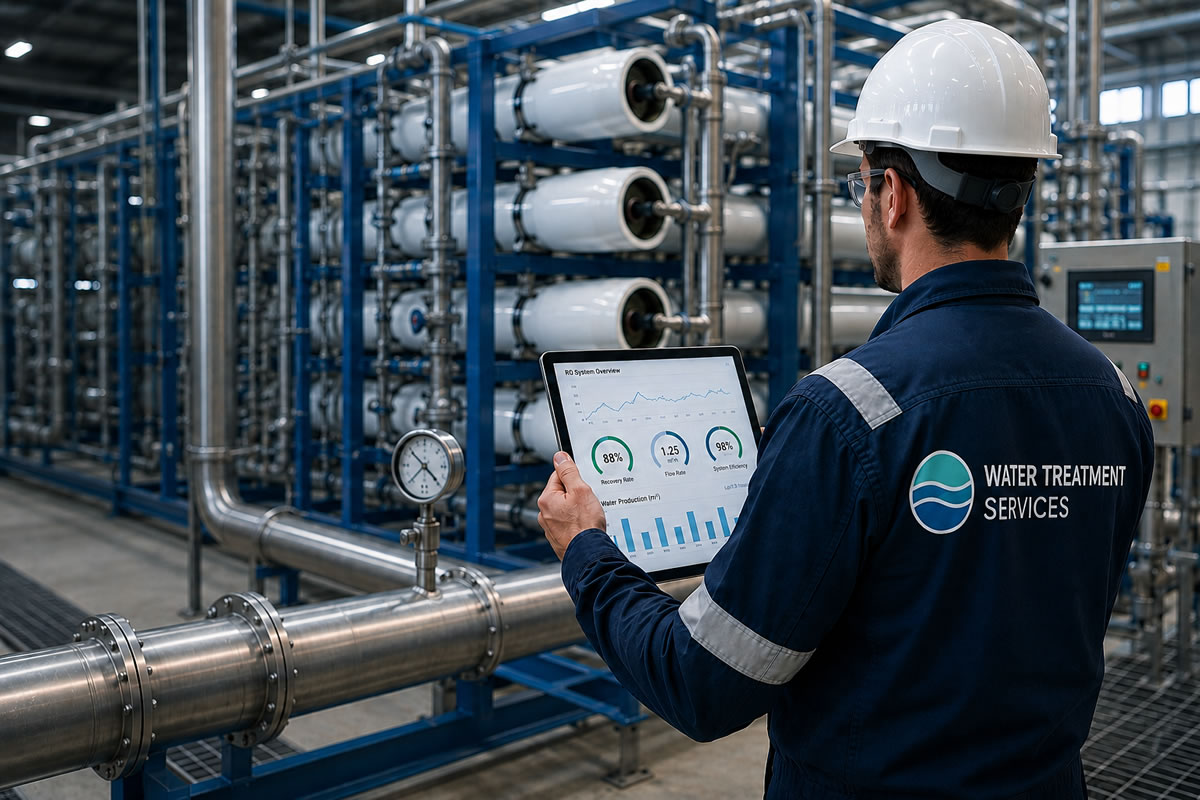
| A Water Treatment Services engineer reviewing the performance of a commercial reverse osmosis system to improve water recovery and reduce industrial water consumption.
Biological water treatment for industrial water reuse
Biological treatment covers many options, but they all involve using microbial activity to remove pollutants present in the water. Organic matter is usually present in wastewater, so it makes sense that microorganisms should break down that matter to assist in its removal. Such methods may include aerobic wastewater treatments, anaerobic treatments, and activated sludge.
The available range of options for biological water treatment gives more scope for industries to use the most relevant and practical one for their needs. This may depend on size, scale, and the amount of water available for treatment.
The main advantage of using biological methods is that there are plenty to choose from. It’s also known for reducing the amount of wastewater taken from the process.
Advanced oxidation processes (AOPs) for wastewater treatment and water recycling
Next up, we have AOPs – advanced oxidation processes that use chemicals to treat wastewater. These will usually remove organic matter in the water, although inorganic matter can sometimes be removed too. Typical examples involve ozone treatments, although organic matter can also be removed via UV disinfection.
The ozone treatment leads to the presence of hydroxyl radicals in the treated water, often combining UV light and ozone to achieve this purpose. Any pollutants that are present in the water will then be oxidised and broken down. Ozone is a good option in many cases because it is powerful enough to break down lots of pollutants. This means it is ideal for numerous scenarios, even where more complex pollutants are present.
Comparing industrial water treatment methods for water saving
| Method | Typical Water Saving | Capital Cost | Best Applications |
|---|---|---|---|
| Reverse osmosis | High | Medium | High purity water |
| Biological treatment | Medium | Medium | Wastewater treatment |
| Water reuse | High | Low-medium | Manufacturing |
| Smart monitoring | Medium | Low | All industrial sites |
| Cooling tower optimisation | Medium-high | Low | HVAC and industrial cooling |
Reusing treated water for non-potable industrial applications
Water can be used for all kinds of applications and processes. Some processes require potable water – that is, water that is safe to drink. However, there are many other industrial applications where non-potable water would be fine to reuse.
Non-potable water has still been treated to reach a safe level for use in such scenarios. For example, many cleaning processes are fine to complete using non-potable water. This means all wastewater generated by an industrial plant can be processed, treated and then reused for cleaning purposes. There could be many ways in which this could be done. Another example might involve irrigation purposes that may not require potable water.
Making better use of water across your site
Every business has its own requirements for and demands on the water supply it receives. Some may simply choose to use that water supply and do what’s necessary to make sure all discharged wastewater is safe to get rid of.
However, as we have seen, there are multiple ways that wastewater can be treated to reduce the amount that leaves the plant. If even 15% of the water normally got rid of as wastewater could be recycled through the plant and reused for other purposes, that’s a lot less water that needs to come into the plant.
If you’re considering how you might be able to recycle, treat, and reuse wastewater to ensure you are using as much as you can, it is a good idea to consider what you are doing at present. It may be that you have one or two methods in place, but are those methods achieving the best water reuse results for you?
Technology always improves, so even if you have an older reverse osmosis process in place, you may find you can improve the results and recycle more water if you switch to a high efficiency method.
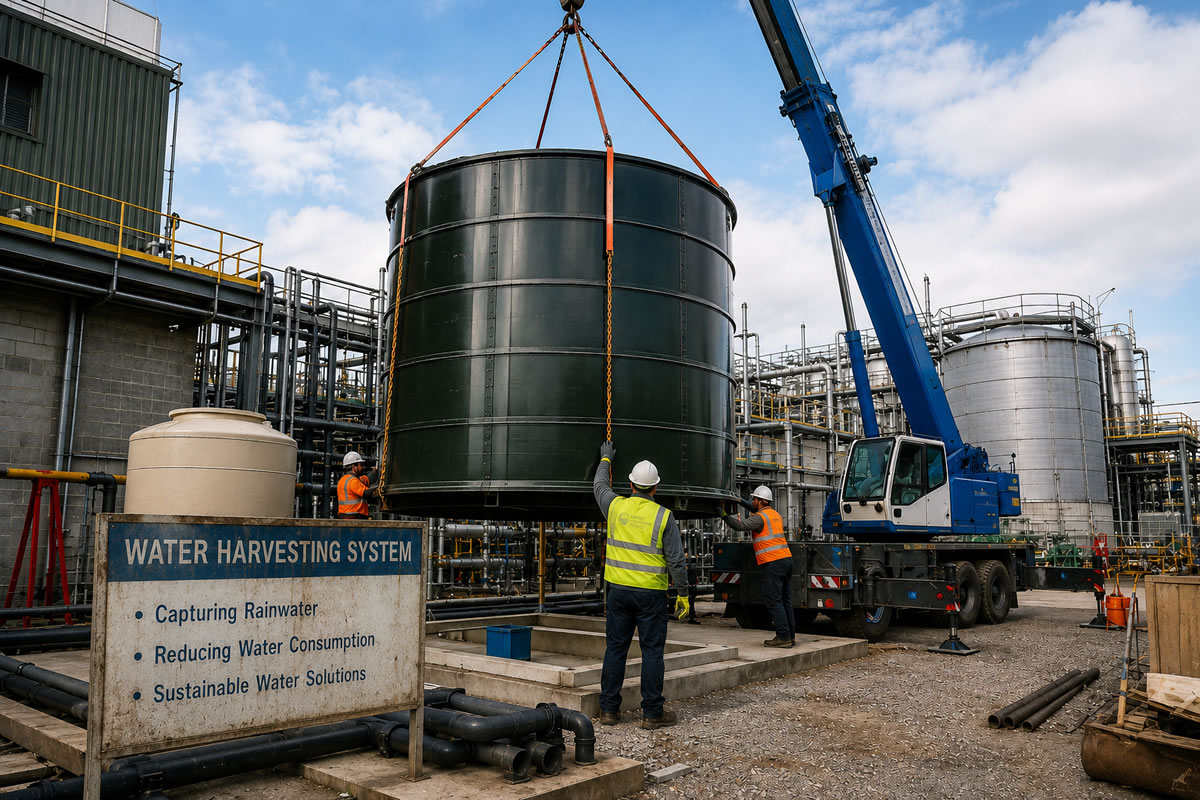
| Installation of a commercial rainwater harvesting tank to help reduce industrial water consumption and increase the use of recycled water on site.
FAQ about reducing water consumption during water treatment
Can industrial wastewater be reused?
Yes. Lots of businesses treat wastewater and reuse it for jobs like equipment cleaning, cooling systems or irrigation. This reduces water use and cuts the amount of wastewater sent to drain.
How much water can reverse osmosis recover?
It depends on the system, but lots of industrial reverse osmosis systems can recover between 70% and 90% of the incoming water. Modern high-efficiency systems can achieve even better results.
What is the most water-efficient treatment process?
Unfortunately, there isn’t one solution that suits every site. The best results should be based on how your business uses water and typically come from combining treatment with recycling and reuse.
How do you calculate water recovery?
Water recovery is simply the percentage of treated water you get back compared with the amount that entered the system. The higher the recovery rate, the less water is wasted.
Is rainwater suitable for reuse in industrial processes?
In many cases, yes. After treatment, rainwater can often be used for cleaning, cooling systems, irrigation and other non-drinking applications.
Can cooling tower water be recycled?
Yes. Many cooling systems can be adapted to reuse more water. Good water treatment also helps improve efficiency and reduce water use.
How can businesses reduce wastewater charges?
Using less water, recycling treated water and reducing the amount of wastewater discharged can all help lower trade effluent and water bills. A water audit will often identify simple savings.
What industries benefit most from water reuse?
Any industry using large amounts of water could benefit from better water reuse including manufacturing, food production, healthcare, hotels, chemical processing and power generation.
Does water recycling improve ESG performance?
Yes. Recycling water helps reduce water consumption and wastewater discharge. This makes it easier to demonstrate improvements in sustainability and environmental performance.
What’s the difference between water recycling and water reuse?
Water reuse means using treated water again for another purpose. Water recycling usually means treating wastewater and returning it to the same process.
What are the benefits of reducing water use in industry?
Reducing water use doesn’t just help protect a valuable resource, it also makes a big difference to operating costs. Using less water and reducing the amount of wastewater sent to drain can lower both water and trade effluent charges. Better water management also supports sustainability goals, helps businesses cope during periods of water scarcity and reduces the environmental impact. Over time, even small improvements can lead to savings and a more efficient, resilient site.
How Water Treatment Services can help reduce industrial water use
Depending on your experience, you may recognise one or more of the water reuse methods we’ve gone through above. However, seeking expert advice and insight on this topic will certainly make it easier to determine if and where any improvements could be made.
It could be that you are able to reuse some wastewater as non-potable water now – you may simply never have considered it before. Alternatively, switching to alternative methods of wastewater treatment could see a higher percentage of wastewater ready for reuse in one or more ways around the site. This insight can help you decide what’s best for your business from now on – both from a water saving point of view and for cost effectiveness going forward.
Contact Water Treatment Services today to discuss your requirements and discover how a water audit can identify opportunities to save water, improve reuse efficiency, and reduce costs.





 Water Treatment Services