What are the 4 Main Methods for Treating Industrial Wastewater?
We all rely on water every day yet rarely give much thought to what happens once it disappears down the drain. Wastewater is the inevitable result of domestic, commercial and industrial activity, and it cannot simply be returned to the environment without careful management. Effective treatment is essential to remove contaminants, protect public health and minimise environmental impact. In simple terms, most industrial wastewater treatment processes fall into four main categories, each playing a distinct role in turning used water into something that can be safely discharged or reused.
In this article, we take a closer look at those four key methods – physical, chemical, biological and sludge treatment – and how they are applied in practice. We’ll explore how each approach works, where it is most effective, and why multiple methods are often used together to achieve the best results. We also consider how to determine the most suitable treatment option for different types of industrial wastewater, the benefits of expert water analysis, along with the growing importance of sustainable and modern treatment techniques.
Understanding the main industrial wastewater treatment methods
We all use water in various ways throughout each day. We rarely think too much about it unless we turn on a tap and nothing happens. Taking it for granted is understandable, but where that water goes … and what happens to it after it’s been used is a journey that’s worth knowing more about.
Water that’s been used in the home, in industry and in the wider environment, is often referred to as wastewater. This is not potable water, i.e. it cannot be used to drink or use again without some form of treatment. Fortunately, there are various methods in use that can help us treat this wastewater. That’s what we’ll focus on in this article.
What are the four main methods of wastewater treatment?
You might see more treatment methods than this appearing on some lists or in other articles. However, oftentimes, more than one of the methods on those lists falls under the same umbrella category. Here are the four main treatment areas to consider:
1. Sludge treatment
This involves separating the sludge from the wastewater.
2. Chemical treatment
This involves the use of speciality chemicals to treat the wastewater. Products typically include biocides, flocculants, coagulants and more.
3. Biological treatment
Biological treatment involves the use of special microorganisms to break down the organic matter present in the wastewater
4. Physical treatment
Physical treatment often involves the use or specialist plant and equipment. Screening and filtering are two examples of physically treating wastewater to remove particles and sediment
You can see there are often several methods included under each of the main treatment methods listed above. For example, a combination of different chemicals may be required if adopting a chemical treatment approach.
There are many ways to remove sediment via physical treatment, such as the use of a centrifuge to spin out the water and separate it from what’s left behind. A centrifuge is also used to separate sludge from wastewater.
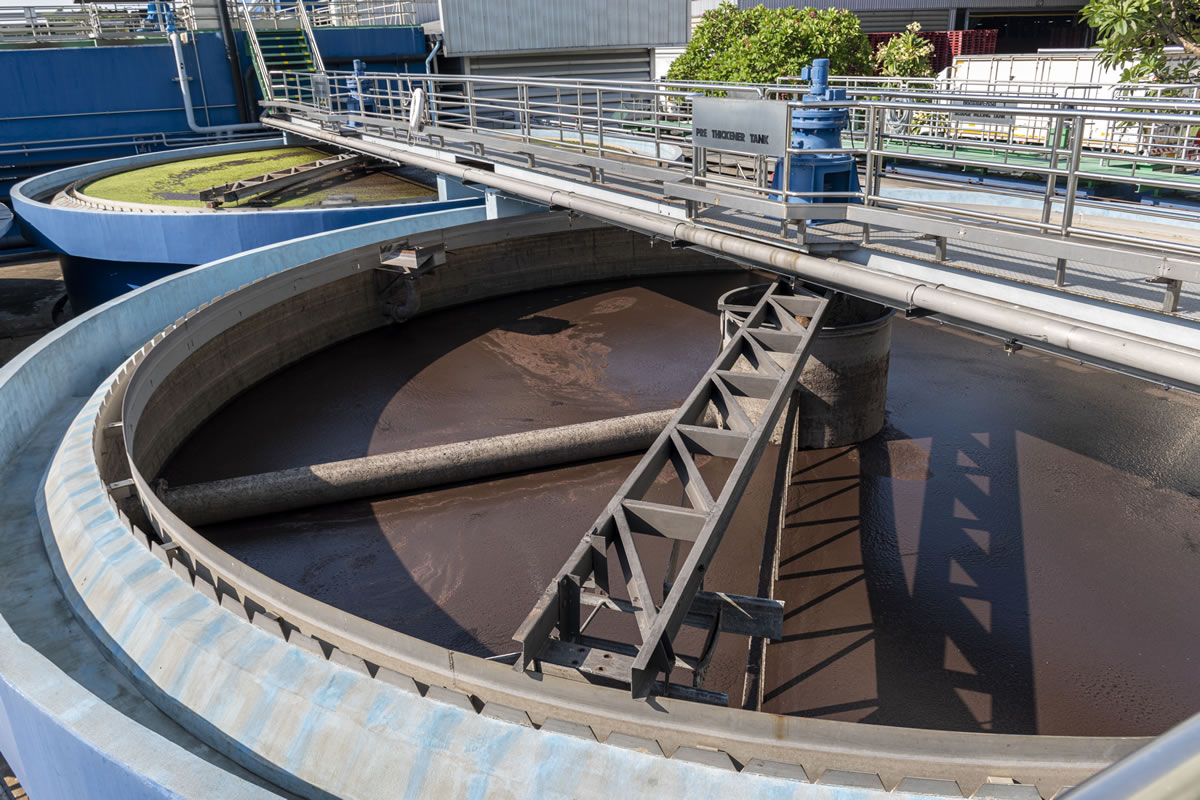
Sedimentation is another example of a physical treatment. Since sediment will be heavier than the water it is suspended in, it can be left to settle to the bottom of a “settlement tank” before the water is separated out for removal.
What is the best method for the treatment of industrial wastewater?
The best wastewater treatment methods can vary depending on the circumstances, the type and levels of contamination, the venue where the wastewater is being treated, and where the wastewater came from. However, chlorine is one of the most common methods used for this purpose. Chlorine is a tried and tested, cost effective chemical treatment designed to get rid of all kinds of bacteria and viruses that might be present in the water. It’s been used to disinfect drinking water for well over 100 years, with the first continuous, large-scale use starting in the USA in the early 1900s.
Another treatment option, often called pH correction, where contamination has made the water either acidic (below pH 7) or alkaline (above pH 7) is to neutralise the wastewater by bringing the pH back to 7 (neutral).
Selecting the best methods for the treatment of wastewater depends on a number of factors including the type of industry, the type and levels of contamination created, and the requirements of any discharge permits in place.
What is the most sustainable form of wastewater treatment?
Forms of biological wastewater treatment is top of the list in this department. Not all industrial wastewater can be treated in this manner, though. It tends to be reserved for water that has previously been used by humans, rather than water derived from industrial processes.
Typical examples would involve water that carries waste away from a domestic residence, along with water that has been emptied out of a sink after washing up. Water from baths and showers would also fall into this category.
Wastewater can be composted if a source of carbon is added to it to trigger an aerobic process of breaking down organic matter within it. Bacteria can also be used to break it down, using oxygen to do so … aerobic biological treatments. The matter within the wastewater ends up releasing carbon dioxide, so all the unwanted matter will decompose and eventually disappear.
The opposite to this is the use of anaerobic biological treatments. These trigger fermentation to raise the temperature of the organic matter to break it down. In each case, though, the result is the same … wastewater is processed using biological methods that do not involve any chemicals or machinery.
Is modern industrial wastewater treatment effective?
Yes, if done properly and the correct or most suitable method or methods is selected for treatment in each case. Wastewater comes from many sources, not just from private homes. It may be derived from various industries, from building sites, and almost every other business you can think of.
Industrial wastewater is often a byproduct of certain business, industrial and manufacturing processes. This means it is important to consider the elements contained within the wastewater. Clearly, wastewater taken from a private residence would be very different to that taken from say a metals processing factory or from any other business premises.
For example, it could be that your business creates a lot of sludge. This might mean enlisting a business to tanker away the sludge and treat it for you to separate the components and remove the water. In other cases, biological treatments might make more sense.
What are modern methods of wastewater treatment?
Biological treatments get plenty of headlines here because they are far more sustainable than other methods. However, they’ve also been around for a long time. People have used aerobic and anaerobic methods to treat wastewater since the 1800s!
Today, this method is still in use, but modern alternatives include advanced filtration including reverse osmosis, distillation, and chlorination. We also use flocculation and coagulation in certain cases, and even UV light as a chemical-free, physical disinfection alternative to kill microorganisms, bacteria, and viruses.
Identifying the best wastewater treatment methods for your business
Breaking down industrial wastewater treatments into four main categories is therefore only the beginning. If you are looking at ways to treat the wastewater your business is creating, it’s best to get a sample of your wastewater professionally assessed first, so that you know for sure what it contains. This information will then help you work out which method is best to use.
In each case, there might be an option to treat your own wastewater locally on site, depending on which method would work best, and whether you’ve got room to add any necessary equipment. It can certainly be more eco-friendly to tackle this element yourself, and that will look good for business.
You should also consider that more than one treatment method might be needed in your case. For example, larger solids might need to be removed by one method, followed by another process used to remove dissolved solids or organic matter. Again, it comes back to testing and then evaluating your wastewater before deciding on the right approach. Consulting an expert in wastewater treatment like Water Treatment Services is the best option to begin with, as you can get the right advice on how to proceed.
Expert wastewater treatment support for businesses
Understanding the four main methods of wastewater treatment is an important first step, but in practice, achieving the right outcome often depends on how those methods are combined and applied. No two wastewater streams are exactly alike, which is why a tailored approach is essential. By assessing the composition of your wastewater and identifying the specific contaminants present, it becomes far easier to determine which treatment processes will deliver the most effective and efficient results.
At Water Treatment Services, we work closely with businesses across a wide range of sectors to provide that level of clarity. From initial testing and analysis through to recommending and implementing suitable treatment solutions, our aim is to ensure your wastewater is managed safely, compliantly and cost-effectively. Whether you require support with chemical dosing, biological treatment or physical separation processes, our team can guide you towards a solution that meets both your operational needs and your environmental responsibilities.
Contact Water Treatment Services today to discuss how we can help develop cost effective solutions that meet both your operational needs and environmental responsibilities.