• Link to X
  • Link to Facebook
  • Link to LinkedIn
  • Link to Mail
  • Call Me Back
  • About
  • Knowledge
📞 Call us on 0330 223 31 31
Water Treatment Services
  • Home
  • Water
    • Applications
      • Boiler Water Treatment Services
      • Cooling Water Treatment
      • Closed Loop Water Treatment
    • Services
      • Cooling Tower Cleaning Services UK
      • Cooling Tower Maintenance
      • Chlorine Dioxide Water Treatment Services
      • Commercial Water Softeners
      • Expert Witness Services
      • Pre-Commission Cleaning
      • Tank Reline & Repair
      • TMV Servicing
      • Water Chlorination & Disinfection
      • Water Leak Detection
      • Water Testing
        • Drinking Water Testing Services UK
        • Testing Water for Heavy Metals
        • Pool Water Testing
        • BSRIA Closed System Testing
        • SDI Testing & Analysis
        • Trade Effluent Testing
    • Training
      • Water Treatment Training
      • Basic Chemistry of Water
      • Industrial Treatment
      • Pre-Treatment
      • Boiler Treatment
      • Cooling Systems
      • Closed Systems
      • Wastewater Training
      • Advanced Treatments
      • Training Dates 2025
  • Wastewater
    • Testing Water for Heavy Metals
    • Trade Effluent Testing
    • Wastewater Training
    • Expert Witness Services
  • Air
    • Ductwork Cleaning
    • Indoor Air Quality
    • Local Exhaust Ventilation Testing
    • Mould Testing
    • Expert Witness Services
  • Energy
  • Contact
  • Click to open the search input field Click to open the search input field Search
  • Menu Menu
You are here: Home1 / Knowledge2 / Testing water for metals

Posts

What is aerobic wastewater treatment?

What is Aerobic Wastewater Treatment?

This technical guide explains the process known as aerobic wastewater treatment, and how it is used to improve the quality of industrial wastewater streams. The guide looks at what the process involves, and how it works. It also considers each of the most popular types of aerobic system used by businesses including activated sludge, fixed bed bioreactors, moving bed bioreactors, membrane bioreactors and biological trickling filters.

Read more →

Drinking water testing

Drinking Water Testing Services UK

Drinking Water Testing for Mains, Private Water Supplies, Boreholes & Wells

Drinking water testing & water quality analysis

Specialist drinking water testing and analysis

Water Treatment Services is a leading water, air and environmental specialist offering expert laboratory services including drinking water testing and analysis of both mains fed (tap water) and private water supplies (including boreholes, wells and other watercourses) to organisations and private individuals throughout the UK and Ireland.

Our potable water analysis procedures incorporate tests for metals and heavy metals, chemical and microbiological analysis, and in-field sampling services.

What is drinking water?

Drinking water, also known as potable water, is water that is considered safe for human consumption. It should be free from harmful contaminants such as bacteria, viruses, chemicals, and heavy metals that could cause illness. It comes from sources such as rivers, lakes and reservoirs, boreholes and wells, rainwater harvesting and desalination.

Drinking water is typically treated through filtration, disinfection and other purification processes to ensure it meets local water quality standards.

Why test drinking water?

When was the last time that you had the quality of your tap water tested? Here in the UK, water utility companies have to conform to strict water quality standards set by the Government, and enforced by the regulator, the Drinking Water Inspectorate (DWI). These standards ensure that the water flowing through the mains distribution system is up to scratch at all times. However, once the water leaves the mains supply and enters a private residence or commercial building, the pipes, storage tanks, local distribution systems and other factors can start to affect the quality of the water.

There are also properties, mostly in remote locations, which depend on other types of private water supplies such as springs, boreholes, rivers, lakes or wells and people using these types of supplies may need to carry out their own drinking water testing too.

Specialist drinking water testing and analysis

Our specialist laboratory based drinking water tests and water quality analysis solutions include:

  • Laboratory Water Testing & Analysis

    Specialist laboratory analysis of drinking water for metals, chemicals and microbiological parameters.

  • Mains Fed Tap Water Analysis

    Specialist suite of tests covering metal and chemical parameters specifically for mains fed water systems.

  • Private Water Supply Testing

    Specialist suite of tests covering metal and chemical parameters specifically for private water supplies, wells and borehole fed water systems.

  • Microbiological Water Analysis

    Specialist analysis for a range of microbial parameters including coliforms, E. coli, total viable count (TVC), enterococci, sulphate reducing bacteria (SRB), legionella and pseudomonas.

  • Monitoring & Validation

    Latest laboratory and in-field water analysis equipment to monitor and validate water treatment programme performance against regulatory standards.

  • In-field Sampling.

    Expert in-field water sampling.

Full national UK coverage

With offices in London serving the South and South East England, Manchester (North West), Birmingham (Midlands), Bristol (South East England and Wales), Leeds (North and North East) and Glasgow (Scotland), supported by regional teams of specially trained engineers, water treatment specialists and technicians we can offer professional, cost effective drinking water testing, in-field water sampling and laboratory analysis services across the UK and Ireland.

Contact WTS today to learn how our water quality analysis solutions can help identify contamination issues. To speak with one of our water testing experts call us on 0330 223 31 31 or simply use this button.

Contact Us Today

What can contaminate tap water?

If you are supplied by a water utility company and are concerned about what might be getting into your water between it leaving the public mains and coming out of the taps in your property, then a good place to start is by looking at how you treat your water. This could include a review of the type of water distribution systems you have in your building, the materials that have been used (lead, copper, plastic etc.) to construct the system, especially the pipes carrying the water and any water storage tanks.

Older domestic and commercial properties which have not been renovated since 1970 might have lead pipes either in the kitchen, bathrooms, or elsewhere in the property on the route the water takes to the tap. Lead was a common material used for pipes and plumbing installations pre-1970 and can cause serious health issues, especially in children and pregnant women. If water testing identifies that lead is contaminating your water and is present at higher than the prescribed limits, you should take prompt action to replace the pipes.
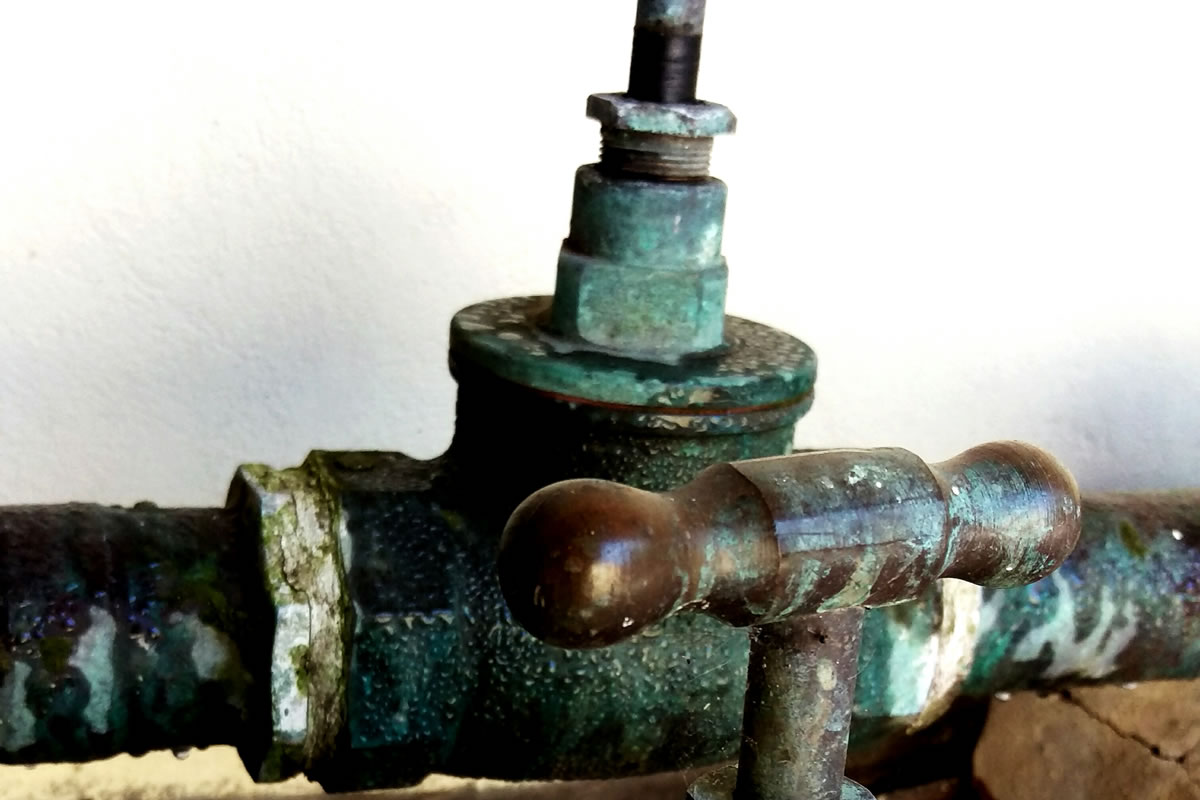
Old lead pipes and corroding plumbing can contaminate drinking water

Other common drinking water contaminants are corrosion by-products, most often caused by copper corrosion or cast iron pipes rusting and leaching iron particles into the water supply. If this is happening, the water way contain increased levels of iron, copper or even manganese which can all lead to discolouration of the water and unsightly surface staining of baths, sinks, WC’s, pools and spas.

There are several microbiological contaminants that can also affect water quality including Legionella bacteria and Pseudomonas aeruginosa. These bacterium will typically colonise a buildings local water distribution system and, under the right circumstances can cause serious health issues.

Testing private water supplies

If your water comes from a private water supply such as a well, spring, borehole or river, it is unlikely to have been through the intensive water treatment processing stages used by the water utility companies to filter and disinfect our mains drinking water.

  • Learn more about private water supplies

In the worse case scenario, this could mean that there are bacteria, viruses and a range of other chemical or metal contaminants in your water.

One of the main concerns when extracting from a private water supply is contamination with faecal matter, especially in rural and agricultural areas where the presence of animals and cattle may pollute local water courses. This can lead to dangerous contamination of the water by organisms such as E. coli and Salmonella. Other issues in such areas include contamination from elevated levels of nitrates, nitrites, sulphates and sulphides which can be caused by the intensive use of commercial fertilisers or sewage contamination.

Regular drinking water testing will help to make sure that the steps you are taking to treat your water are having the desired effect and that any unwanted contaminants are maintained within the safe limits set out by the government. If you are living or working in a property with a private water supply, testing the supply might be something you do on a regular basis.

  • More on the Water Supply Regulations

Drinking water testing

If you are testing drinking water for just one contaminant, such as lead or bacteria, then you might choose to use simple test strips or dip slides which you can dip in to the water to get your result. These are a quick and cost-effective way of testing your water but with one obvious drawback – you might get an answer about one type of contaminant but be completely unaware of other serious issues with your water.

We recommend it’s better and safer to have your tap water tested by the experts at WTS, who can run a series of specialist drinking water tests in the laboratory to identify a range of specific microbiological, metal and chemical contaminants in your water, and determine at which levels they are present. These results would then be compared to the standards set out in the governments Water Supply Regulations, and a report produced. The report will flag up those contaminants which are of particular concern, allowing you to target your efforts to reduce risk.

Testing drinking water in the laboratory

Standard compliance suite of tests for potable (drinking) water

Our standard compliance suite of tests for potable (drinking) water is highly recommended and provides an excellent indication of overall water quality for general potable applications. This compliance suite includes for the following tests:

  • General colony microbial counts after 2 and 3 days
  • Clostridium perfringens (confirmed)
  • Total coliforms
  • E.coli
  • Conductivity
  • pH
  • Turbidity
  • Ammonium
  • Nitrite
  • Nitrate
  • Odour
  • Taste
  • Aluminium
  • Iron
  • Manganese
  • Colour

Mains fed water testing and analysis (chemical and metal)

Our standard suite of chemical and metal parameter tests for mains fed water supplies would typically include:

  • Chloride
  • Conductivity
  • Copper
  • Hardness
  • Iron
  • Lead
  • Alkalinity
  • Manganese
  • pH
  • Phosphate
  • TDS

Testing private water supplies and borehole water analysis (chemical and metal)

Our standard suite of chemical and metal parameter tests for private water supplies, wells, boreholes, lakes and rivers would typically include:

  • Chloride
  • Conductivity
  • Copper
  • Hardness
  • Iron
  • Lead
  • Alkalinity
  • Manganese
  • Nitrate
  • Nitrite
  • pH
  • Phosphate
  • Sulphate
  • Sulphide
  • TDS

Drinking water treatment techniques

Once you have your detailed drinking water analysis report giving information about the quality of your drinking water and any issues which have been found, you can then make plans for improving the quality of your water… or where this is not possible, to look for an alternative supply.

The approach and water treatment techniques selected will depend very much on the types of contaminants which have been identified. For example, if high levels of bacteria have been found in the water, the advice might be to use UV light to kill off the bugs, or add a suitable, DWI approved disinfectant to the water supply to kill them that way. If the issue is corrosion in the pipes causing the water to become discoloured, then replacing the pipes might be the only option.

If other types of contaminants are found, you might be able to filter them out by adding a filtration system either at the point where the water supply enters the property, or directly adjacent to the taps used for drinking water. However, it’s important to remember that there is no point making any of these changes before you know whether or not you have a problem with water quality, and that can only be determined by specialist drinking water testing.

On-going water quality testing and analysis

Once you have invested in the correct improvements to your water supply, it’s then essential to have the water retested in exactly the same way so that you get an accurate comparison of the water quality before and after. It may also be well worthwhile implementing a regular programme of water testing to ensure water quality is maintained consistently.

Specialist drinking water testing for metals, chemicals & microbial contaminants

Contact WTS today to find out more about our laboratory water analysis services including drinking water testing for mains fed and private water supplies, swimming pool testing and in-field sampling services.

With offices in London serving the South and South East England, Manchester (North West), Birmingham (Midlands), Bristol (South East England and Wales), Leeds (North and North East) and Glasgow (Scotland), supported by regional teams of specially trained technicians, in-field specialists and consultants we can offer cost effective environmental support solutions across the whole of the UK and Ireland.

Contact us today to learn how our expert water quality analysis services can help you keep your drinking water safe.

Contact Us Today

You may also be interested in…

Boiler water treatment
…
Read more
Cooling tower compliance inspector surveying roof top installations - Quiz
1 June, 2026
How confident are you that your cooling tower management programme…
Read more
Cleaning and maintaining reverse osmosis membranes
22 December, 2025
Reverse osmosis (RO) systems are relied upon to deliver a consistent…
Read more
What is an authorising engineer water?
4 September, 2025
An Authorising Engineer (Water), or AE (Water), is a specialist…
Read more
Preventing Pseudomonas in water systems
3 April, 2025
Pseudomonas aeruginosa is a waterborne bacterium that poses a…
Read more
Reviews
Submit your review here
What is aerobic wastewater treatment?

What is Aerobic Wastewater Treatment?

This technical guide explains the process known as aerobic wastewater treatment, and how it is used to improve the quality of industrial wastewater streams. The guide looks at what the process involves, and how it works. It also considers each of the most popular types of aerobic system used by businesses including activated sludge, fixed bed bioreactors, moving bed bioreactors, membrane bioreactors and biological trickling filters.

Read more →

Drinking water testing

Drinking Water Testing Services UK

Drinking Water Testing for Mains, Private Water Supplies, Boreholes & Wells

Drinking water testing & water quality analysis

Specialist drinking water testing and analysis

Water Treatment Services is a leading water, air and environmental specialist offering expert laboratory services including drinking water testing and analysis of both mains fed (tap water) and private water supplies (including boreholes, wells and other watercourses) to organisations and private individuals throughout the UK and Ireland.

Our potable water analysis procedures incorporate tests for metals and heavy metals, chemical and microbiological analysis, and in-field sampling services.

What is drinking water?

Drinking water, also known as potable water, is water that is considered safe for human consumption. It should be free from harmful contaminants such as bacteria, viruses, chemicals, and heavy metals that could cause illness. It comes from sources such as rivers, lakes and reservoirs, boreholes and wells, rainwater harvesting and desalination.

Drinking water is typically treated through filtration, disinfection and other purification processes to ensure it meets local water quality standards.

Why test drinking water?

When was the last time that you had the quality of your tap water tested? Here in the UK, water utility companies have to conform to strict water quality standards set by the Government, and enforced by the regulator, the Drinking Water Inspectorate (DWI). These standards ensure that the water flowing through the mains distribution system is up to scratch at all times. However, once the water leaves the mains supply and enters a private residence or commercial building, the pipes, storage tanks, local distribution systems and other factors can start to affect the quality of the water.

There are also properties, mostly in remote locations, which depend on other types of private water supplies such as springs, boreholes, rivers, lakes or wells and people using these types of supplies may need to carry out their own drinking water testing too.

Specialist drinking water testing and analysis

Our specialist laboratory based drinking water tests and water quality analysis solutions include:

  • Laboratory Water Testing & Analysis

    Specialist laboratory analysis of drinking water for metals, chemicals and microbiological parameters.

  • Mains Fed Tap Water Analysis

    Specialist suite of tests covering metal and chemical parameters specifically for mains fed water systems.

  • Private Water Supply Testing

    Specialist suite of tests covering metal and chemical parameters specifically for private water supplies, wells and borehole fed water systems.

  • Microbiological Water Analysis

    Specialist analysis for a range of microbial parameters including coliforms, E. coli, total viable count (TVC), enterococci, sulphate reducing bacteria (SRB), legionella and pseudomonas.

  • Monitoring & Validation

    Latest laboratory and in-field water analysis equipment to monitor and validate water treatment programme performance against regulatory standards.

  • In-field Sampling.

    Expert in-field water sampling.

Full national UK coverage

With offices in London serving the South and South East England, Manchester (North West), Birmingham (Midlands), Bristol (South East England and Wales), Leeds (North and North East) and Glasgow (Scotland), supported by regional teams of specially trained engineers, water treatment specialists and technicians we can offer professional, cost effective drinking water testing, in-field water sampling and laboratory analysis services across the UK and Ireland.

Contact WTS today to learn how our water quality analysis solutions can help identify contamination issues. To speak with one of our water testing experts call us on 0330 223 31 31 or simply use this button.

Contact Us Today

What can contaminate tap water?

If you are supplied by a water utility company and are concerned about what might be getting into your water between it leaving the public mains and coming out of the taps in your property, then a good place to start is by looking at how you treat your water. This could include a review of the type of water distribution systems you have in your building, the materials that have been used (lead, copper, plastic etc.) to construct the system, especially the pipes carrying the water and any water storage tanks.

Older domestic and commercial properties which have not been renovated since 1970 might have lead pipes either in the kitchen, bathrooms, or elsewhere in the property on the route the water takes to the tap. Lead was a common material used for pipes and plumbing installations pre-1970 and can cause serious health issues, especially in children and pregnant women. If water testing identifies that lead is contaminating your water and is present at higher than the prescribed limits, you should take prompt action to replace the pipes.

Old lead pipes and corroding plumbing can contaminate drinking water

Other common drinking water contaminants are corrosion by-products, most often caused by copper corrosion or cast iron pipes rusting and leaching iron particles into the water supply. If this is happening, the water way contain increased levels of iron, copper or even manganese which can all lead to discolouration of the water and unsightly surface staining of baths, sinks, WC’s, pools and spas.

There are several microbiological contaminants that can also affect water quality including Legionella bacteria and Pseudomonas aeruginosa. These bacterium will typically colonise a buildings local water distribution system and, under the right circumstances can cause serious health issues.

Testing private water supplies

If your water comes from a private water supply such as a well, spring, borehole or river, it is unlikely to have been through the intensive water treatment processing stages used by the water utility companies to filter and disinfect our mains drinking water.

  • Learn more about private water supplies

In the worse case scenario, this could mean that there are bacteria, viruses and a range of other chemical or metal contaminants in your water.

One of the main concerns when extracting from a private water supply is contamination with faecal matter, especially in rural and agricultural areas where the presence of animals and cattle may pollute local water courses. This can lead to dangerous contamination of the water by organisms such as E. coli and Salmonella. Other issues in such areas include contamination from elevated levels of nitrates, nitrites, sulphates and sulphides which can be caused by the intensive use of commercial fertilisers or sewage contamination.

Regular drinking water testing will help to make sure that the steps you are taking to treat your water are having the desired effect and that any unwanted contaminants are maintained within the safe limits set out by the government. If you are living or working in a property with a private water supply, testing the supply might be something you do on a regular basis.

  • More on the Water Supply Regulations

Drinking water testing

If you are testing drinking water for just one contaminant, such as lead or bacteria, then you might choose to use simple test strips or dip slides which you can dip in to the water to get your result. These are a quick and cost-effective way of testing your water but with one obvious drawback – you might get an answer about one type of contaminant but be completely unaware of other serious issues with your water.

We recommend it’s better and safer to have your tap water tested by the experts at WTS, who can run a series of specialist drinking water tests in the laboratory to identify a range of specific microbiological, metal and chemical contaminants in your water, and determine at which levels they are present. These results would then be compared to the standards set out in the governments Water Supply Regulations, and a report produced. The report will flag up those contaminants which are of particular concern, allowing you to target your efforts to reduce risk.

Testing drinking water in the laboratory

Standard compliance suite of tests for potable (drinking) water

Our standard compliance suite of tests for potable (drinking) water is highly recommended and provides an excellent indication of overall water quality for general potable applications. This compliance suite includes for the following tests:

  • General colony microbial counts after 2 and 3 days
  • Clostridium perfringens (confirmed)
  • Total coliforms
  • E.coli
  • Conductivity
  • pH
  • Turbidity
  • Ammonium
  • Nitrite
  • Nitrate
  • Odour
  • Taste
  • Aluminium
  • Iron
  • Manganese
  • Colour

Mains fed water testing and analysis (chemical and metal)

Our standard suite of chemical and metal parameter tests for mains fed water supplies would typically include:

  • Chloride
  • Conductivity
  • Copper
  • Hardness
  • Iron
  • Lead
  • Alkalinity
  • Manganese
  • pH
  • Phosphate
  • TDS

Testing private water supplies and borehole water analysis (chemical and metal)

Our standard suite of chemical and metal parameter tests for private water supplies, wells, boreholes, lakes and rivers would typically include:

  • Chloride
  • Conductivity
  • Copper
  • Hardness
  • Iron
  • Lead
  • Alkalinity
  • Manganese
  • Nitrate
  • Nitrite
  • pH
  • Phosphate
  • Sulphate
  • Sulphide
  • TDS

Drinking water treatment techniques

Once you have your detailed drinking water analysis report giving information about the quality of your drinking water and any issues which have been found, you can then make plans for improving the quality of your water… or where this is not possible, to look for an alternative supply.

The approach and water treatment techniques selected will depend very much on the types of contaminants which have been identified. For example, if high levels of bacteria have been found in the water, the advice might be to use UV light to kill off the bugs, or add a suitable, DWI approved disinfectant to the water supply to kill them that way. If the issue is corrosion in the pipes causing the water to become discoloured, then replacing the pipes might be the only option.

If other types of contaminants are found, you might be able to filter them out by adding a filtration system either at the point where the water supply enters the property, or directly adjacent to the taps used for drinking water. However, it’s important to remember that there is no point making any of these changes before you know whether or not you have a problem with water quality, and that can only be determined by specialist drinking water testing.

On-going water quality testing and analysis

Once you have invested in the correct improvements to your water supply, it’s then essential to have the water retested in exactly the same way so that you get an accurate comparison of the water quality before and after. It may also be well worthwhile implementing a regular programme of water testing to ensure water quality is maintained consistently.

Specialist drinking water testing for metals, chemicals & microbial contaminants

Contact WTS today to find out more about our laboratory water analysis services including drinking water testing for mains fed and private water supplies, swimming pool testing and in-field sampling services.

With offices in London serving the South and South East England, Manchester (North West), Birmingham (Midlands), Bristol (South East England and Wales), Leeds (North and North East) and Glasgow (Scotland), supported by regional teams of specially trained technicians, in-field specialists and consultants we can offer cost effective environmental support solutions across the whole of the UK and Ireland.

Contact us today to learn how our expert water quality analysis services can help you keep your drinking water safe.

Contact Us Today

You may also be interested in…

Boiler water treatment
…
Read more
Cooling tower compliance inspector surveying roof top installations - Quiz
1 June, 2026
How confident are you that your cooling tower management programme…
Read more
Cleaning and maintaining reverse osmosis membranes
22 December, 2025
Reverse osmosis (RO) systems are relied upon to deliver a consistent…
Read more
What is an authorising engineer water?
4 September, 2025
An Authorising Engineer (Water), or AE (Water), is a specialist…
Read more
Preventing Pseudomonas in water systems
3 April, 2025
Pseudomonas aeruginosa is a waterborne bacterium that poses a…
Read more
Reviews
Submit your review here
Testing water for metals

Testing Water for Heavy Metals

Testing Water for Metals & Heavy Metals

Testing water for metals and heavy metals

Testing water for metals and heavy metals.

Testing your water for metals and heavy metals is an important step in safeguarding health, protecting assets, and ensuring compliance with environmental and regulatory standards. At Water Treatment Services we provide specialist laboratory analysis and in-field sampling solutions designed to identify the presence and concentration of metals such as lead, mercury, arsenic and others that can pose serious risks if left unchecked. Our expert services support private individuals, businesses and organisations across the UK, helping to ensure drinking water, trade effluent and industrial wastewater remain safe, compliant and fit for purpose.

Our comprehensive testing services cover a wide range of applications, from the analysis of potable water supplies and private sources such as wells and boreholes, through to the testing of wastewater and trade effluent discharges. We use the latest laboratory techniques and in-field monitoring equipment to deliver accurate, reliable results across metals, chemicals and microbiological parameters. Whether you need reassurance about the quality of your drinking water, independent validation of water treatment performance, or assistance meeting strict effluent discharge consent limits, our experienced teams are here to help.

Why test water for metals contamination?

There are a number of reasons why you may want to test water for metals, including some of the more common heavy metals such as lead, mercury and arsenic.

You may extract your water from a private supply and be concerned about contamination of your drinking water, or you may be a business looking to satisfy trade effluent discharge standards for your wastewater. Whatever your reasons Water Treatment Services has the expertise to help you.

Testing water for metals and heavy metals

Our specialist laboratory based water analysis and in-field sampling solutions include:

  • Laboratory Water Testing & Analysis

    Expert analysis of water, waste water and industrial effluents for metals, chemicals and microbiological parameters.

  • Physical Parameters

    Testing for specified physical parameters in water.

  • Monitoring & Validation

    Latest laboratory and in-field water analysis equipment to monitor and validate water treatment programme performance and satisfy discharge consent standards.

  • In-field Sampling.

    Expert in-field water sampling.

Full national UK coverage

Testing water for metals and heavy metals is a vital step in protecting health, meeting legal obligations, and maintaining the performance of water systems and treatment programmes. Whether you are concerned about a private water supply, need to confirm compliance with the Water Supply Regulations, or have to meet strict trade effluent discharge standards, accurate and reliable analysis is essential.

With offices in London serving the South and South East England, Manchester (North West), Birmingham (Midlands), Bristol (South East England and Wales), Leeds (North and North East) and Glasgow (Scotland), supported by regional teams of specially trained engineers, water treatment service specialists and technical experts we can offer professional, cost effective water testing, in-field water sampling and laboratory analysis services across the UK and Ireland.

Contact Water Treatment Services today to learn how our professional water quality analysis, in-field testing and sampling solutions can help improve your water quality, water treatment validation and regulatory compliance processes. To speak with one of our water testing experts call us on 0330 223 31 31 or simply use this button.

Contact Us Today

Understanding how metal contamination can affect water quality

Here in the UK we’re lucky to have a safe and reliable supply of clean drinking water, literally on-tap. Most homes and commercial buildings in the UK get their mains water supplied directly by one of the big water companies, who have a responsibility to check the quality of the water being supplied, and testing it to ensure it falls within strict legal limits set by the regulators.

Water supplied for drinking (often called potable water) in the UK has to be constantly monitored, and there is an independent regulatory body called the Drinking Water Inspectorate (DWI) which monitors this. DWI inspectors regularly enter consumer properties to take water samples for independent analysis.

The quality of our drinking water is not something most of us need to worry about unless something goes wrong. However, if you’re buying or leasing a property for residential or commercial purposes which takes its water from a private water supply such as a well, borehole, spring or other water source, then it’s up to you to ensure your water meets the standards set in the Water Supply Regulations 2016. Confirming this may involve testing water for metals, chemicals, microbiological parameters and other common contaminants.

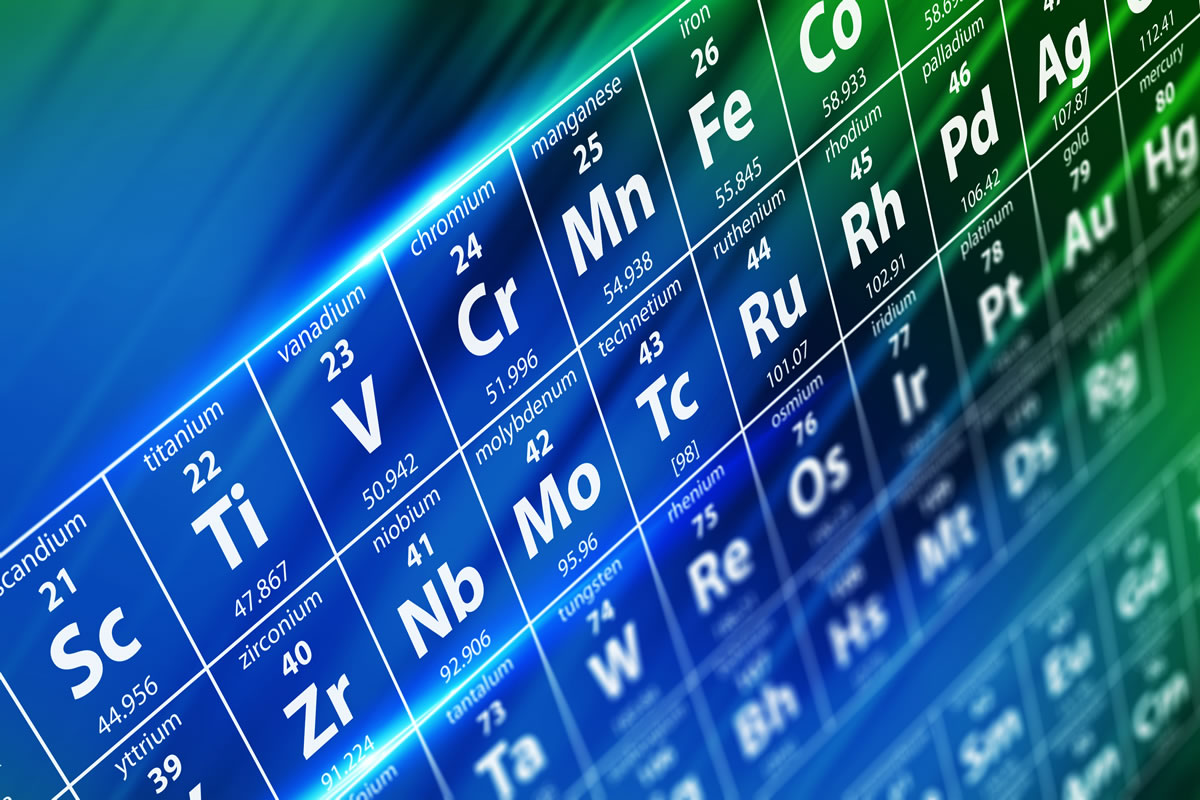
Periodic table showing metals that can contaminate water

What metals are found to contaminate water?

In general, heavy metals contaminating our water supplies are less of a problem than they were in the past. With improved environmental awareness we’ve cleaned up our collective act when it comes to waste and wastewater disposal.

Changing patterns of work have also meant that we just don’t have the heavy industrial processes that previously used iron, steel, lead, mercury, arsenic and other metals. However, that doesn’t mean there is now no longer any metal contamination of our water supplies. It’s therefore important that where you suspect there may be a metal contamination issue that you test your water to make sure concentrations’ do not exceed the safe limits set by the Government.

Some of the main metals and other elements you might find in water, and which could potentially cause health problems if present at high enough concentrations include:

  • Lead

    Although lead has been banned for use in water pipes and water storage tanks since the 1970s, many older properties which have not been renovated for years might still have lead pipes.

    Too much lead in drinking water can have serious consequences; lead poisoning can cause a range of health problems including headaches, high blood pressure, memory loss, abdominal pain, kidney failure, miscarriage or premature birth.

  • Mercury

    Mercury occurs naturally in the environment and can combine with other elements in the earth to form a variety of compounds.

    Unlike lead poisoning where the effects build up over time, short term exposure to high levels of mercury in drinking water can cause serious health issues including headaches, insomnia, kidney problems, as well as having an effect on hearing, vision and memor

  • Arsenic

    It’s not news that arsenic is poisonous, and this metallic element is found at differing levels throughout the UK.

    Long-term exposure to arsenic in drinking water is linked to a higher risk of developing several types of cancer as well as heart disease.

  • Aluminium

    Scientific research is still ongoing into the possible negative effects of aluminium in drinking water, with many press reports making a link with increased levels of dementia.

  • Iron

    Most iron contamination in our drinking water comes from old plumbing installations where old iron pipes and water tanks corrode, and leach iron into the water.

    High levels of iron in water are generally easy to spot as the water becomes discoloured.

  • Calcium

    If you live in a hard water area then there will be higher levels of calcium and magnesium salts dissolved in your water… when compared to soft water areas.

    There are no reported health issues associated with drinking hard water, but it can cause limescale damage to boilers, kettles, washing machines and other appliances that use untreated hard water.

Drinking water metal analysis

The UK’s 2016 Water Supply Regulations set out maximum allowable limits for metals and heavy metals in drinking water. If your water is supplied from a water utility company then they are obliged to meet these standards. However, if you extract from a private water supply such as a well, borehole, spring or other water source, then it’s up to you to ensure you meet these standards. The following limits on the maximum concentration levels of metals in drinking water are taken from the Water Supply Regulations 2016.

Maximum Concentration of Metals in Drinking Water - Water Supply Regulations
MetalMaximum concentration
in drinking water
Point of compliance
Aluminium (Al)200 µg/lConsumers’ taps
Antimony (Sb)5.0 µg/lConsumers’ taps
Arsenic (As)10 µg/lConsumers’ taps
Boron (B)1.0 mg/lConsumers’ taps
Cadmium (Cd)5.0 µg/lConsumers’ taps
Chromium (Cr)50 µg/lConsumers’ taps
Copper (Cu)2.0 µg/lConsumers’ taps
Iron (Fe)200 µg/lConsumers’ taps
Lead (Pb)10 µg/lConsumers’ taps
Manganese (Mn)50 µg/lConsumers’ taps
Mercury (Hg)1.0 µg/lConsumers’ taps
Nickel (Ni)20 µg/lConsumers’ taps
Selenium (Se)10 µg/lConsumers’ taps
Sodium (Na)200 µg/lConsumers’ taps

Trade effluent and wastewater metals testing

If you intend to discharge trade effluent or industrial waste water in to a public sewer or watercourse such as a stream, river, lake or the sea then you will need to obtain specific consent from your local sewerage undertaker. Your consent to discharge is likely to include strict limits on the quality of the effluent including its metal content. Water Treatment Services can analyse your waste water and effluent streams for a range of common metals including the following:

  • Antimony
  • Arsenic
  • Barium
  • Cadmium
  • Chromium
  • Copper
  • Lead
  • Mercury
  • Molybdenum
  • Selenium
  • Zinc
  • Other metals

Making sure drinking water is safe from contamination

There are a number of steps you can take to make sure that your drinking water is safe, especially when you’re relying on water from a private supply or natural source rather than taking it from one of the big water utilities. The approach selected in treating your water before drinking will very much depend on what type of contamination problems exist or are suspected. Testing water for metals, chemicals, microbiological and other contaminants is therefore important. The main methods used to treat water to make it suitable for drinking are:

  • Filtration

    Filtration is a very common technique and involves water flowing through a series of filters which are designed to remove particles of various sizes that contaminate the water. This process could be as simple as a jug filter with removable cartridge for use in a home kitchen, or a complex series of filters used to treat wastewater or industrial effluent that uses several different elements at various stages of the filtration process.

  • UV Treatment

    Ultra-violet or UV treatment is a commonly used technique to deal with microbiological contamination. Although this process won’t do anything to remove metals in your water, it’s a common way of dealing with bacteria that can contaminate drinking water supplies. The advantage of this technique is that it offers a chemical-free way of treating drinking water.

  • Chlorination

    Chlorination is a very common water treatment technique and has been used successfully for many years. Chlorine is the primary chemical added to municipal water supplies to kill off bugs and bacteria in drinking water to make it safer to drink. While treatment with chlorine is a cheap and simple way of dealing with microbiological contamination, it won’t deal with any metals in water.

Expert testing for metals, heavy metals & other contaminants

At Water Treatment Services we combine specialist laboratory testing, in-field sampling and expert consultancy to give you clear, dependable results you can act on with confidence. With offices and technical teams located across the UK, we offer full national coverage and cost-effective solutions tailored to your specific needs. Contact us today to speak with one of our water testing experts and find out how our comprehensive range of water analysis services can help you safeguard quality, demonstrate compliance and protect the people, processes and environments that matter most.

Contact us today to learn how our expert analysis solutions can help you determine your water quality and the presence and concentration of any metal contamination.

Contact Us Today

You may also be interested in…

Boiler water treatment
…
Read more
Cooling tower compliance inspector surveying roof top installations - Quiz
1 June, 2026
How confident are you that your cooling tower management programme…
Read more
Cleaning and maintaining reverse osmosis membranes
22 December, 2025
Reverse osmosis (RO) systems are relied upon to deliver a consistent…
Read more
What is an authorising engineer water?
4 September, 2025
An Authorising Engineer (Water), or AE (Water), is a specialist…
Read more
Preventing Pseudomonas in water systems
3 April, 2025
Pseudomonas aeruginosa is a waterborne bacterium that poses a…
Read more

Reviews

Submit your review here

Water testing laboratory water quality analysis

Water Testing & Laboratory Analysis

Water Testing & Laboratory Water Quality Analysis

Water testing and water quality analysis

Professional laboratory analysis for a range of biological, chemical and physical parameters.

WTS is a leading UK water and environmental solutions specialist offering a comprehensive range of water testing, laboratory water quality analysis and in-field water sampling services to organisations and domestic-private individuals throughout the UK and Ireland.

Our laboratory water analysis and in-field sampling services have been developed to accurately identify the presence of specified parameters within water samples taken from both public and private water supplies.

Our expert laboratory analysis solutions help improve water testing procedures, water treatment and environmental hygiene programme validation and regulatory compliance processes to optimise performance and keep people safe from harm.

What is water testing?

Water testing analyses water quality to determine its safety and suitability for drinking, agriculture, industrial processes, and environmental health. It can involve checks for a number of parameters including biological (bacteria, viruses), chemical (pH, heavy metals, nitrates), physical (colour, turbidity) and radiological (radioactive substances). Regular testing helps to monitor contamination, ensures regulatory compliance, and protects health.

Expert water testing and analysis services

Our specialist laboratory based water testing and in-field water sampling solutions include:

  • Laboratory Water Testing & Analysis

    Expert microbiological analysis of water for Pseudomonas, Coliforms, E.coli, Total Viable Counts (TVCs) and other parameters.

  • chemical parameters

    Laboratory testing for chemical parameters in water.

  • physical parameters

    Testing for specified physical parameters in water.

  • Monitoring & Validation

    Latest in-field water analysis equipment to monitor and validate water treatment programme performance.

  • In-field sampling.

    Expert in-field water sampling of commercial, domestic and residential water supplies.

Full national UK cover

With offices in London serving the South and South East England, Manchester (North West), Birmingham (Midlands), Bristol (South East England and Wales), Leeds (North and North East) and Glasgow (Scotland), supported by regional teams of specially trained engineers, water treatment service specialists and technical experts we can offer professional, cost effective water testing, in-field water sampling and laboratory analysis services across the UK and Ireland.

Contact Water Treatment Services today to learn how our professional water quality analysis, in-field testing and sampling solutions can help improve your water quality, water treatment validation and regulatory compliance processes both in the workplace and at home.

To speak with one of our water testing experts call us on 0330 223 31 31 or simply use the button below to get our full contact details or submit our contact form.

Contact Us Today

Accurate water testing with full interpretation of results

Water quality assessment, evaluation and the expert interpretation of laboratory test results is incredibly important, which makes fast and accurate water testing essential in so many different circumstances.

Our teams of highly trained technicians are experienced in obtaining and handling water samples so as to maintain a high standard throughout the sampling and collection process.

Our water testing facilities are set up specifically to handle expert testing whenever required by our clients.

Our laboratory testing services include the analysis of potable water (drinking water) in the workplace and at home, swimming pool and spa waters, hydrotherapy pools, natural recreational waters, domestic hot and cold water installations; water used in cooling systems, cooling towers, industrial and manufacturing processes, and other commercial and healthcare settings.

Laboratory water testing

Testing for microbiological, chemical and physical parameters

Our professional water quality analysis and in-field water sampling services cover a wide range of tests that include microbiological, chemical and physical parameters:

Microbiological testing of water

  • Coliforms
  • E.coli
  • Total Viable Counts (TVCs)
  • Pseudomonas aeruginosa and other Pseudomonas species
  • Enterococci
  • Staphylococcus aureus

Chemical parameters in water

  • Scale
  • Corrosion
  • pH
  • Dissolved oxygen
  • Hardness, alkalinity
  • Redox potential
  • Chlorine
  • Total Dissolved Solids (TDS)
  • Metals
  • Heavy metals
  • Non metals

Physical parameters in water

  • Effluent analysis
  • COD
  • Suspended solids
  • Conductivity
  • Resistivity
  • Silt Density Index (SDI)
  • Sludge Density

On completion of all our laboratory analysis procedures a full report is issued and our experts are be on-hand to explain the results and what these mean for you, your water systems and the safety and health of those exposed to your water systems.

You can therefore be confident in choosing WTS for all your in-field sampling, water testing and laboratory analysis requirements.

  • More on metals analysis

Water quality analysis investigations

Water Treatment Services offer two professional water testing, sampling and laboratory water analysis services covering both commercial and domestic/residential supplies to support your water analysis needs and they are as follows:

  • Managed Water Sampling Services

    The first of our water sampling services involves one of our experienced in-field technicians visiting your site at an agreed time to take samples from your water systems.

    If required they will also help to identify suitable sampling points.

    Details of the sampling points and water samples are then recorded and the samples taken to the laboratory for evaluation.

  • DIY Water Testing

    The second of our sampling services is a “Do-It-Yourself” style water testing service.

    It involves us providing you with a comprehensive kit that includes specially sterilised 1 litre sample bottles, ID labels, and full instructions together with a FREEpost return facility.

    This sampling kit will allow you to collect your own water samples, record details of each sample point correctly and then courier them to us for evaluation in the lab.

How to order your 5 step DIY water test

DIY water testing process from Water Treatment Services

Our water analysis, in-field sampling and laboratory water testing services can be performed on a one-off or contract basis to suit your specific needs.

Please contact us to discuss your water quality analysis requirements in more detail… contact us →

Testing water across all business sectors

Regardless of the reason why you need your water testing, it is reassuring to know Water Treatment Services has extensive experience across all business sectors.

For example we can provide water tests for cooling towers and closed systems. We can also test water in swimming pools, spas, boreholes and even private water supplies serving businesses and domestic-residential homes.

We can also provide professional advice and support for any customers who believe they may need to test the quality of their water, but are unsure of which tests are required to best meet their needs.

Expert water testing and laboratory analysis

Contact WTS today to find out more about our professional water testing laboratory and in-field water sampling solutions and how they can help improve your validation and regulatory compliance processes.

As a leading provider of water tests, sampling and laboratory water quality analysis procedures we can ensure you get the best possible services whenever you need them.

Whether you need to test the water at home, from a borehole, in a swimming pool or an industrial cooling tower, you can rest assured you will receive exactly what you need with our professional solutions.

With offices in London serving the South and South East England, Manchester (North West), Birmingham (Midlands), Bristol (South East England and Wales), Leeds (North and North East) and Glasgow (Scotland), supported by teams of specially trained engineers, in-field site service specialists and technical experts we can offer professional, cost effective water quality testing and environmental support solutions across the UK and Ireland.

Contact us today to learn how our expert water quality analysis services can help you keep your water safe.

Contact Us Today
Reviews
Submit your review here
Industrial wastewater and effluent treatment

Wastewater & Effluent Treatment

Industrial Wastewater Treatment & Trade Effluent Management

Industrial wastewater treatment and trade effluent

Optimising industrial wastewater and trade effluent treatment to create economic and environmental benefit.

Water Treatment Services is a leading UK water and industrial wastewater treatment specialist offering a comprehensive range of expert water, trade effluent and environmental management solutions.

Our services include the evaluation and treatment of industrial waste waters and trade effluents from manufacturing, and industrial processes to ensure cost and process optimisation is achieved; and environmental compliance standards are met and maintained.

Our experience and capabilities in this important area allow us to offer carefully tailored, cost effective industrial wastewater treatment and effluent treatment solutions covering effluent discharge, regulatory compliance and consent evaluation; process design, plant and equipment, chemical treatments, sludge management, and water recycling and reuse solutions.

Expert industrial wastewater treatment & trade effluent management

Our specialist industrial wastewater treatment and trade effluent treatment solutions include:

  • industrial wastewater & trade effluent solutions

    Professional industrial wastewater and trade effluent treatment solutions for commercial, industrial, manufacturing and process applications.

  • compliance & discharge consents

    Expert advice on regulatory compliance, trade effluent discharge and consents.

  • Process optimisation

    Process optimisation, evaluation and design solutions.

  • Effluent treatment plant

    Effluent treatment plant, mechanical process and equipment.

  • chemical treatments

    Specialist chemical and biological treatments.

  • sludge management

    Expert sludge management to achieve cost effective, compliant solutions.

  • Environmentally sensitive

    Environmentally sensitive, eco-friendly water recycling and reuse solutions.

  • Energy Efficiency

    Expert investigation and analysis to identify process improvements and energy efficiencies involving industrial wastewater, effluent and waste management processes… energy efficiency →

Full National UK Coverage

With offices in London serving the South and South East England, Manchester (North West), Birmingham (Midlands), Bristol (South East England and Wales), Leeds (North and North East) and Glasgow (Scotland), supported by regional teams of specially trained environmental engineers, in-field wastewater specialists and technical experts we can offer professional, cost effective industrial wastewater treatment and associated engineering services across the UK and Ireland.

Contact Water Treatment Services today to learn how our industrial wastewater treatment and effluent treatment solutions can help improve cost and process optimisation, and ensure environmental compliance standards are achieved. To speak with one of our industrial wastewater treatment experts call us on 0330 223 31 31 or simply use this button.

Contact Us Today

Environmentally sensitive treatment of industrial wastewater

With the introduction of increasingly stringent environmental standards, the optimisation of treatment processes for industrial wastewater and trade effluents is becoming increasingly important.

It’s now not simply about meeting discharge compliance standards; cost, process and energy efficiencies are becoming key considerations along with opportunities for more eco-friendly recycling and water reuse solutions.

Water Treatment Services, through our team of experts offer a holistic approach to the evaluation and treatment of industrial effluents allowing us to assist our customers in meeting their legal obligations in the most economic, environmentally sensitive way to reduce costs, improve waste management processes and protect the environment.

What is trade effluent?

In the UK any wastewater that is produced as part of an industrial or commercial process is referred to as “trade effluent”.

Trade effluent is typically waste water or other waste liquids that are not considered to be domestic sewage or uncontaminated rainwater run-off.

This can include wastewater from manufacturing and production activities, cooling processes, washing etc.

The Water Industry Act 1991 describes trade effluent as follows:

… any liquid, either with or without particles of matter in suspension in the liquid, which is wholly or partly produced in the course of any trade or industry carried on at a trade premises.

If your water is not considered to be domestic sewage or uncontaminated rainwater run-off then you need to deal with it differently.

Consent to discharge trade effluent

If you intend to discharge any industrial wastewater or trade effluent in to a public sewer or watercourse such as a river, stream, lake or the sea then you will need to obtain specific consent from your local sewerage undertaker.

If you fail to do this you will be breaking the law and may face legal action and substantial fines.

A consent to discharge trade effluent will normally specify limits on the following:

  • Effluent volumes

    Maximum daily volume of effluent to be discharged.

  • Rate of Discharge

    Maximum rate of effluent discharge.

  • Total Suspended Solids

    Details of Total Suspended Solids (TSS) of the effluent to be discharged.

  • Chemical Oxygen Demand

    Details of the Chemical Oxygen Demand (COD) of the effluent.

  • Temperature

    The temperature range of the effluent.

  • pH range.

    The pH range of the effluent.

  • Other factors

    Any other wastewater quality, environmental or health and safety parameters based on the type of effluent to be discharged.

Evaluating your wastewater & trade effluent needs

Typically the treatment of industrial effluents involves a number of distinct stages and technologies, depending on the industry, type and concentration of contaminants and overall complexity of the effluent stream involved.

Through our team of wastewater treatment experts we can perform a comprehensive evaluation of your waste processes and effluent discharge requirements to advise on the selection of the most appropriate methods and technologies for the treatment of your wastewater in order to meet discharge compliance standards in the most economic and environmentally sensitive way.

  • Monitoring levels of metals in your effluent

Industrial wastewater treatment training

The industrial and process water treatment specialists at Water Treatment Services have developed an extensive series of professional water and wastewater treatment training courses that includes WTS 0070 “Industrial Wastewater Treatment”.

This specialist wastewater treatment training course comprises an intensive one day course designed for wastewater treatment engineers, plant operators, environmental and process engineers, maintenance and engineering contractors, and those with responsibility for the operation, maintenance and on-going management of industrial wastewater treatment installations… wastewater treatment training →

Expert industrial wastewater & trade effluent treatment solutions

Contact Water Treatment Services today to discuss your industrial wastewater treatment and effluent treatment requirements.

Our specialists can deliver a full range of expert environmental management services including the evaluation and implementation of cost effective, environmentally sensitive trade effluent treatment solutions.

With offices in London serving the South and South East England, Manchester (North West), Birmingham (Midlands), Bristol (South East England and Wales), Leeds (North and North East) and Glasgow (Scotland), supported by regional teams of specially trained environmental engineers, in-field wastewater specialists and technical experts we can offer professional, cost effective industrial wastewater treatment and engineering support services throughout the UK and Ireland.

Contact us now for more information or for your FREE, no obligation quote.

Contact Us Today

You may also be interested in…

Guide to managing trade effluent

Short Guide to Managing Trade Effluent

19 May, 2025
Read more
Guide to water reuse and recycling for a better future

Guide to Water Reuse and Recycling for a Better Future

24 April, 2025
Read more
What is rainwater harvesting?

What is Rainwater Harvesting?

23 November, 2023
Read more
Industrial wastewater equipment - Treating your own effluent

Industrial Wastewater Equipment: Treating Your Own Effluent

2 October, 2023
Read more
Nutrient Neutrality: Its impact on wastewater treatment?

Nutrient Neutrality: Its Impact On Wastewater Treatment?

14 September, 2023
Read more
How to safely dispose of used cooking oil

How to Safely Dispose of Used Cooking Oil

6 September, 2023
Read more
Removing heavy metals from industrial wastewater

Removing Heavy Metals from Industrial Wastewater

29 August, 2023
Read more
Discharging Trade Effluent – What are Your Responsibilities?

Discharging Trade Effluent – What You Need to Know

17 May, 2023
Read more
What are the Advantages and Disadvantages of Heat Pumps?

What are the Advantages and Disadvantages of Heat Pumps?

18 January, 2023
Read more
What is Turbidity in Water?

What is Turbidity in Water?

3 October, 2022
Read more
Previous Previous Previous Next Next Next

Further reading…

More information about treating industrial wastewater and trade effluent… here →

REVIEWS

Submit your review here

Pages

What is aerobic wastewater treatment?

What is Aerobic Wastewater Treatment?

This technical guide explains the process known as aerobic wastewater treatment, and how it is used to improve the quality of industrial wastewater streams. The guide looks at what the process involves, and how it works. It also considers each of the most popular types of aerobic system used by businesses including activated sludge, fixed bed bioreactors, moving bed bioreactors, membrane bioreactors and biological trickling filters.

Read more →

Drinking water testing

Drinking Water Testing Services UK

Drinking Water Testing for Mains, Private Water Supplies, Boreholes & Wells

Drinking water testing & water quality analysis

Specialist drinking water testing and analysis

Water Treatment Services is a leading water, air and environmental specialist offering expert laboratory services including drinking water testing and analysis of both mains fed (tap water) and private water supplies (including boreholes, wells and other watercourses) to organisations and private individuals throughout the UK and Ireland.

Our potable water analysis procedures incorporate tests for metals and heavy metals, chemical and microbiological analysis, and in-field sampling services.

What is drinking water?

Drinking water, also known as potable water, is water that is considered safe for human consumption. It should be free from harmful contaminants such as bacteria, viruses, chemicals, and heavy metals that could cause illness. It comes from sources such as rivers, lakes and reservoirs, boreholes and wells, rainwater harvesting and desalination.

Drinking water is typically treated through filtration, disinfection and other purification processes to ensure it meets local water quality standards.

Why test drinking water?

When was the last time that you had the quality of your tap water tested? Here in the UK, water utility companies have to conform to strict water quality standards set by the Government, and enforced by the regulator, the Drinking Water Inspectorate (DWI). These standards ensure that the water flowing through the mains distribution system is up to scratch at all times. However, once the water leaves the mains supply and enters a private residence or commercial building, the pipes, storage tanks, local distribution systems and other factors can start to affect the quality of the water.

There are also properties, mostly in remote locations, which depend on other types of private water supplies such as springs, boreholes, rivers, lakes or wells and people using these types of supplies may need to carry out their own drinking water testing too.

Specialist drinking water testing and analysis

Our specialist laboratory based drinking water tests and water quality analysis solutions include:

  • Laboratory Water Testing & Analysis

    Specialist laboratory analysis of drinking water for metals, chemicals and microbiological parameters.

  • Mains Fed Tap Water Analysis

    Specialist suite of tests covering metal and chemical parameters specifically for mains fed water systems.

  • Private Water Supply Testing

    Specialist suite of tests covering metal and chemical parameters specifically for private water supplies, wells and borehole fed water systems.

  • Microbiological Water Analysis

    Specialist analysis for a range of microbial parameters including coliforms, E. coli, total viable count (TVC), enterococci, sulphate reducing bacteria (SRB), legionella and pseudomonas.

  • Monitoring & Validation

    Latest laboratory and in-field water analysis equipment to monitor and validate water treatment programme performance against regulatory standards.

  • In-field Sampling.

    Expert in-field water sampling.

Full national UK coverage

With offices in London serving the South and South East England, Manchester (North West), Birmingham (Midlands), Bristol (South East England and Wales), Leeds (North and North East) and Glasgow (Scotland), supported by regional teams of specially trained engineers, water treatment specialists and technicians we can offer professional, cost effective drinking water testing, in-field water sampling and laboratory analysis services across the UK and Ireland.

Contact WTS today to learn how our water quality analysis solutions can help identify contamination issues. To speak with one of our water testing experts call us on 0330 223 31 31 or simply use this button.

Contact Us Today

What can contaminate tap water?

If you are supplied by a water utility company and are concerned about what might be getting into your water between it leaving the public mains and coming out of the taps in your property, then a good place to start is by looking at how you treat your water. This could include a review of the type of water distribution systems you have in your building, the materials that have been used (lead, copper, plastic etc.) to construct the system, especially the pipes carrying the water and any water storage tanks.

Older domestic and commercial properties which have not been renovated since 1970 might have lead pipes either in the kitchen, bathrooms, or elsewhere in the property on the route the water takes to the tap. Lead was a common material used for pipes and plumbing installations pre-1970 and can cause serious health issues, especially in children and pregnant women. If water testing identifies that lead is contaminating your water and is present at higher than the prescribed limits, you should take prompt action to replace the pipes.

Old lead pipes and corroding plumbing can contaminate drinking water

Other common drinking water contaminants are corrosion by-products, most often caused by copper corrosion or cast iron pipes rusting and leaching iron particles into the water supply. If this is happening, the water way contain increased levels of iron, copper or even manganese which can all lead to discolouration of the water and unsightly surface staining of baths, sinks, WC’s, pools and spas.

There are several microbiological contaminants that can also affect water quality including Legionella bacteria and Pseudomonas aeruginosa. These bacterium will typically colonise a buildings local water distribution system and, under the right circumstances can cause serious health issues.

Testing private water supplies

If your water comes from a private water supply such as a well, spring, borehole or river, it is unlikely to have been through the intensive water treatment processing stages used by the water utility companies to filter and disinfect our mains drinking water.

  • Learn more about private water supplies

In the worse case scenario, this could mean that there are bacteria, viruses and a range of other chemical or metal contaminants in your water.

One of the main concerns when extracting from a private water supply is contamination with faecal matter, especially in rural and agricultural areas where the presence of animals and cattle may pollute local water courses. This can lead to dangerous contamination of the water by organisms such as E. coli and Salmonella. Other issues in such areas include contamination from elevated levels of nitrates, nitrites, sulphates and sulphides which can be caused by the intensive use of commercial fertilisers or sewage contamination.

Regular drinking water testing will help to make sure that the steps you are taking to treat your water are having the desired effect and that any unwanted contaminants are maintained within the safe limits set out by the government. If you are living or working in a property with a private water supply, testing the supply might be something you do on a regular basis.

  • More on the Water Supply Regulations

Drinking water testing

If you are testing drinking water for just one contaminant, such as lead or bacteria, then you might choose to use simple test strips or dip slides which you can dip in to the water to get your result. These are a quick and cost-effective way of testing your water but with one obvious drawback – you might get an answer about one type of contaminant but be completely unaware of other serious issues with your water.

We recommend it’s better and safer to have your tap water tested by the experts at WTS, who can run a series of specialist drinking water tests in the laboratory to identify a range of specific microbiological, metal and chemical contaminants in your water, and determine at which levels they are present. These results would then be compared to the standards set out in the governments Water Supply Regulations, and a report produced. The report will flag up those contaminants which are of particular concern, allowing you to target your efforts to reduce risk.

Testing drinking water in the laboratory

Standard compliance suite of tests for potable (drinking) water

Our standard compliance suite of tests for potable (drinking) water is highly recommended and provides an excellent indication of overall water quality for general potable applications. This compliance suite includes for the following tests:

  • General colony microbial counts after 2 and 3 days
  • Clostridium perfringens (confirmed)
  • Total coliforms
  • E.coli
  • Conductivity
  • pH
  • Turbidity
  • Ammonium
  • Nitrite
  • Nitrate
  • Odour
  • Taste
  • Aluminium
  • Iron
  • Manganese
  • Colour

Mains fed water testing and analysis (chemical and metal)

Our standard suite of chemical and metal parameter tests for mains fed water supplies would typically include:

  • Chloride
  • Conductivity
  • Copper
  • Hardness
  • Iron
  • Lead
  • Alkalinity
  • Manganese
  • pH
  • Phosphate
  • TDS

Testing private water supplies and borehole water analysis (chemical and metal)

Our standard suite of chemical and metal parameter tests for private water supplies, wells, boreholes, lakes and rivers would typically include:

  • Chloride
  • Conductivity
  • Copper
  • Hardness
  • Iron
  • Lead
  • Alkalinity
  • Manganese
  • Nitrate
  • Nitrite
  • pH
  • Phosphate
  • Sulphate
  • Sulphide
  • TDS

Drinking water treatment techniques

Once you have your detailed drinking water analysis report giving information about the quality of your drinking water and any issues which have been found, you can then make plans for improving the quality of your water… or where this is not possible, to look for an alternative supply.

The approach and water treatment techniques selected will depend very much on the types of contaminants which have been identified. For example, if high levels of bacteria have been found in the water, the advice might be to use UV light to kill off the bugs, or add a suitable, DWI approved disinfectant to the water supply to kill them that way. If the issue is corrosion in the pipes causing the water to become discoloured, then replacing the pipes might be the only option.

If other types of contaminants are found, you might be able to filter them out by adding a filtration system either at the point where the water supply enters the property, or directly adjacent to the taps used for drinking water. However, it’s important to remember that there is no point making any of these changes before you know whether or not you have a problem with water quality, and that can only be determined by specialist drinking water testing.

On-going water quality testing and analysis

Once you have invested in the correct improvements to your water supply, it’s then essential to have the water retested in exactly the same way so that you get an accurate comparison of the water quality before and after. It may also be well worthwhile implementing a regular programme of water testing to ensure water quality is maintained consistently.

Specialist drinking water testing for metals, chemicals & microbial contaminants

Contact WTS today to find out more about our laboratory water analysis services including drinking water testing for mains fed and private water supplies, swimming pool testing and in-field sampling services.

With offices in London serving the South and South East England, Manchester (North West), Birmingham (Midlands), Bristol (South East England and Wales), Leeds (North and North East) and Glasgow (Scotland), supported by regional teams of specially trained technicians, in-field specialists and consultants we can offer cost effective environmental support solutions across the whole of the UK and Ireland.

Contact us today to learn how our expert water quality analysis services can help you keep your drinking water safe.

Contact Us Today

You may also be interested in…

Boiler water treatment
…
Read more
Cooling tower compliance inspector surveying roof top installations - Quiz
1 June, 2026
How confident are you that your cooling tower management programme…
Read more
Cleaning and maintaining reverse osmosis membranes
22 December, 2025
Reverse osmosis (RO) systems are relied upon to deliver a consistent…
Read more
What is an authorising engineer water?
4 September, 2025
An Authorising Engineer (Water), or AE (Water), is a specialist…
Read more
Preventing Pseudomonas in water systems
3 April, 2025
Pseudomonas aeruginosa is a waterborne bacterium that poses a…
Read more
Reviews
Submit your review here
What is aerobic wastewater treatment?

What is Aerobic Wastewater Treatment?

This technical guide explains the process known as aerobic wastewater treatment, and how it is used to improve the quality of industrial wastewater streams. The guide looks at what the process involves, and how it works. It also considers each of the most popular types of aerobic system used by businesses including activated sludge, fixed bed bioreactors, moving bed bioreactors, membrane bioreactors and biological trickling filters.

Read more →

Drinking water testing

Drinking Water Testing Services UK

Drinking Water Testing for Mains, Private Water Supplies, Boreholes & Wells

Drinking water testing & water quality analysis

Specialist drinking water testing and analysis

Water Treatment Services is a leading water, air and environmental specialist offering expert laboratory services including drinking water testing and analysis of both mains fed (tap water) and private water supplies (including boreholes, wells and other watercourses) to organisations and private individuals throughout the UK and Ireland.

Our potable water analysis procedures incorporate tests for metals and heavy metals, chemical and microbiological analysis, and in-field sampling services.

What is drinking water?

Drinking water, also known as potable water, is water that is considered safe for human consumption. It should be free from harmful contaminants such as bacteria, viruses, chemicals, and heavy metals that could cause illness. It comes from sources such as rivers, lakes and reservoirs, boreholes and wells, rainwater harvesting and desalination.

Drinking water is typically treated through filtration, disinfection and other purification processes to ensure it meets local water quality standards.

Why test drinking water?

When was the last time that you had the quality of your tap water tested? Here in the UK, water utility companies have to conform to strict water quality standards set by the Government, and enforced by the regulator, the Drinking Water Inspectorate (DWI). These standards ensure that the water flowing through the mains distribution system is up to scratch at all times. However, once the water leaves the mains supply and enters a private residence or commercial building, the pipes, storage tanks, local distribution systems and other factors can start to affect the quality of the water.

There are also properties, mostly in remote locations, which depend on other types of private water supplies such as springs, boreholes, rivers, lakes or wells and people using these types of supplies may need to carry out their own drinking water testing too.

Specialist drinking water testing and analysis

Our specialist laboratory based drinking water tests and water quality analysis solutions include:

  • Laboratory Water Testing & Analysis

    Specialist laboratory analysis of drinking water for metals, chemicals and microbiological parameters.

  • Mains Fed Tap Water Analysis

    Specialist suite of tests covering metal and chemical parameters specifically for mains fed water systems.

  • Private Water Supply Testing

    Specialist suite of tests covering metal and chemical parameters specifically for private water supplies, wells and borehole fed water systems.

  • Microbiological Water Analysis

    Specialist analysis for a range of microbial parameters including coliforms, E. coli, total viable count (TVC), enterococci, sulphate reducing bacteria (SRB), legionella and pseudomonas.

  • Monitoring & Validation

    Latest laboratory and in-field water analysis equipment to monitor and validate water treatment programme performance against regulatory standards.

  • In-field Sampling.

    Expert in-field water sampling.

Full national UK coverage

With offices in London serving the South and South East England, Manchester (North West), Birmingham (Midlands), Bristol (South East England and Wales), Leeds (North and North East) and Glasgow (Scotland), supported by regional teams of specially trained engineers, water treatment specialists and technicians we can offer professional, cost effective drinking water testing, in-field water sampling and laboratory analysis services across the UK and Ireland.

Contact WTS today to learn how our water quality analysis solutions can help identify contamination issues. To speak with one of our water testing experts call us on 0330 223 31 31 or simply use this button.

Contact Us Today

What can contaminate tap water?

If you are supplied by a water utility company and are concerned about what might be getting into your water between it leaving the public mains and coming out of the taps in your property, then a good place to start is by looking at how you treat your water. This could include a review of the type of water distribution systems you have in your building, the materials that have been used (lead, copper, plastic etc.) to construct the system, especially the pipes carrying the water and any water storage tanks.

Older domestic and commercial properties which have not been renovated since 1970 might have lead pipes either in the kitchen, bathrooms, or elsewhere in the property on the route the water takes to the tap. Lead was a common material used for pipes and plumbing installations pre-1970 and can cause serious health issues, especially in children and pregnant women. If water testing identifies that lead is contaminating your water and is present at higher than the prescribed limits, you should take prompt action to replace the pipes.

Old lead pipes and corroding plumbing can contaminate drinking water

Other common drinking water contaminants are corrosion by-products, most often caused by copper corrosion or cast iron pipes rusting and leaching iron particles into the water supply. If this is happening, the water way contain increased levels of iron, copper or even manganese which can all lead to discolouration of the water and unsightly surface staining of baths, sinks, WC’s, pools and spas.

There are several microbiological contaminants that can also affect water quality including Legionella bacteria and Pseudomonas aeruginosa. These bacterium will typically colonise a buildings local water distribution system and, under the right circumstances can cause serious health issues.

Testing private water supplies

If your water comes from a private water supply such as a well, spring, borehole or river, it is unlikely to have been through the intensive water treatment processing stages used by the water utility companies to filter and disinfect our mains drinking water.

  • Learn more about private water supplies

In the worse case scenario, this could mean that there are bacteria, viruses and a range of other chemical or metal contaminants in your water.

One of the main concerns when extracting from a private water supply is contamination with faecal matter, especially in rural and agricultural areas where the presence of animals and cattle may pollute local water courses. This can lead to dangerous contamination of the water by organisms such as E. coli and Salmonella. Other issues in such areas include contamination from elevated levels of nitrates, nitrites, sulphates and sulphides which can be caused by the intensive use of commercial fertilisers or sewage contamination.

Regular drinking water testing will help to make sure that the steps you are taking to treat your water are having the desired effect and that any unwanted contaminants are maintained within the safe limits set out by the government. If you are living or working in a property with a private water supply, testing the supply might be something you do on a regular basis.

  • More on the Water Supply Regulations

Drinking water testing

If you are testing drinking water for just one contaminant, such as lead or bacteria, then you might choose to use simple test strips or dip slides which you can dip in to the water to get your result. These are a quick and cost-effective way of testing your water but with one obvious drawback – you might get an answer about one type of contaminant but be completely unaware of other serious issues with your water.

We recommend it’s better and safer to have your tap water tested by the experts at WTS, who can run a series of specialist drinking water tests in the laboratory to identify a range of specific microbiological, metal and chemical contaminants in your water, and determine at which levels they are present. These results would then be compared to the standards set out in the governments Water Supply Regulations, and a report produced. The report will flag up those contaminants which are of particular concern, allowing you to target your efforts to reduce risk.

Testing drinking water in the laboratory

Standard compliance suite of tests for potable (drinking) water

Our standard compliance suite of tests for potable (drinking) water is highly recommended and provides an excellent indication of overall water quality for general potable applications. This compliance suite includes for the following tests:

  • General colony microbial counts after 2 and 3 days
  • Clostridium perfringens (confirmed)
  • Total coliforms
  • E.coli
  • Conductivity
  • pH
  • Turbidity
  • Ammonium
  • Nitrite
  • Nitrate
  • Odour
  • Taste
  • Aluminium
  • Iron
  • Manganese
  • Colour

Mains fed water testing and analysis (chemical and metal)

Our standard suite of chemical and metal parameter tests for mains fed water supplies would typically include:

  • Chloride
  • Conductivity
  • Copper
  • Hardness
  • Iron
  • Lead
  • Alkalinity
  • Manganese
  • pH
  • Phosphate
  • TDS

Testing private water supplies and borehole water analysis (chemical and metal)

Our standard suite of chemical and metal parameter tests for private water supplies, wells, boreholes, lakes and rivers would typically include:

  • Chloride
  • Conductivity
  • Copper
  • Hardness
  • Iron
  • Lead
  • Alkalinity
  • Manganese
  • Nitrate
  • Nitrite
  • pH
  • Phosphate
  • Sulphate
  • Sulphide
  • TDS

Drinking water treatment techniques

Once you have your detailed drinking water analysis report giving information about the quality of your drinking water and any issues which have been found, you can then make plans for improving the quality of your water… or where this is not possible, to look for an alternative supply.

The approach and water treatment techniques selected will depend very much on the types of contaminants which have been identified. For example, if high levels of bacteria have been found in the water, the advice might be to use UV light to kill off the bugs, or add a suitable, DWI approved disinfectant to the water supply to kill them that way. If the issue is corrosion in the pipes causing the water to become discoloured, then replacing the pipes might be the only option.

If other types of contaminants are found, you might be able to filter them out by adding a filtration system either at the point where the water supply enters the property, or directly adjacent to the taps used for drinking water. However, it’s important to remember that there is no point making any of these changes before you know whether or not you have a problem with water quality, and that can only be determined by specialist drinking water testing.

On-going water quality testing and analysis

Once you have invested in the correct improvements to your water supply, it’s then essential to have the water retested in exactly the same way so that you get an accurate comparison of the water quality before and after. It may also be well worthwhile implementing a regular programme of water testing to ensure water quality is maintained consistently.

Specialist drinking water testing for metals, chemicals & microbial contaminants

Contact WTS today to find out more about our laboratory water analysis services including drinking water testing for mains fed and private water supplies, swimming pool testing and in-field sampling services.

With offices in London serving the South and South East England, Manchester (North West), Birmingham (Midlands), Bristol (South East England and Wales), Leeds (North and North East) and Glasgow (Scotland), supported by regional teams of specially trained technicians, in-field specialists and consultants we can offer cost effective environmental support solutions across the whole of the UK and Ireland.

Contact us today to learn how our expert water quality analysis services can help you keep your drinking water safe.
Contact Us Today

You may also be interested in…

Boiler water treatment
…
Read more
Cooling tower compliance inspector surveying roof top installations - Quiz
1 June, 2026
How confident are you that your cooling tower management programme…
Read more
Cleaning and maintaining reverse osmosis membranes
22 December, 2025
Reverse osmosis (RO) systems are relied upon to deliver a consistent…
Read more
What is an authorising engineer water?
4 September, 2025
An Authorising Engineer (Water), or AE (Water), is a specialist…
Read more
Preventing Pseudomonas in water systems
3 April, 2025
Pseudomonas aeruginosa is a waterborne bacterium that poses a…
Read more
Reviews
Submit your review here
Testing water for metals

Testing Water for Heavy Metals

Testing Water for Metals & Heavy Metals

Testing water for metals and heavy metals

Testing water for metals and heavy metals.

Testing your water for metals and heavy metals is an important step in safeguarding health, protecting assets, and ensuring compliance with environmental and regulatory standards. At Water Treatment Services we provide specialist laboratory analysis and in-field sampling solutions designed to identify the presence and concentration of metals such as lead, mercury, arsenic and others that can pose serious risks if left unchecked. Our expert services support private individuals, businesses and organisations across the UK, helping to ensure drinking water, trade effluent and industrial wastewater remain safe, compliant and fit for purpose.

Our comprehensive testing services cover a wide range of applications, from the analysis of potable water supplies and private sources such as wells and boreholes, through to the testing of wastewater and trade effluent discharges. We use the latest laboratory techniques and in-field monitoring equipment to deliver accurate, reliable results across metals, chemicals and microbiological parameters. Whether you need reassurance about the quality of your drinking water, independent validation of water treatment performance, or assistance meeting strict effluent discharge consent limits, our experienced teams are here to help.

Why test water for metals contamination?

There are a number of reasons why you may want to test water for metals, including some of the more common heavy metals such as lead, mercury and arsenic.

You may extract your water from a private supply and be concerned about contamination of your drinking water, or you may be a business looking to satisfy trade effluent discharge standards for your wastewater. Whatever your reasons Water Treatment Services has the expertise to help you.

Testing water for metals and heavy metals

Our specialist laboratory based water analysis and in-field sampling solutions include:

  • Laboratory Water Testing & Analysis

    Expert analysis of water, waste water and industrial effluents for metals, chemicals and microbiological parameters.

  • Physical Parameters

    Testing for specified physical parameters in water.

  • Monitoring & Validation

    Latest laboratory and in-field water analysis equipment to monitor and validate water treatment programme performance and satisfy discharge consent standards.

  • In-field Sampling.

    Expert in-field water sampling.

Full national UK coverage

Testing water for metals and heavy metals is a vital step in protecting health, meeting legal obligations, and maintaining the performance of water systems and treatment programmes. Whether you are concerned about a private water supply, need to confirm compliance with the Water Supply Regulations, or have to meet strict trade effluent discharge standards, accurate and reliable analysis is essential.

With offices in London serving the South and South East England, Manchester (North West), Birmingham (Midlands), Bristol (South East England and Wales), Leeds (North and North East) and Glasgow (Scotland), supported by regional teams of specially trained engineers, water treatment service specialists and technical experts we can offer professional, cost effective water testing, in-field water sampling and laboratory analysis services across the UK and Ireland.

Contact Water Treatment Services today to learn how our professional water quality analysis, in-field testing and sampling solutions can help improve your water quality, water treatment validation and regulatory compliance processes. To speak with one of our water testing experts call us on 0330 223 31 31 or simply use this button.

Contact Us Today

Understanding how metal contamination can affect water quality

Here in the UK we’re lucky to have a safe and reliable supply of clean drinking water, literally on-tap. Most homes and commercial buildings in the UK get their mains water supplied directly by one of the big water companies, who have a responsibility to check the quality of the water being supplied, and testing it to ensure it falls within strict legal limits set by the regulators.

Water supplied for drinking (often called potable water) in the UK has to be constantly monitored, and there is an independent regulatory body called the Drinking Water Inspectorate (DWI) which monitors this. DWI inspectors regularly enter consumer properties to take water samples for independent analysis.

The quality of our drinking water is not something most of us need to worry about unless something goes wrong. However, if you’re buying or leasing a property for residential or commercial purposes which takes its water from a private water supply such as a well, borehole, spring or other water source, then it’s up to you to ensure your water meets the standards set in the Water Supply Regulations 2016. Confirming this may involve testing water for metals, chemicals, microbiological parameters and other common contaminants.

Periodic table showing metals that can contaminate water

What metals are found to contaminate water?

In general, heavy metals contaminating our water supplies are less of a problem than they were in the past. With improved environmental awareness we’ve cleaned up our collective act when it comes to waste and wastewater disposal.

Changing patterns of work have also meant that we just don’t have the heavy industrial processes that previously used iron, steel, lead, mercury, arsenic and other metals. However, that doesn’t mean there is now no longer any metal contamination of our water supplies. It’s therefore important that where you suspect there may be a metal contamination issue that you test your water to make sure concentrations’ do not exceed the safe limits set by the Government.

Some of the main metals and other elements you might find in water, and which could potentially cause health problems if present at high enough concentrations include:

  • Lead

    Although lead has been banned for use in water pipes and water storage tanks since the 1970s, many older properties which have not been renovated for years might still have lead pipes.

    Too much lead in drinking water can have serious consequences; lead poisoning can cause a range of health problems including headaches, high blood pressure, memory loss, abdominal pain, kidney failure, miscarriage or premature birth.

  • Mercury

    Mercury occurs naturally in the environment and can combine with other elements in the earth to form a variety of compounds.

    Unlike lead poisoning where the effects build up over time, short term exposure to high levels of mercury in drinking water can cause serious health issues including headaches, insomnia, kidney problems, as well as having an effect on hearing, vision and memor

  • Arsenic

    It’s not news that arsenic is poisonous, and this metallic element is found at differing levels throughout the UK.

    Long-term exposure to arsenic in drinking water is linked to a higher risk of developing several types of cancer as well as heart disease.

  • Aluminium

    Scientific research is still ongoing into the possible negative effects of aluminium in drinking water, with many press reports making a link with increased levels of dementia.

  • Iron

    Most iron contamination in our drinking water comes from old plumbing installations where old iron pipes and water tanks corrode, and leach iron into the water.

    High levels of iron in water are generally easy to spot as the water becomes discoloured.

  • Calcium

    If you live in a hard water area then there will be higher levels of calcium and magnesium salts dissolved in your water… when compared to soft water areas.

    There are no reported health issues associated with drinking hard water, but it can cause limescale damage to boilers, kettles, washing machines and other appliances that use untreated hard water.

Drinking water metal analysis

The UK’s 2016 Water Supply Regulations set out maximum allowable limits for metals and heavy metals in drinking water. If your water is supplied from a water utility company then they are obliged to meet these standards. However, if you extract from a private water supply such as a well, borehole, spring or other water source, then it’s up to you to ensure you meet these standards. The following limits on the maximum concentration levels of metals in drinking water are taken from the Water Supply Regulations 2016.

Maximum Concentration of Metals in Drinking Water - Water Supply Regulations
MetalMaximum concentration
in drinking water
Point of compliance
Aluminium (Al)200 µg/lConsumers’ taps
Antimony (Sb)5.0 µg/lConsumers’ taps
Arsenic (As)10 µg/lConsumers’ taps
Boron (B)1.0 mg/lConsumers’ taps
Cadmium (Cd)5.0 µg/lConsumers’ taps
Chromium (Cr)50 µg/lConsumers’ taps
Copper (Cu)2.0 µg/lConsumers’ taps
Iron (Fe)200 µg/lConsumers’ taps
Lead (Pb)10 µg/lConsumers’ taps
Manganese (Mn)50 µg/lConsumers’ taps
Mercury (Hg)1.0 µg/lConsumers’ taps
Nickel (Ni)20 µg/lConsumers’ taps
Selenium (Se)10 µg/lConsumers’ taps
Sodium (Na)200 µg/lConsumers’ taps

Trade effluent and wastewater metals testing

If you intend to discharge trade effluent or industrial waste water in to a public sewer or watercourse such as a stream, river, lake or the sea then you will need to obtain specific consent from your local sewerage undertaker. Your consent to discharge is likely to include strict limits on the quality of the effluent including its metal content. Water Treatment Services can analyse your waste water and effluent streams for a range of common metals including the following:

  • Antimony
  • Arsenic
  • Barium
  • Cadmium
  • Chromium
  • Copper
  • Lead
  • Mercury
  • Molybdenum
  • Selenium
  • Zinc
  • Other metals

Making sure drinking water is safe from contamination

There are a number of steps you can take to make sure that your drinking water is safe, especially when you’re relying on water from a private supply or natural source rather than taking it from one of the big water utilities. The approach selected in treating your water before drinking will very much depend on what type of contamination problems exist or are suspected. Testing water for metals, chemicals, microbiological and other contaminants is therefore important. The main methods used to treat water to make it suitable for drinking are:

  • Filtration

    Filtration is a very common technique and involves water flowing through a series of filters which are designed to remove particles of various sizes that contaminate the water. This process could be as simple as a jug filter with removable cartridge for use in a home kitchen, or a complex series of filters used to treat wastewater or industrial effluent that uses several different elements at various stages of the filtration process.

  • UV Treatment

    Ultra-violet or UV treatment is a commonly used technique to deal with microbiological contamination. Although this process won’t do anything to remove metals in your water, it’s a common way of dealing with bacteria that can contaminate drinking water supplies. The advantage of this technique is that it offers a chemical-free way of treating drinking water.

  • Chlorination

    Chlorination is a very common water treatment technique and has been used successfully for many years. Chlorine is the primary chemical added to municipal water supplies to kill off bugs and bacteria in drinking water to make it safer to drink. While treatment with chlorine is a cheap and simple way of dealing with microbiological contamination, it won’t deal with any metals in water.

Expert testing for metals, heavy metals & other contaminants

At Water Treatment Services we combine specialist laboratory testing, in-field sampling and expert consultancy to give you clear, dependable results you can act on with confidence. With offices and technical teams located across the UK, we offer full national coverage and cost-effective solutions tailored to your specific needs. Contact us today to speak with one of our water testing experts and find out how our comprehensive range of water analysis services can help you safeguard quality, demonstrate compliance and protect the people, processes and environments that matter most.

Contact us today to learn how our expert analysis solutions can help you determine your water quality and the presence and concentration of any metal contamination.

Contact Us Today

You may also be interested in…

Boiler water treatment
…
Read more
Cooling tower compliance inspector surveying roof top installations - Quiz
1 June, 2026
How confident are you that your cooling tower management programme…
Read more
Cleaning and maintaining reverse osmosis membranes
22 December, 2025
Reverse osmosis (RO) systems are relied upon to deliver a consistent…
Read more
What is an authorising engineer water?
4 September, 2025
An Authorising Engineer (Water), or AE (Water), is a specialist…
Read more
Preventing Pseudomonas in water systems
3 April, 2025
Pseudomonas aeruginosa is a waterborne bacterium that poses a…
Read more

Reviews

Submit your review here

Water testing laboratory water quality analysis

Water Testing & Laboratory Analysis

Water Testing & Laboratory Water Quality Analysis

Water testing and water quality analysis

Professional laboratory analysis for a range of biological, chemical and physical parameters.

WTS is a leading UK water and environmental solutions specialist offering a comprehensive range of water testing, laboratory water quality analysis and in-field water sampling services to organisations and domestic-private individuals throughout the UK and Ireland.

Our laboratory water analysis and in-field sampling services have been developed to accurately identify the presence of specified parameters within water samples taken from both public and private water supplies.

Our expert laboratory analysis solutions help improve water testing procedures, water treatment and environmental hygiene programme validation and regulatory compliance processes to optimise performance and keep people safe from harm.

What is water testing?

Water testing analyses water quality to determine its safety and suitability for drinking, agriculture, industrial processes, and environmental health. It can involve checks for a number of parameters including biological (bacteria, viruses), chemical (pH, heavy metals, nitrates), physical (colour, turbidity) and radiological (radioactive substances). Regular testing helps to monitor contamination, ensures regulatory compliance, and protects health.

Expert water testing and analysis services

Our specialist laboratory based water testing and in-field water sampling solutions include:

  • Laboratory Water Testing & Analysis

    Expert microbiological analysis of water for Pseudomonas, Coliforms, E.coli, Total Viable Counts (TVCs) and other parameters.

  • chemical parameters

    Laboratory testing for chemical parameters in water.

  • physical parameters

    Testing for specified physical parameters in water.

  • Monitoring & Validation

    Latest in-field water analysis equipment to monitor and validate water treatment programme performance.

  • In-field sampling.

    Expert in-field water sampling of commercial, domestic and residential water supplies.

Full national UK cover

With offices in London serving the South and South East England, Manchester (North West), Birmingham (Midlands), Bristol (South East England and Wales), Leeds (North and North East) and Glasgow (Scotland), supported by regional teams of specially trained engineers, water treatment service specialists and technical experts we can offer professional, cost effective water testing, in-field water sampling and laboratory analysis services across the UK and Ireland.

Contact Water Treatment Services today to learn how our professional water quality analysis, in-field testing and sampling solutions can help improve your water quality, water treatment validation and regulatory compliance processes both in the workplace and at home.

To speak with one of our water testing experts call us on 0330 223 31 31 or simply use the button below to get our full contact details or submit our contact form.

Contact Us Today

Accurate water testing with full interpretation of results

Water quality assessment, evaluation and the expert interpretation of laboratory test results is incredibly important, which makes fast and accurate water testing essential in so many different circumstances.

Our teams of highly trained technicians are experienced in obtaining and handling water samples so as to maintain a high standard throughout the sampling and collection process.

Our water testing facilities are set up specifically to handle expert testing whenever required by our clients.

Our laboratory testing services include the analysis of potable water (drinking water) in the workplace and at home, swimming pool and spa waters, hydrotherapy pools, natural recreational waters, domestic hot and cold water installations; water used in cooling systems, cooling towers, industrial and manufacturing processes, and other commercial and healthcare settings.

Laboratory water testing

Testing for microbiological, chemical and physical parameters

Our professional water quality analysis and in-field water sampling services cover a wide range of tests that include microbiological, chemical and physical parameters:

Microbiological testing of water

  • Coliforms
  • E.coli
  • Total Viable Counts (TVCs)
  • Pseudomonas aeruginosa and other Pseudomonas species
  • Enterococci
  • Staphylococcus aureus

Chemical parameters in water

  • Scale
  • Corrosion
  • pH
  • Dissolved oxygen
  • Hardness, alkalinity
  • Redox potential
  • Chlorine
  • Total Dissolved Solids (TDS)
  • Metals
  • Heavy metals
  • Non metals

Physical parameters in water

  • Effluent analysis
  • COD
  • Suspended solids
  • Conductivity
  • Resistivity
  • Silt Density Index (SDI)
  • Sludge Density

On completion of all our laboratory analysis procedures a full report is issued and our experts are be on-hand to explain the results and what these mean for you, your water systems and the safety and health of those exposed to your water systems.

You can therefore be confident in choosing WTS for all your in-field sampling, water testing and laboratory analysis requirements.

  • More on metals analysis

Water quality analysis investigations

Water Treatment Services offer two professional water testing, sampling and laboratory water analysis services covering both commercial and domestic/residential supplies to support your water analysis needs and they are as follows:

  • Managed Water Sampling Services

    The first of our water sampling services involves one of our experienced in-field technicians visiting your site at an agreed time to take samples from your water systems.

    If required they will also help to identify suitable sampling points.

    Details of the sampling points and water samples are then recorded and the samples taken to the laboratory for evaluation.

  • DIY Water Testing

    The second of our sampling services is a “Do-It-Yourself” style water testing service.

    It involves us providing you with a comprehensive kit that includes specially sterilised 1 litre sample bottles, ID labels, and full instructions together with a FREEpost return facility.

    This sampling kit will allow you to collect your own water samples, record details of each sample point correctly and then courier them to us for evaluation in the lab.

How to order your 5 step DIY water test

DIY water testing process from Water Treatment Services

Our water analysis, in-field sampling and laboratory water testing services can be performed on a one-off or contract basis to suit your specific needs.

Please contact us to discuss your water quality analysis requirements in more detail… contact us →

Testing water across all business sectors

Regardless of the reason why you need your water testing, it is reassuring to know Water Treatment Services has extensive experience across all business sectors.

For example we can provide water tests for cooling towers and closed systems. We can also test water in swimming pools, spas, boreholes and even private water supplies serving businesses and domestic-residential homes.

We can also provide professional advice and support for any customers who believe they may need to test the quality of their water, but are unsure of which tests are required to best meet their needs.

Expert water testing and laboratory analysis

Contact WTS today to find out more about our professional water testing laboratory and in-field water sampling solutions and how they can help improve your validation and regulatory compliance processes.

As a leading provider of water tests, sampling and laboratory water quality analysis procedures we can ensure you get the best possible services whenever you need them.

Whether you need to test the water at home, from a borehole, in a swimming pool or an industrial cooling tower, you can rest assured you will receive exactly what you need with our professional solutions.

With offices in London serving the South and South East England, Manchester (North West), Birmingham (Midlands), Bristol (South East England and Wales), Leeds (North and North East) and Glasgow (Scotland), supported by teams of specially trained engineers, in-field site service specialists and technical experts we can offer professional, cost effective water quality testing and environmental support solutions across the UK and Ireland.

Contact us today to learn how our expert water quality analysis services can help you keep your water safe.

Contact Us Today
Reviews
Submit your review here
Industrial wastewater and effluent treatment

Wastewater & Effluent Treatment

Industrial Wastewater Treatment & Trade Effluent Management

Industrial wastewater treatment and trade effluent

Optimising industrial wastewater and trade effluent treatment to create economic and environmental benefit.

Water Treatment Services is a leading UK water and industrial wastewater treatment specialist offering a comprehensive range of expert water, trade effluent and environmental management solutions.

Our services include the evaluation and treatment of industrial waste waters and trade effluents from manufacturing, and industrial processes to ensure cost and process optimisation is achieved; and environmental compliance standards are met and maintained.

Our experience and capabilities in this important area allow us to offer carefully tailored, cost effective industrial wastewater treatment and effluent treatment solutions covering effluent discharge, regulatory compliance and consent evaluation; process design, plant and equipment, chemical treatments, sludge management, and water recycling and reuse solutions.

Expert industrial wastewater treatment & trade effluent management

Our specialist industrial wastewater treatment and trade effluent treatment solutions include:

  • industrial wastewater & trade effluent solutions

    Professional industrial wastewater and trade effluent treatment solutions for commercial, industrial, manufacturing and process applications.

  • compliance & discharge consents

    Expert advice on regulatory compliance, trade effluent discharge and consents.

  • Process optimisation

    Process optimisation, evaluation and design solutions.

  • Effluent treatment plant

    Effluent treatment plant, mechanical process and equipment.

  • chemical treatments

    Specialist chemical and biological treatments.

  • sludge management

    Expert sludge management to achieve cost effective, compliant solutions.

  • Environmentally sensitive

    Environmentally sensitive, eco-friendly water recycling and reuse solutions.

  • Energy Efficiency

    Expert investigation and analysis to identify process improvements and energy efficiencies involving industrial wastewater, effluent and waste management processes… energy efficiency →

Full National UK Coverage

With offices in London serving the South and South East England, Manchester (North West), Birmingham (Midlands), Bristol (South East England and Wales), Leeds (North and North East) and Glasgow (Scotland), supported by regional teams of specially trained environmental engineers, in-field wastewater specialists and technical experts we can offer professional, cost effective industrial wastewater treatment and associated engineering services across the UK and Ireland.

Contact Water Treatment Services today to learn how our industrial wastewater treatment and effluent treatment solutions can help improve cost and process optimisation, and ensure environmental compliance standards are achieved. To speak with one of our industrial wastewater treatment experts call us on 0330 223 31 31 or simply use this button.

Contact Us Today

Environmentally sensitive treatment of industrial wastewater

With the introduction of increasingly stringent environmental standards, the optimisation of treatment processes for industrial wastewater and trade effluents is becoming increasingly important.

It’s now not simply about meeting discharge compliance standards; cost, process and energy efficiencies are becoming key considerations along with opportunities for more eco-friendly recycling and water reuse solutions.

Water Treatment Services, through our team of experts offer a holistic approach to the evaluation and treatment of industrial effluents allowing us to assist our customers in meeting their legal obligations in the most economic, environmentally sensitive way to reduce costs, improve waste management processes and protect the environment.

What is trade effluent?

In the UK any wastewater that is produced as part of an industrial or commercial process is referred to as “trade effluent”.

Trade effluent is typically waste water or other waste liquids that are not considered to be domestic sewage or uncontaminated rainwater run-off.

This can include wastewater from manufacturing and production activities, cooling processes, washing etc.

The Water Industry Act 1991 describes trade effluent as follows:

… any liquid, either with or without particles of matter in suspension in the liquid, which is wholly or partly produced in the course of any trade or industry carried on at a trade premises.

If your water is not considered to be domestic sewage or uncontaminated rainwater run-off then you need to deal with it differently.

Consent to discharge trade effluent

If you intend to discharge any industrial wastewater or trade effluent in to a public sewer or watercourse such as a river, stream, lake or the sea then you will need to obtain specific consent from your local sewerage undertaker.

If you fail to do this you will be breaking the law and may face legal action and substantial fines.

A consent to discharge trade effluent will normally specify limits on the following:

  • Effluent volumes

    Maximum daily volume of effluent to be discharged.

  • Rate of Discharge

    Maximum rate of effluent discharge.

  • Total Suspended Solids

    Details of Total Suspended Solids (TSS) of the effluent to be discharged.

  • Chemical Oxygen Demand

    Details of the Chemical Oxygen Demand (COD) of the effluent.

  • Temperature

    The temperature range of the effluent.

  • pH range.

    The pH range of the effluent.

  • Other factors

    Any other wastewater quality, environmental or health and safety parameters based on the type of effluent to be discharged.

Evaluating your wastewater & trade effluent needs

Typically the treatment of industrial effluents involves a number of distinct stages and technologies, depending on the industry, type and concentration of contaminants and overall complexity of the effluent stream involved.

Through our team of wastewater treatment experts we can perform a comprehensive evaluation of your waste processes and effluent discharge requirements to advise on the selection of the most appropriate methods and technologies for the treatment of your wastewater in order to meet discharge compliance standards in the most economic and environmentally sensitive way.

  • Monitoring levels of metals in your effluent

Industrial wastewater treatment training

The industrial and process water treatment specialists at Water Treatment Services have developed an extensive series of professional water and wastewater treatment training courses that includes WTS 0070 “Industrial Wastewater Treatment”.

This specialist wastewater treatment training course comprises an intensive one day course designed for wastewater treatment engineers, plant operators, environmental and process engineers, maintenance and engineering contractors, and those with responsibility for the operation, maintenance and on-going management of industrial wastewater treatment installations… wastewater treatment training →

Expert industrial wastewater & trade effluent treatment solutions

Contact Water Treatment Services today to discuss your industrial wastewater treatment and effluent treatment requirements.

Our specialists can deliver a full range of expert environmental management services including the evaluation and implementation of cost effective, environmentally sensitive trade effluent treatment solutions.

With offices in London serving the South and South East England, Manchester (North West), Birmingham (Midlands), Bristol (South East England and Wales), Leeds (North and North East) and Glasgow (Scotland), supported by regional teams of specially trained environmental engineers, in-field wastewater specialists and technical experts we can offer professional, cost effective industrial wastewater treatment and engineering support services throughout the UK and Ireland.

Contact us now for more information or for your FREE, no obligation quote.

Contact Us Today

You may also be interested in…

Guide to managing trade effluent

Short Guide to Managing Trade Effluent

19 May, 2025
Read more
Guide to water reuse and recycling for a better future

Guide to Water Reuse and Recycling for a Better Future

24 April, 2025
Read more
What is rainwater harvesting?

What is Rainwater Harvesting?

23 November, 2023
Read more
Industrial wastewater equipment - Treating your own effluent

Industrial Wastewater Equipment: Treating Your Own Effluent

2 October, 2023
Read more
Nutrient Neutrality: Its impact on wastewater treatment?

Nutrient Neutrality: Its Impact On Wastewater Treatment?

14 September, 2023
Read more
How to safely dispose of used cooking oil

How to Safely Dispose of Used Cooking Oil

6 September, 2023
Read more
Removing heavy metals from industrial wastewater

Removing Heavy Metals from Industrial Wastewater

29 August, 2023
Read more
Discharging Trade Effluent – What are Your Responsibilities?

Discharging Trade Effluent – What You Need to Know

17 May, 2023
Read more
What are the Advantages and Disadvantages of Heat Pumps?

What are the Advantages and Disadvantages of Heat Pumps?

18 January, 2023
Read more
What is Turbidity in Water?

What is Turbidity in Water?

3 October, 2022
Read more
Previous Previous Previous Next Next Next

Further reading…

More information about treating industrial wastewater and trade effluent… here →

REVIEWS

Submit your review here

Search…

Search Search

What's New

  • Cooling Tower Compliance Check – Free Online Assessment

    Cooling Tower Compliance Check – Free Online Assessment

    How confident are you that your cooling tower management …
  • What are the 4 Main Methods for Treating Industrial Wastewater?

    What are the 4 Main Methods for Treating Industrial Wastewater?

    We all rely on water every day yet rarely …
  • Water Quality Assessment: 3 Key Areas for Safe Water Systems

    Water Quality Assessment: 3 Key Areas for Safe Water Systems

    Assessing water quality is a fundamental part of managing …
  • Water Quality Analysis for Modern Industries

    Water Quality Analysis for Modern Industries

    Understanding the quality of water used across modern industries …
  • Free Boiler Health Check & Boiler Water Treatment Assessment

    Free Boiler Health Check & Boiler Water Treatment Assessment

    Even small boiler water quality issues can lead to …
  • How to Clean and Maintain Reverse Osmosis Membranes

    How to Clean and Maintain Reverse Osmosis Membranes

    Reverse osmosis (RO) systems are relied upon to deliver …

REVIEWS

4.8
Water Treatment Services is rated 4.8 out of 5 stars (based on 103 reviews)
Read our reviews

Newsletter

Receive exciting features, news, latest research and special offers! Just add your email address and we'll do the rest.

Contact us

Water Treatment Services

[email protected]

Tel: 0330 223 31 31

© Copyright 2026 - EDG Ltd. Operating as Water Treatment Services
  • Link to X
  • Link to Facebook
  • Link to LinkedIn
  • Link to Mail
  • Home
  • About
  • Careers
  • Privacy
  • Environment
  • Reviews
  • Login[learndash_login login_label=”Login/Register” logout_label=”Logout”]
  • Sitemap
Scroll to top Scroll to top Scroll to top

This site uses cookies. By continuing to browse the site, you are agreeing to our use of cookies.

OK

Cookie and Privacy Settings


How we use cookies

We may request cookies to be set on your device. We use cookies to let us know when you visit our websites, how you interact with us, to enrich your user experience, and to customize your relationship with our website.

Click on the different category headings to find out more. You can also change some of your preferences. Note that blocking some types of cookies may impact your experience on our websites and the services we are able to offer.

Essential Website Cookies

These cookies are strictly necessary to provide you with services available through our website and to use some of its features.

Because these cookies are strictly necessary to deliver the website, refusing them will have impact how our site functions. You always can block or delete cookies by changing your browser settings and force blocking all cookies on this website. But this will always prompt you to accept/refuse cookies when revisiting our site.

We fully respect if you want to refuse cookies but to avoid asking you again and again kindly allow us to store a cookie for that. You are free to opt out any time or opt in for other cookies to get a better experience. If you refuse cookies we will remove all set cookies in our domain.

We provide you with a list of stored cookies on your computer in our domain so you can check what we stored. Due to security reasons we are not able to show or modify cookies from other domains. You can check these in your browser security settings.

Google Analytics Cookies

These cookies collect information that is used either in aggregate form to help us understand how our website is being used or how effective our marketing campaigns are, or to help us customize our website and application for you in order to enhance your experience.

If you do not want that we track your visit to our site you can disable tracking in your browser here:

Other external services

We also use different external services like Google Webfonts, Google Maps, and external Video providers. Since these providers may collect personal data like your IP address we allow you to block them here. Please be aware that this might heavily reduce the functionality and appearance of our site. Changes will take effect once you reload the page.

Google Webfont Settings:

Google Map Settings:

Google reCaptcha Settings:

Vimeo and Youtube video embeds:

Other cookies

The following cookies are also needed - You can choose if you want to allow them:

Privacy Policy

You can read about our cookies and privacy settings in detail on our Privacy Policy Page.

Privacy
Accept settingsHide notification only