• Link to X
  • Link to Facebook
  • Link to LinkedIn
  • Link to Mail
  • Call Me Back
  • About
  • Knowledge
📞 Call us on 0330 223 31 31
Water Treatment Services
  • Home
  • Water
    • Applications
      • Boiler Water Treatment Services
      • Cooling Water Treatment
      • Closed Loop Water Treatment
    • Services
      • Cooling Tower Cleaning
      • Cooling Tower Maintenance
      • Chlorine Dioxide Water Treatment
      • Commercial Water Softeners
      • Expert Witness Services
      • Pre-Commission Cleaning
      • Tank Reline & Repair
      • TMV Servicing
      • Water Chlorination & Disinfection
      • Water Leak Detection
      • Water Testing
        • Drinking Water Testing
        • Testing Water for Heavy Metals
        • Pool Water Testing
        • BSRIA Closed System Testing
        • SDI Testing & Analysis
        • Trade Effluent Testing
    • Training
      • Water Treatment Training
      • Basic Chemistry of Water
      • Industrial Treatment
      • Pre-Treatment
      • Boiler Treatment
      • Cooling Systems
      • Closed Systems
      • Wastewater Training
      • Advanced Treatments
      • Training Dates 2025
  • Wastewater
    • Testing Water for Heavy Metals
    • Trade Effluent Testing
    • Wastewater Training
    • Expert Witness Services
  • Air
    • Ductwork Cleaning
    • Indoor Air Quality
    • Local Exhaust Ventilation Testing
    • Mould Testing
    • Expert Witness Services
  • Energy
  • Contact
  • Click to open the search input field Click to open the search input field Search
  • Menu Menu
You are here: Home1 / Knowledge2 / Energy3 / Non-Oxidising Biocides vs Bio-Dispersants: Which Is Better for Cooling...
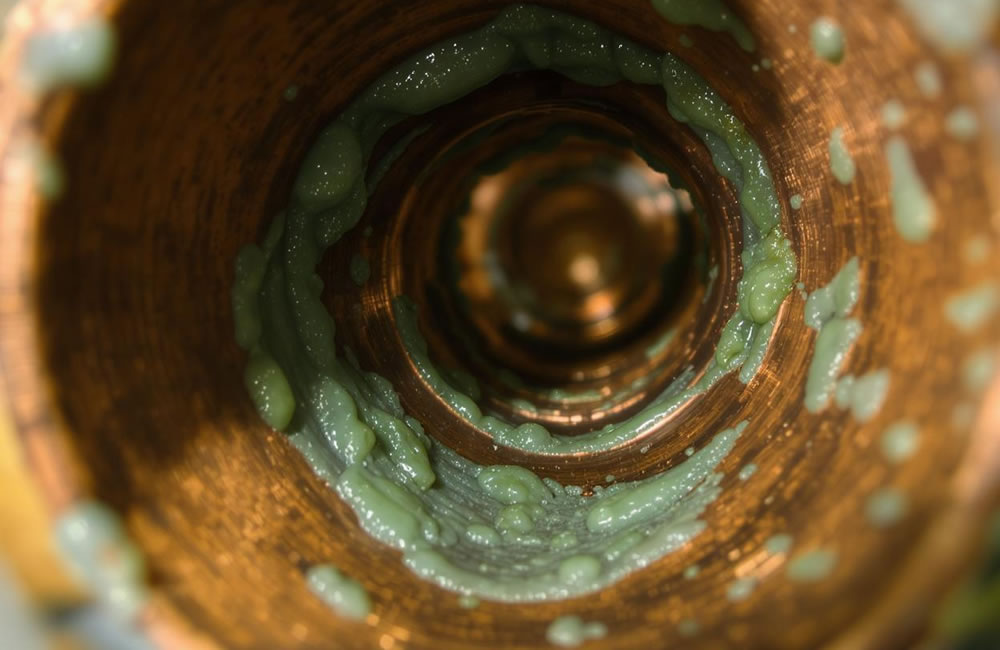
Biofilm contamination to the inside surfaces of a copper pipe

Non-Oxidising Biocides vs Bio-Dispersants: Which Is Better for Cooling Tower Water Treatment?

Maintaining clean, safe water in cooling towers is crucial for preventing the growth of harmful bacteria, including Legionella. Biocides and bio-dispersants both play important roles in this process, but there is growing interest in whether the application of non-oxidising biocides might offer a more effective solution than traditional bio-dispersants alone. By combining oxidising and non-oxidising biocides, many experts suggest that water systems can be treated more thoroughly, targeting both bacterial load and the biofilms that protect microorganisms.

This article explores the differences between oxidising and non-oxidising biocides, the role of bio-dispersants, and how these treatments interact in cooling tower environments. We’ll also examine current guidance from the Health and Safety Executive (HSG274 and ACOP L8), and the importance of correct dosing and timing when applying these treatments. Ultimately, we aim to clarify whether a shift towards non-oxidising biocides can improve water safety and system efficiency, or whether bio-dispersants are still necessary for cooling tower water treatment.

Cooling tower biocides and bio-dispersants

Biocides are regularly used to help clean and maintain water quality in cooling towers, evaporative condensers, and various other water systems. They help keep these water systems safe and free from harmful bacteria and other microorganisms that could potentially colonise it.

Cooling towers are often treated with bio-dispersants alongside oxidising biocides. However, there is an argument for replacing the bio-dispersants with non-oxidising biocides. This would mean the water treatment programme would involve both oxidising and non-oxidising biocides working hand in hand.
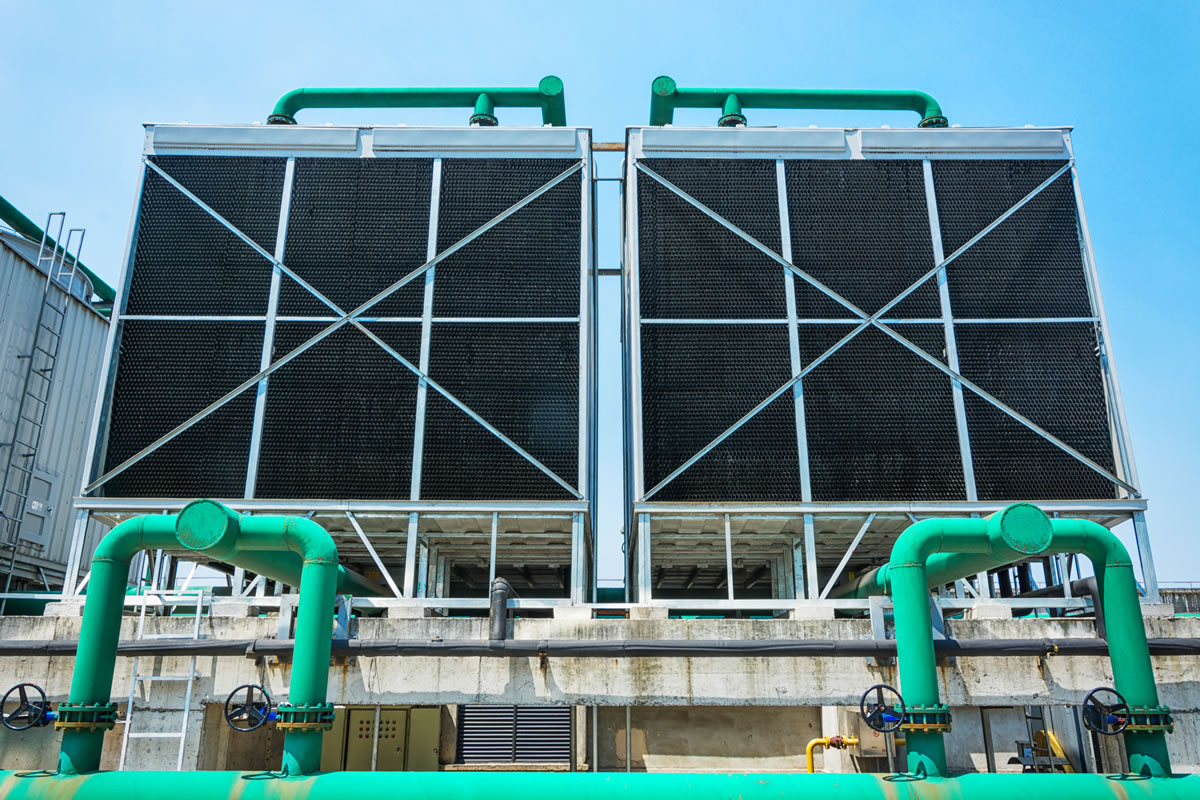
Roof top cooling tower treated with biocides and biodispersants

What are biocides?

Biocides are special chemical compounds used in the treatment of water to eliminate or reduce bacterial load. In cooling towers the control of Legionella bacteria is essentential. Examples of biocides includes compounds of chlorine and bromine, hypochlorous acid, chlorine dioxide and hydrogen peroxide.

What do biocides do in the treatment of water?

Biocides will work to kill harmful bacteria in a water supply. However, to do this, they need to be added in sufficient quantities for the specific water supply in question. They must also be present for long enough to complete the job, sometimes referred to as “kill time”.

There are two types of biocides which can both play an important role in this task:

  • Oxidising biocides
  • Non-oxidising biocides

Oxidising biocides are usually faster acting and don’t need to be dosed at as high a level as the non-oxidising version. However, both can combine to provide an effective treatment for cooling towers and other water systems.

What is a bio-dispersant?

Bio-dispersants are special chemical compounds used to treat water systems. They disrupt and disperse bacteria and biofilms which are slimy layers of microorganisms (bacteria, algae, fungi) that adhere to surfaces such as pipes, cooling towers, or heat exchangers.

What do bio-dispersants do?

With bio-dispersants the clue is in the name. They do not kill harmful bacteria or microorganisms in the water supply. Instead, they work as surfactants. This means they allow other water treatment chemicals – such as biocides – to more easily penetrate biofilms in the water system. They also help them reach and treat deposits more easily. The biofilm and deposits are then more readily dispersed in the water, allowing the biocides to act more effectively in destroying them.

Some non-oxidising biocides have a bio-dispersant included, which can help ensure the best approach to treating the water within a cooling tower. To this end, the combination of an oxidising biocide with a non-oxidising biocide can, when carefully chosen, work well in maintaining the safe operation of the tower.

The Health and Safety Executives ACOP L8 and supporting guidance HSG274 provides extensive advice and guidance on reducing risks associated with Legionella bacteria. It comes in three parts, covering evaporative cooling systems, hot and cold water systems, and other systems, respectively.

Bio-dispersant used to clean cooling system removing biofilm and general slimes

Correct dosing and timing are essential

It’s not enough to simply combine these two oxidising and non-oxidising treatments to ensure an ACOP L8 safe, operational cooling tower. It is essential to make sure the correct dose of each chemical product is added at the right time. It would be easy to assume the biocides are working as they should be, and yet there could be too low a dose in the system for too short a time to make a significant difference. This raises the risk of bacteria, biofilms and debris remaining in the water supply and potentially raising the risks from Legionella and other dangerous waterborne pathogens being present as well.

By enlisting the services of a competent water treatment specialist who is qualified to determine the dosage rates of non-oxidising and oxidising biocides to add to the cooling tower or water system, you are ensuring the water systems operate safely and efficiently. Bio dispersants do have a role to play, as we’ve seen, and they can be combined within a non-oxidising biocide treatment. This ensures that biofilms can be dispersed and removed from the system, thereby reducing the risk of waterborne bacteria colonising the cooling tower. Get in touch for further information regarding such treatments and how we can help ensure your cooling tower is always safe for use.

How good is your cooling tower compliance programme? Find out with our short, confidential assessment

How confident are you that your cooling tower management programme would stand up to regulatory scrutiny? Take our short quiz to assess your cooling tower compliance. It will help identify potential risks and benchmark your programme, you’ll also receive a personalised compliance score.

Answer 15 quick questions (time to complete is only 3-4 minutes) to assess your cooling tower compliance status and identify areas that may need attention.

Cooling Tower Compliance Check

Cooling water specialists

Water Treatment Services offer a comprehensive range of solutions for the management of chilled and cooling water systems. Find out how we can help you improve water safety, meet regulatory standards and optimise the plant performance.

With offices in London serving the South and South East England, Manchester (North West), Birmingham (Midlands), Bristol (South East England and Wales), Leeds (North and North East) and Glasgow (Scotland), supported by regional teams of specially trained engineers, water treatment specialists and technicians we offer cost effective environmental support solutions across the whole of the UK and Ireland.

Contact us today to learn how our cooling water treatment solutions can help you.
Contact Us Today

Tags: Biocide, Cooling Water Treatment, Water Treatment Chemicals
You might also like
Industrial Water Treatment Industrial Water Treatment for Boilers, Cooling & Closed Circuit Water Systems
Adiabatic cooling systems and open evaporative cooling towers compared Adiabatic Cooling Systems & Open Evaporative Cooling Towers Compared
Optimising boiler efficiency Optimising Boiler Efficiency with Intelligent Water Treatment
What is Silver Hydrogen Peroxide? What is Silver Stabilised Hydrogen Peroxide?
Boiler blowdown control Why Boiler Blowdown Control is Important
Boiler carryover in steam generating systems Managing Boiler Carryover in Steam Generating Systems
Types of cooling towers Types of Cooling Towers – Plant Selection Guide
Corrosion in water systems Understanding Corrosion in Water Systems

Search…

Search Search

What's New

  • Cooling Tower Compliance Check – Free Online Assessment

    Cooling Tower Compliance Check – Free Online Assessment

    How confident are you that your cooling tower management …
  • What are the 4 Main Methods for Treating Industrial Wastewater?

    What are the 4 Main Methods for Treating Industrial Wastewater?

    We all rely on water every day yet rarely …
  • Water Quality Assessment: 3 Key Areas for Safe Water Systems

    Water Quality Assessment: 3 Key Areas for Safe Water Systems

    Assessing water quality is a fundamental part of managing …
  • Water Quality Analysis for Modern Industries

    Water Quality Analysis for Modern Industries

    Understanding the quality of water used across modern industries …
  • Is Your Boiler Operating at Peak Performance? Free Online Assessment

    Is Your Boiler Operating at Peak Performance? Free Online Assessment

    Even small boiler water quality issues can lead to …
  • How to Clean and Maintain Reverse Osmosis Membranes

    How to Clean and Maintain Reverse Osmosis Membranes

    Reverse osmosis (RO) systems are relied upon to deliver …

REVIEWS

4.8
Water Treatment Services is rated 4.8 out of 5 stars (based on 103 reviews)
Read our reviews

Newsletter

Receive exciting features, news, latest research and special offers! Just add your email address and we'll do the rest.

Contact us

Water Treatment Services

[email protected]

Tel: 0330 223 31 31

© Copyright 2026 - EDG Ltd. Operating as Water Treatment Services
  • Link to X
  • Link to Facebook
  • Link to LinkedIn
  • Link to Mail
  • Home
  • About
  • Careers
  • Privacy
  • Environment
  • Reviews
  • Login[learndash_login login_label=”Login/Register” logout_label=”Logout”]
  • Sitemap
Link to: How to Prevent Corrosion in Water Systems Link to: How to Prevent Corrosion in Water Systems How to Prevent Corrosion in Water SystemsExtensive corrosion to water system cover plate Link to: What Are the Advantages of Improving Wastewater Treatment Processes? Link to: What Are the Advantages of Improving Wastewater Treatment Processes? What are the advantages of improving wastewater treatment processes?What Are the Advantages of Improving Wastewater Treatment Processes?
Scroll to top Scroll to top Scroll to top

This site uses cookies. By continuing to browse the site, you are agreeing to our use of cookies.

OK

Cookie and Privacy Settings


How we use cookies

We may request cookies to be set on your device. We use cookies to let us know when you visit our websites, how you interact with us, to enrich your user experience, and to customize your relationship with our website.

Click on the different category headings to find out more. You can also change some of your preferences. Note that blocking some types of cookies may impact your experience on our websites and the services we are able to offer.

Essential Website Cookies

These cookies are strictly necessary to provide you with services available through our website and to use some of its features.

Because these cookies are strictly necessary to deliver the website, refusing them will have impact how our site functions. You always can block or delete cookies by changing your browser settings and force blocking all cookies on this website. But this will always prompt you to accept/refuse cookies when revisiting our site.

We fully respect if you want to refuse cookies but to avoid asking you again and again kindly allow us to store a cookie for that. You are free to opt out any time or opt in for other cookies to get a better experience. If you refuse cookies we will remove all set cookies in our domain.

We provide you with a list of stored cookies on your computer in our domain so you can check what we stored. Due to security reasons we are not able to show or modify cookies from other domains. You can check these in your browser security settings.

Google Analytics Cookies

These cookies collect information that is used either in aggregate form to help us understand how our website is being used or how effective our marketing campaigns are, or to help us customize our website and application for you in order to enhance your experience.

If you do not want that we track your visit to our site you can disable tracking in your browser here:

Other external services

We also use different external services like Google Webfonts, Google Maps, and external Video providers. Since these providers may collect personal data like your IP address we allow you to block them here. Please be aware that this might heavily reduce the functionality and appearance of our site. Changes will take effect once you reload the page.

Google Webfont Settings:

Google Map Settings:

Google reCaptcha Settings:

Vimeo and Youtube video embeds:

Other cookies

The following cookies are also needed - You can choose if you want to allow them:

Privacy Policy

You can read about our cookies and privacy settings in detail on our Privacy Policy Page.

Privacy
Accept settingsHide notification only