
Closed System Water Treatment Options for Heating & Cooling
This technical water guide looks at the options for closed system water treatment to protect all types of heating, chilled and cooling water systems. It identifies the three main problems that can cause closed water systems to perform poorly or even fail and what can be done to prevent it happening. The guide looks at what these problems are, what causes them and what can be done to control their impact and maintain thermal performance, save energy, reduce maintenance costs and down-time, and extend plant and equipment life-cycles.
Unfortunately for anyone operating a closed water system such as a heating, chilled or cooling system, there are a number of things that can happen inside the system that can significantly affect its thermal performance, reduce efficiency and impact reliability and system longevity.
Can bacteria grow inside closed systems?
You may not realise it but there are lots of waterborne bacteria that would just love to set up home in this type of closed recirculating water system.
When internal conditions are favourable, the system can give bacteria everything they need to grow and thrive, and this is when problems can arise.
While humans might shudder at the idea of living in conditions involving biofouling, corrosion and limescale, bacteria love them and can actually thrive when they are present.
Additionally, if you don’t take adequate steps to minimise the risks to your water systems, then you could soon be faced with the very real dangers from legionella as well.
Legionella is a type of bacteria and it can cause serious illness, so it’s essential that you identify any risk areas quickly and know exactly what steps to take to control them.
What are the main problems affecting closed systems?
There are three main problems that can affect closed systems and they are:
If left unchecked, any of these three factors can cause havoc in a closed heating, chilled or cooling water system… but what exactly are they, what do they look like and what causes them?
Biofouling in closed water systems
Biofouling describes the build-up of bacteria and slimes within a closed system.
The bacterial slimes can start to coat the inside surfaces of pipes and other system components to cause a number of problems.
The growth of biofilm can restrict the internal flow of water, it can also coat heat transfer surfaces causing reduced thermal performance and lower energy efficiency.
Biofouling can cause serious health and safety issues as it promotes the growth of legionella, and other types of waterborne bacteria including pseudomonas.
Biofouling can also contribute to the amount of scale and corrosion inside the water system.
Legionella bacteria in turn feed off scale and corrosion by-products, so unless you identify the problems quickly, they may soon spiral out of control.
Corrosion in closed heating and cooling systems
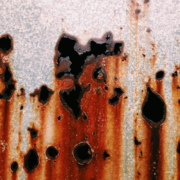
In ferrous (iron or steel) based systems corrosion will involve the formation of rust.
However, corrosion also refers to the build-up of other types of by-products which are produced when metals start to corrode, decay and rot away.
Once corrosion has a hold inside your water system, leaks will begin to appear in pipework, radiators, pumps and other components.
Leaks and corrosion can quickly lead to a shorter lifespan for your pipes and other components in the system.
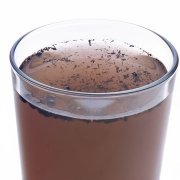
Corrosion by-products also create sludge, debris and suspended solids which can reduce water flow and clog important components such as pumps and heat exchangers leading to full or partial failure.
Scale in closed loop systems
If scale begins to build-up in your closed water system it can quickly limit water flow, block pumps and other moving parts, and coat important internal surfaces such as heat exchangers.
Scale loves to form in warm areas, so heat exchangers are particularly affected and will not work efficiently when clogged up with scale.
You’ll spend much more on energy and in replacing components in your system if you allow surface scale to develop unchecked inside your closed system.
Options for closed system water treatment
It’s never a good idea to sit back and wait for a problem to develop before deciding how to tackle it… taking a proactive approach is essential, especially when dealing with important building water systems.
The best way of maintaining your closed system will vary according to its use, local water conditions and the composition of the system itself.
Any approach should start by looking at the system as a whole, the materials of construction and conditions inside the system before deciding on the most effective water treatment programme to use.
Once you have established exactly what type of closed system you are dealing with (closed heating, chilled or cooling) and you have worked out what water treatment approach is best, you should be in a good position to develop a plan for keeping it in tip-top condition.
It’s important that you take into account the local water pressure flowing through the system as this may affect the type of water treatment you use.
The materials from which the system is made will also affect how you deal with the water treatment.
For example, the approach will be different depending on whether your pipes are made from brass, copper or aluminium.
What are the most popular closed system water treatments?
The ideal water treatment programme for a closed heating, chilled or cooling system is one which will tackle issues of biofouling, corrosion and scale, and which will also deal with sludge, suspended solids, and debris; freezing and foaming.
Dealing with these issues will not only keep your water systems in good condition and operating efficiently, it will also lay to rest any fears about premature failure, poor performance and the dangers from legionella and public health.
All water treatments for closed systems have to conform to the highest current industry standards including BSRIA BG 50 and meet all UK regulations.
This is one of the key reasons why it is usually preferable to get an external specialist company, such as Water Treatment Services out to design and run your closed system water treatment programme, rather than relying on in-house staff.
Using scale and corrosion inhibitors in closed water systems
As the name suggests, scale and corrosion inhibitors are speciality water treatment chemicals which you add in to your system to inhibit scale and corrosion, preventing them from building up in the first place.
The two main types of inhibitor chemicals used in closed water systems are nitrate and molybdate.
Nitrate and molybdate are popular closed system water treatment chemicals as they can be used separately or together at the same time.
Nitrate based inhibitors
Nitrate based corrosion inhibitors get to work as soon as they enter a closed system and work to control corrosion, whereas molybdates form a protective film coating the internal surfaces to limit any further accumulation of scale.
Nitrate based corrosion inhibitors are usually more appropriate for use in older water systems made from steel or cast iron.
It’s important to remember that nitrate corrosion inhibitors can’t be used in heating, chilled or cooling water systems that include zinc or aluminium.
This is because the nitrate will attack these softer metals, leading to corrosion in the form of tiny pin holes in the pipework which ultimately cause leaks.
Molybdate inhibitors
Molybdate is a speciality chemical that works by forming a protective film on the internal surfaces of pipes and other system components.
Once added it forms a physical barrier helping to control scale or corrosion problems.
Another advantage of molybdate is that it can be used in those closed systems which are not suitable for nitrate treatments.
Biocides for the control of bacteria
Biocides are special chemicals which kill off bacteria, helping to keep the water free from contamination and so prolonging the life of a closed water system.
The main bacteria which biocides set out to tackle in closed systems are:
Given the right conditions, bacteria can grow rapidly to contaminate the water and coat pipes and heat transfer surfaces to reduce system efficiency.
All these bacteria can cause a number of problems in a water system if they are left to multiply unchecked.
Pre-commission cleaning and system flushing
Pre-commission cleaning and system flushing are specialist operations that all new closed systems should be subject to before being switched on and brought in to service.
The idea of system flushing is to proactively deal with any contamination including corrosion by-products, swarf, sludge and other debris which might be left over from the manufacturing and installation process and which if not removed may cause issues in the months or years to come.
Using closed system filters to remove unwanted solid particles and sludge
A closed system filter is a special type of filter designed to remove unwanted solid contaminants including suspended solids, sludge, debris etc. from inside a closed system.
The most common filter solution is a side-stream filter and it can help to remove all sorts of solid or suspended material from a water system.
Their use is highly recommended as they can help to maintain peak performance, reduce maintenance costs and extend equipment life-cycles.
Chemical dosing pots
A chemical dosing pot is designed to hold and feed water treatment chemicals into a closed water system as and when required.
Usually, they are made from stainless steel and are positioned on flow and return lines.
Dosing pots have their own inlet and outlet valves, and are useful in both closed heating and cooling water systems.
Dosing pots allow operators to add water treatment chemicals into the system at appropriate points, to be distributed throughout.
One of the major advantages in using dosing pots is that the closed system can continue operating unaffected while the chemical dosing is carried out.
Some of the more advanced closed system filters also incorporate a dosing facility, eliminating the need for a separate dosing pot and filter.
Other water treatment options for closed systems
One other common form of closed system water treatment which is worth a mention is the use of antifreeze, usually glycol.
The addition of antifreeze into the system water is one of the best ways of minimising the risks during colder weather where freeze-thaw can become a serious issue.
Pipes which freeze and then defrost can easily burst to spring a leak due to the expansion and contraction of the water.
Under certain circumstances this can cause the entire closed system to fail, resulting in the system being shut down until remedial works can be completed.
Therefore, it’s essential to add glycol or other similar anti-freeze to systems if there is any risk whatsoever of freezing.
World-class water treatment solutions
Water Treatment Services offer a comprehensive range of industrial solutions for the management of closed heating, chilled and cooling water systems.
Find out how we can help improve the thermal performance of your closed systems, lower energy bills, reduce maintenance costs and down-time, and extend plant life-cycles.
Our industrial water treatment experts can provide advice and full support to help you identify the most appropriate strategies for managing your water systems.
With offices in London serving the South and South East England, Manchester (North West), Birmingham (Midlands), Bristol (South East England and Wales), Leeds (North and North East) and Glasgow (Scotland), supported by regional teams of specially trained engineers, water treatment specialists and technicians we offer cost effective environmental support solutions across the whole of the UK and Ireland.
Contact us today to learn how our water management solutions can help improve the performance of your heating, chilled and cooling water systems.
Further reading…
Learn more about our professional solutions for the treatment of closed loop and closed circuit water systems