
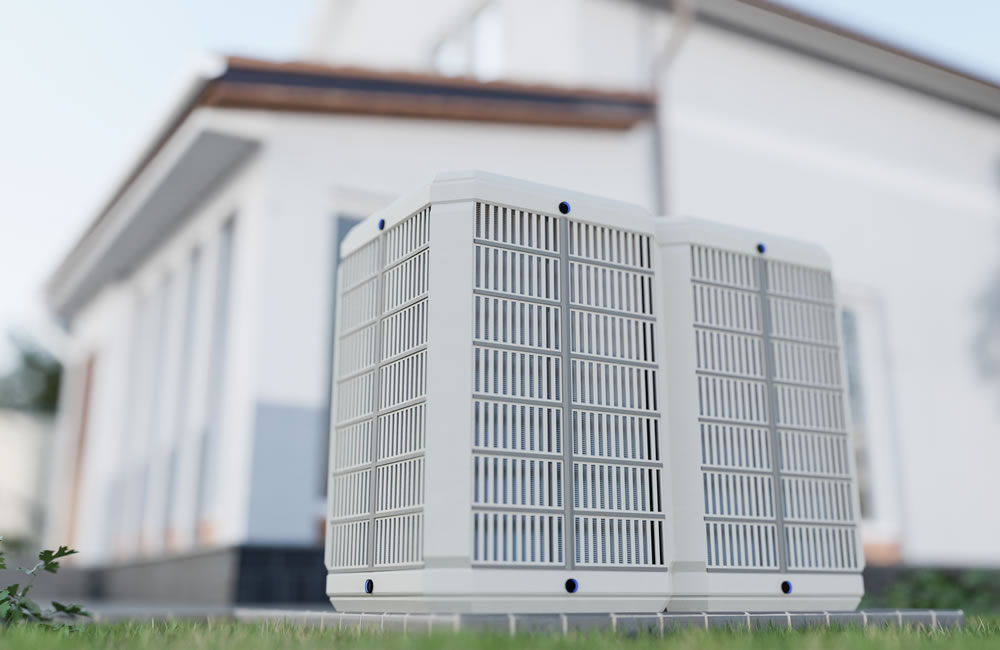
How Do Heat Pumps Work?
In this article the energy management specialists at WTS discuss heat pumps and explain how they work by answering a number of frequently asked questions.
The article starts by explaining what a heat pump is and the different types commonly available. It then goes on to look at how they work, their advantages and disadvantages, how they perform in winter, and completes with advice on how to select the best type of heat pump for your situation.
Are heat pumps an eco-friendly alternative?
If you’ve read anything about heating your home or workplace using eco-friendly methods, you’ve no doubt read about heat pumps. Question is, are they any good at heating your home or business? What should you know about them? And how do they work?
We’ll aim to answer some of those questions in this article.
What is a heat pump?
Let’s begin with the most basic question. A heat pump works by taking heat from outside your building and bringing it indoors. That’s the most basic answer. Digging a little further into the topic, we see that there are different kinds of heat pumps that work in this way.
Currently there are three main types of heat pump that work in different ways, and they are:
Air source heat pumps
Air source heat pumps take heat from the air.
Ground source heat pumps
Ground source heat pumps as the name suggests use heat from the ground.
Hybrid heat pumps
Hybrid heat pumps are designed to work alongside another type of heating system, usually because the heat pump alone would not be sufficient to provide all the heat required.
There are other available types too, such as solar-assisted heat pumps, which focus on providing hot water rather than heating. Another example is a water-source heat pump, which may be ideal if you live close to a water source you can use for this purpose, such as a lake or river.
According to Government figures, over 41% of UK electricity was generated via renewable sources in 2022
You can think of a heat pump as a way of transferring naturally occurring heat from outside your property to where you can benefit from it indoors. As we have seen from the different types of heat pumps available, the heat transfer can come from the air, the ground, or even from water.
When it’s hot during the summer months, a heat pump can also work in reverse, taking the heat from inside the home or workplace and taking it outdoors. This means that installing a heat pump brings you the perks of an air conditioner as well.
How does a heat pump work?
A heat pump is powered by electricity, which may not sound very eco-friendly, but it does not need to burn fuel like gas, oil or wood to work. This means there are no carbon dioxide emissions to worry about, making it far greener than many traditional heating methods.
Furthermore, electricity can now be generated by green methods. According to the UK Government’s Energy Trends March 2023 report, 41.4% of UK electricity was generated via renewable sources in 2022, up almost 2% on the previous year. So, while electricity is required to power a heat pump, you can see that it is still a greener method, even without considering how that electricity is generated.
The heat pump contains refrigerant liquid. The heat source enters the pump and heats the liquid, changing it into a gas. The gas then rises in temperature as it goes through a compressor. Once the heated gas completes its journey through the heat pump, the heat is used to warm the building or provide hot water. The gas then drops in temperature and goes back to its original liquid form, and the whole process begins again.
What are the advantages of a heat pump?
We’ve covered some of the advantages of a heat pump already, including their green credentials and efficiency levels. Another bonus is that extensive annual servicing is typically not required. Some elements require an annual check, but building owners can usually do this themselves once they have the knowledge, as these checks are not too complex to perform. Servicing will be required, but this can be done every few years instead of annually, as would be the case with a gas boiler.
Heat pumps also tend to last many years, typically around 15 at least, which ranks better than many gas boilers.
What are the disadvantages of a heat pump?
All heating systems provide pros and cons, so it is only reasonable that we assess some of the downsides of owning a heat pump. The first and most well-known disadvantage for many people is the upfront cost of buying and installing one, which can often run into thousands. This is offset by the energy savings of using the heat pump rather than a traditional heating method, but it does take time to recoup those savings. As such, they are only ideal to buy if you know you are going to stay at the property for long enough to make those savings count.
Installation can also be tricky, as there does not tend to be a standard installation process that would apply to every building. Individual properties could be south facing, north facing, or based in an area of the UK that experiences cooler weather than average. All this must be considered before installation. If you are considering a ground source heat pump, it is necessary to understand the geology of the area prior to installation, as this may not be the right choice.
Furthermore, some properties aren’t suitable for heat pumps. This may include older buildings, ones where there is a lack of outdoor space, and a lack of suitable insulation in the building.
Do heat pumps work in winter?
Whether heat pumps work in winter is a very common question and worth answering here. They work the same way throughout the year, regardless of the outside temperature. However, they are not as effective or efficient in colder temperatures. If you opt for an air source heat pump, ice may potentially cause damage if the temperatures drop low enough to create the condition. Make sure any heat pump you consider purchasing has automatic frost protection available to combat this.
Weighing up the pros and cons of heat pumps
As with any building heating system, it is important to gain an understanding of how heat pumps work and whether they might be ideal for your home or business. In some cases, the answer is no. In others, it may be more advantageous to install a heat pump, especially if it makes sense to use a specific design because of where you live.
Those looking to invest in their property and install a greener way of generating heat and hot water could certainly consider how a heat pump works and whether it would make sense to install one. Understanding the differences between each type of heat pump is the best way to begin.
Energy management solutions
WTS offer a range of specialist energy management solutions that can improve energy efficiency and environmental performance, and reduce costs for business.
Our experts can provide advice and support to help you identify the most appropriate strategies for the identification, investigation and implementation water and energy efficiency programmes.
With offices in London serving the South and South East England, Manchester (North West), Birmingham (Midlands), Bristol (South East England and Wales), Leeds (North and North East) and Glasgow (Scotland), supported by regional teams of specially trained engineers we offer cost effective environmental support solutions throughout the UK and internationally.
Contact us today to learn how our energy solutions can help optimise your energy consumption to reduce costs and improve environmental performance.


